
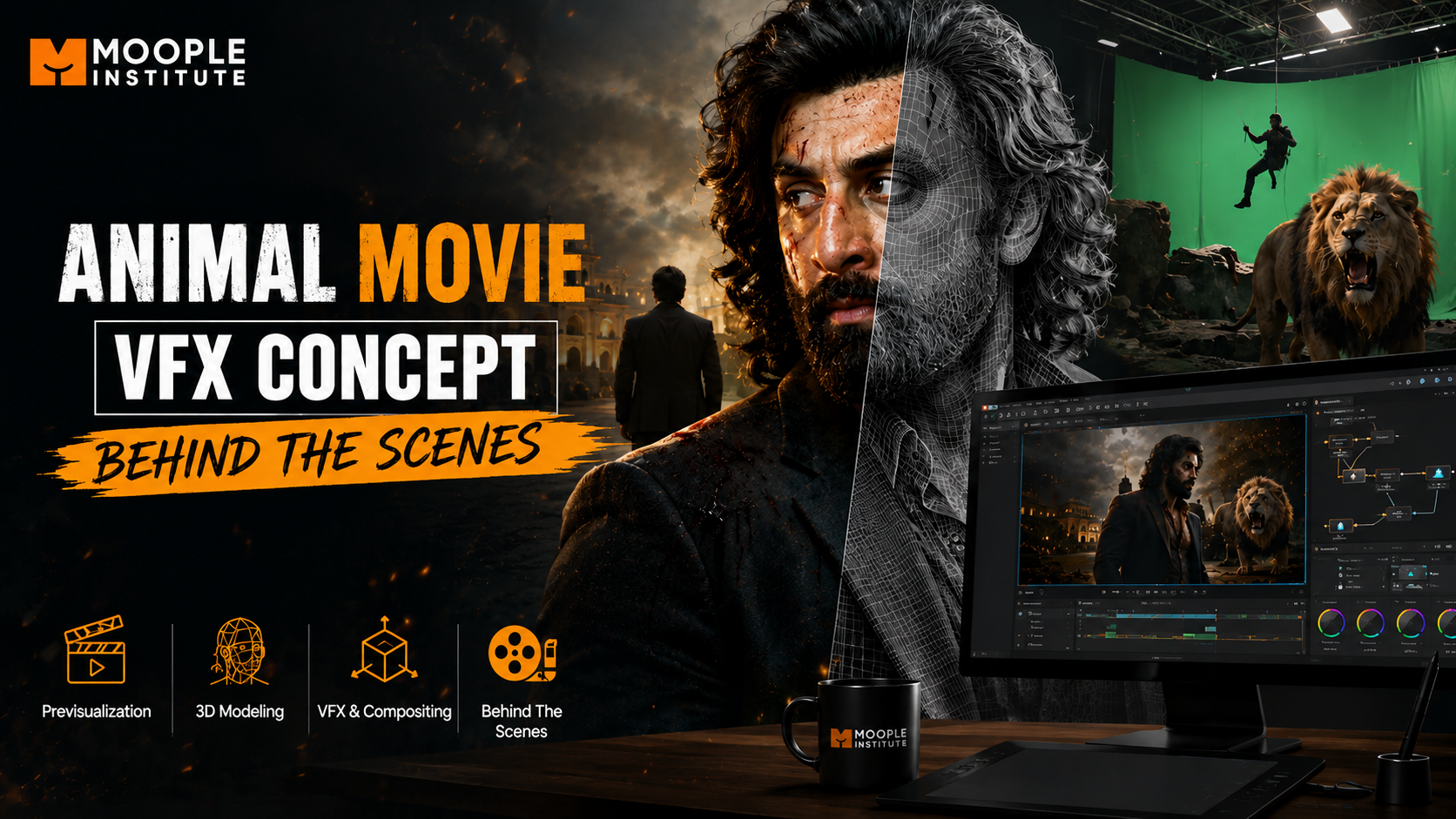
The world of Indian cinema has changed significantly with the growth of visual effects (VFX), and Animal is a strong example of how modern filmmaking techniques can enhance intense action, environments, and storytelling. While the performances and direction create the emotional impact, VFX works behind the scenes to make many sequences look larger, more dramatic, and visually convincing.
But what actually happens behind the scenes? How are complicated action sequences created? Which parts are filmed traditionally, and which parts are enhanced digitally? Let’s explore the VFX concepts and filmmaking techniques that help bring a movie like Animal to life.
Understanding the VFX Concept Behind Animal
VFX is not simply about adding explosions or creating completely digital scenes. Modern VFX combines real footage with computer-generated elements, digital environments, set extensions, compositing, color correction, and visual enhancements.
For a film like Animal, VFX can be used to enhance action sequences, remove unwanted objects, modify environments, create realistic destruction, improve backgrounds, and make practical effects look more cinematic.
The objective is usually to make the final shot look natural enough that the audience does not notice where the real footage ends and the digital work begins.
Pre-Production: Planning the VFX Shots
A major part of successful VFX happens before the cameras start rolling. During pre-production, directors, cinematographers, stunt teams, production designers, and VFX artists can work together to determine how complicated shots should be created.
Storyboards and pre-visualization help filmmakers understand camera movements, character positions, action choreography, and digital elements before production begins.
This planning is particularly important for action-heavy sequences because even a small change in camera position can affect tracking, compositing, lighting, and CGI work later.
Production: Combining Real Filming with VFX
The next stage is principal photography. Filmmakers generally try to capture as much realistic material as possible on set. Practical sets, real vehicles, stunt performances, props, lighting, and physical environments provide authentic details that are difficult to reproduce digitally.
VFX artists can then enhance these elements during post-production
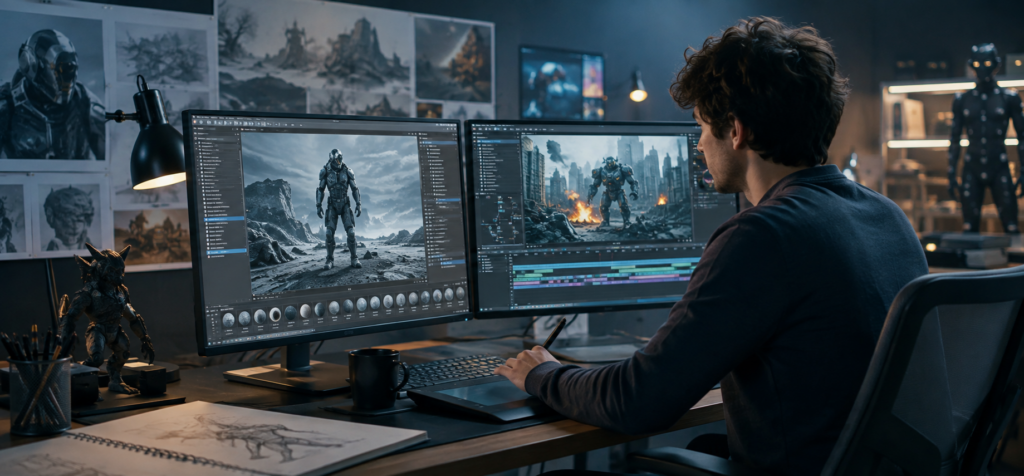
For example, a real location might be extended digitally to make it appear larger. A practical vehicle shot might be combined with a digitally created environment. Background elements can also be replaced or enhanced without requiring the entire scene to be created using CGI.
Digital Environment and Set Extensions
One important VFX concept used in modern cinema is digital environment creation.
Instead of constructing an enormous physical location, filmmakers can shoot part of a scene on a controlled set and digitally expand the surroundings. This saves production resources while giving filmmakers greater creative freedom.
Digital set extensions can add buildings, roads, landscapes, crowds, smoke, weather conditions, or other environmental elements while retaining the realism of the original footage.
Action Sequences and VFX Enhancement
Action filmmaking often requires a combination of practical stunts and digital effects. VFX can help enhance the scale and intensity of action scenes without putting performers and crew at unnecessary risk.
Digital compositing can combine multiple layers of footage into one final shot. CGI can also be used to enhance impacts, debris, vehicles, environmental destruction, and other elements.
The key challenge is maintaining realism. Camera movement, motion blur, shadows, reflections, lighting, and perspective all need to match the original footage.
The Role of CGI and 3D
CGI and 3D modelling are important components of modern VFX production. Artists can create digital objects, vehicles, environments, props, and other visual elements using specialized 3D software.
A typical workflow may involve 3D modelling, texturing, rigging, animation, lighting, rendering, and compositing.
For students interested in this field, learning these concepts can provide a strong foundation for professional VFX production.
Compositing: Bringing Everything Together
Compositing is one of the most important stages of VFX filmmaking. Different layers of footage and digital elements are combined to create a single seamless shot.
A compositor may work with:
- Live-action footage
- CGI elements
- Background replacements
- Green-screen footage
- Smoke and atmospheric effects
- Digital lighting
- Shadows and reflections
- Color adjustments
The final objective is to make all these separate elements appear as though they were captured together in the same environment.
Color Grading and Final Look
After VFX shots are completed, color grading helps establish the visual mood of the film. Different scenes can be adjusted for contrast, exposure, saturation, highlights, shadows, and overall tone.
Color grading is especially important when multiple elements have been captured at different times or created digitally. Matching their visual characteristics helps create a consistent cinematic appearance.
Skills Needed to Build a Career in VFX
The making of a visually complex film demonstrates how many different professionals contribute to a production. VFX is a multidisciplinary field that requires both creative and technical skills.
Students interested in this career can consider a BSc in VFX and filmmaking to develop knowledge of visual effects, animation, filmmaking, 3D production, compositing, and related creative technologies.
A specialized
can also help beginners understand the fundamentals of modelling, texturing, animation, compositing, motion graphics, and visual storytelling.
Why Learning VFX Can Be a Creative Career Choice
The demand for visual content continues to grow across films, OTT platforms, advertising, gaming, music videos, television, and digital media. As production techniques become more advanced, skilled VFX professionals are needed to transform creative ideas into convincing visuals.
Learning VFX is therefore not only about understanding software. It involves developing an eye for detail, understanding cinematography, solving visual problems, and learning how different elements work together to create believable scenes.
Conclusion
The Animal Movie VFX concept behind the scenes demonstrates that modern filmmaking is a combination of performance, cinematography, practical production, technology, and digital artistry. Many visual elements that appear natural on screen can involve complex work from VFX artists, compositors, 3D artists, editors, and other specialists.
For aspiring artists, studying a BSc in VFX and filmmaking or joining a professional VFX Course can be a valuable starting point for understanding the techniques used in contemporary visual storytelling. With creativity, technical knowledge, and consistent practice, students can build skills relevant to the growing VFX and filmmaking industry.
Frequently Asked Questions
1. What VFX techniques were used in the Animal movie?
The movie uses a combination of CGI, compositing, visual effects, color grading, environment enhancement, and digital effects to create realistic and cinematic scenes.
2. How was VFX used in the Animal movie scenes?
VFX was used to enhance action sequences, backgrounds, environments, character shots, explosions, and other scenes that required digital manipulation or visual enhancement.
3. What is the VFX concept behind the Animal movie?
The VFX concept focuses on making intense action and dramatic sequences look more realistic while maintaining the movie’s cinematic visual style.
4. Was CGI used in the Animal movie?
Yes, CGI can be used alongside practical filmmaking techniques to create or enhance elements that are difficult, unsafe, or impractical to capture directly during filming.
5. How are action scenes created using VFX?
Action scenes can combine live-action footage with CGI, compositing, digital environments, effects simulation, and color correction to produce visually impactful sequences.

Pooja Sharma is a creative education content writer who creates engaging articles on career guidance, skill development, and learning opportunities to help students make informed decisions.