In the world of cinema, Visual Effects (VFX) have taken storytelling to new heights, allowing filmmakers to transport audiences to unimaginable realms. LEO, a captivating upcoming movie, is no exception. With cutting-edge technology and an innovative approach to VFX, LEO promises to be a visual feast that will leave audiences in awe. In this blog, we’ll delve into some fascinating facts about the VFX concepts used in the LEO movie, which is poised to redefine the boundaries of cinematic storytelling.
Creating the Exquisite Lunar Landscape
LEO’s story revolves around a journey to the Moon, and the VFX team spared no effort in recreating the lunar landscape with stunning accuracy. They meticulously studied high-resolution images of the Moon’s surface to ensure that every crater, rock, and dust particle is faithfully represented. The result is a breathtaking lunar environment that feels incredibly realistic.
The spacecraft featured in LEO are a testament to the dedication of the VFX artists. In fact, many B.Sc VFX students are hailing it as a good example to study from. These spacecraft were designed in collaboration with aerospace engineers to ensure their authenticity and functionality. Every button, switch, and control panel inside the spacecraft is not just for show; it serves a purpose, adding to the movie’s credibility.
Zero-Gravity Simulation
Simulating zero gravity is one of the biggest challenges in space-themed films. LEO has achieved this effect by using a combination of physical rigs, wirework, and advanced CGI. The actors underwent extensive training to move gracefully in a weightless environment. This attention to detail immerses the audience in the realistic experience of space travel.
The universe is full of awe-inspiring celestial events, and LEO features some of the most breathtaking ones, such as solar flares, meteor showers, and nebulae. The VFX team collaborated with astrophysicists and astronomers to ensure that these cosmic phenomena were depicted accurately, making the audience feel like they’re truly gazing into the depths of space. One of the aspects taught in B.Sc in VFX and Filmmaking is the importance of collaboration.
Alien Worlds and Extraterrestrial Life
LEO ventures beyond our Moon and Earth to explore distant alien worlds, each uniquely designed with a combination of practical effects and digital wizardry. The film introduces audiences to captivating and imaginative extraterrestrial life forms, all brought to life through the mastery of VFX.
One of the most exciting aspects of LEO’s VFX is the use of real-time rendering technology. This allows the director and cinematographer to view CGI scenes in real time, making it easier to adjust shots and create a seamless blend between live action and digital elements. The result of VFX courses is a smoother and more efficient filmmaking process.
Immersive 3D Soundscapes
LEO doesn’t just captivate the eyes but also the ears. The movie features a meticulously designed 3D soundscape that enhances the immersive experience. The VFX team collaborated with sound engineers to create spatial audio that matches the visuals, making the audience feel as if they’re right there in the midst of the action.
In an era of growing environmental consciousness, LEO’s VFX team took steps to minimize the carbon footprint of their work. By using energy-efficient servers, eco-friendly rendering farms, and sustainable practices, they ensured that the movie’s visual effects were as green as they were spectacular.
Conclusion
LEO promises to be a groundbreaking cinematic experience, pushing the boundaries of what’s possible with VFX in the realm of space exploration. With meticulous attention to detail, collaboration with experts, and a dedication to authenticity, the movie will transport audiences to the Moon and beyond. As technology continues to advance, we can only imagine what future VFX will bring to the world of cinema. Until then, fasten your seatbelts and prepare to be spellbound by the VFX marvels of LEO.
FAQs
1. What makes the VFX in the LEO movie unique?
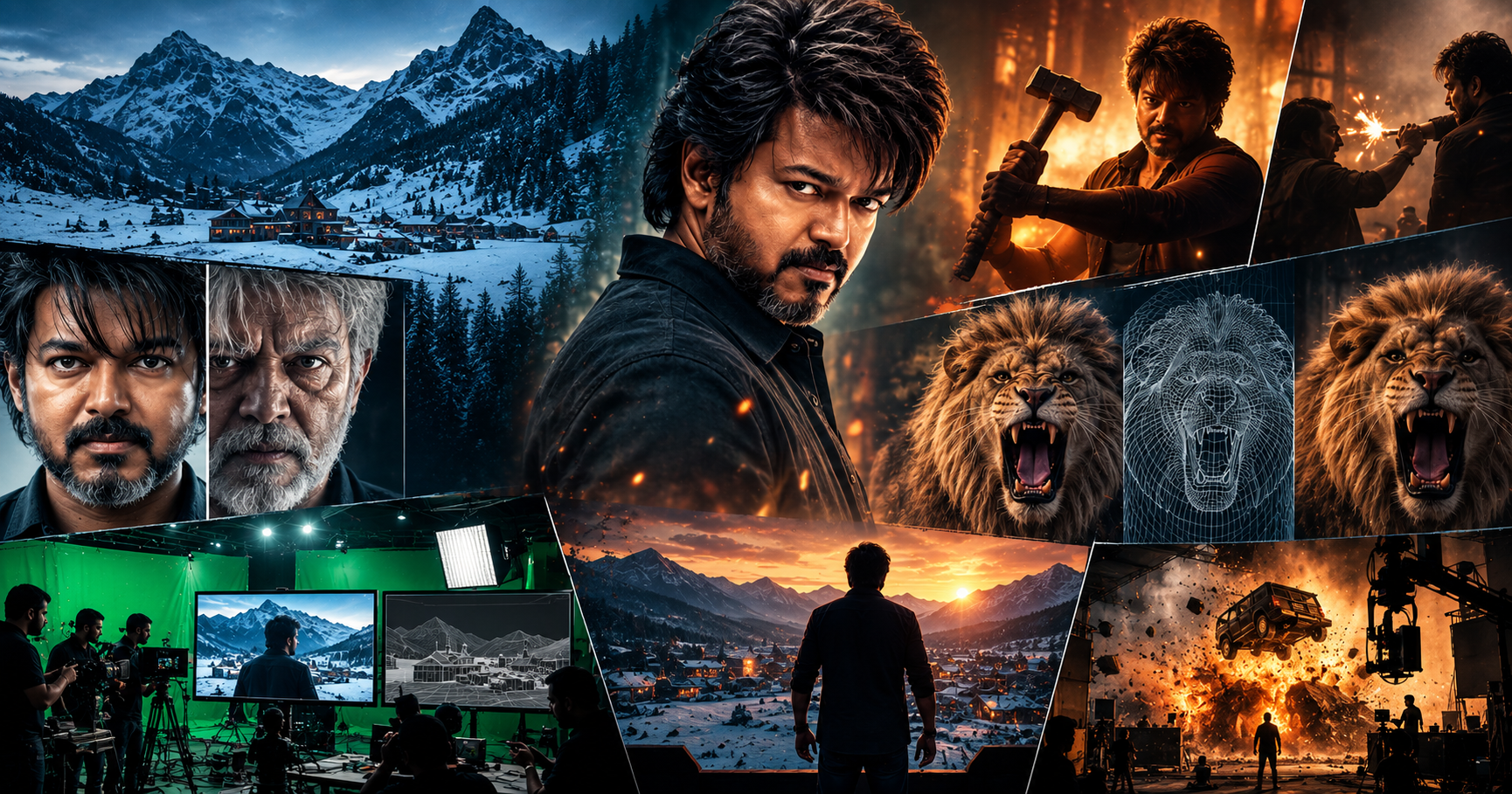
The VFX in LEO combines realistic CGI, seamless compositing, and advanced digital environments to create visually stunning action sequences. The film also uses high-quality creature animation and invisible visual effects to enhance realism without distracting the audience.
2. Was CGI used to create the animals in LEO?
Yes. The hyena featured in LEO was created using advanced CGI and VFX techniques. Artists carefully modeled, textured, animated, and composited the digital animal to blend naturally with the live-action footage.
3. Which VFX techniques were used in the LEO movie?
The movie uses several modern VFX techniques, including CGI creature creation, digital environment extensions, green screen compositing, motion tracking, color grading, and realistic lighting simulations to achieve cinematic visuals.
4. Why is LEO considered a good learning reference for VFX students?
LEO showcases professional-quality visual effects, action compositing, CGI integration, and realistic digital creatures. Studying these techniques helps aspiring VFX artists understand how modern films combine practical filmmaking with computer-generated imagery.
5. Can beginners learn the VFX techniques used in movies like LEO?
Yes. Beginners can learn the fundamentals of VFX through structured training in software such as Adobe After Effects, Autodesk Maya, Blender, Houdini, and Nuke. With practice, they can develop the skills needed to create effects similar to those seen in films like LEO.

Pooja Sharma is a creative education content writer who creates engaging articles on career guidance, skill development, and learning opportunities to help students make informed decisions.