
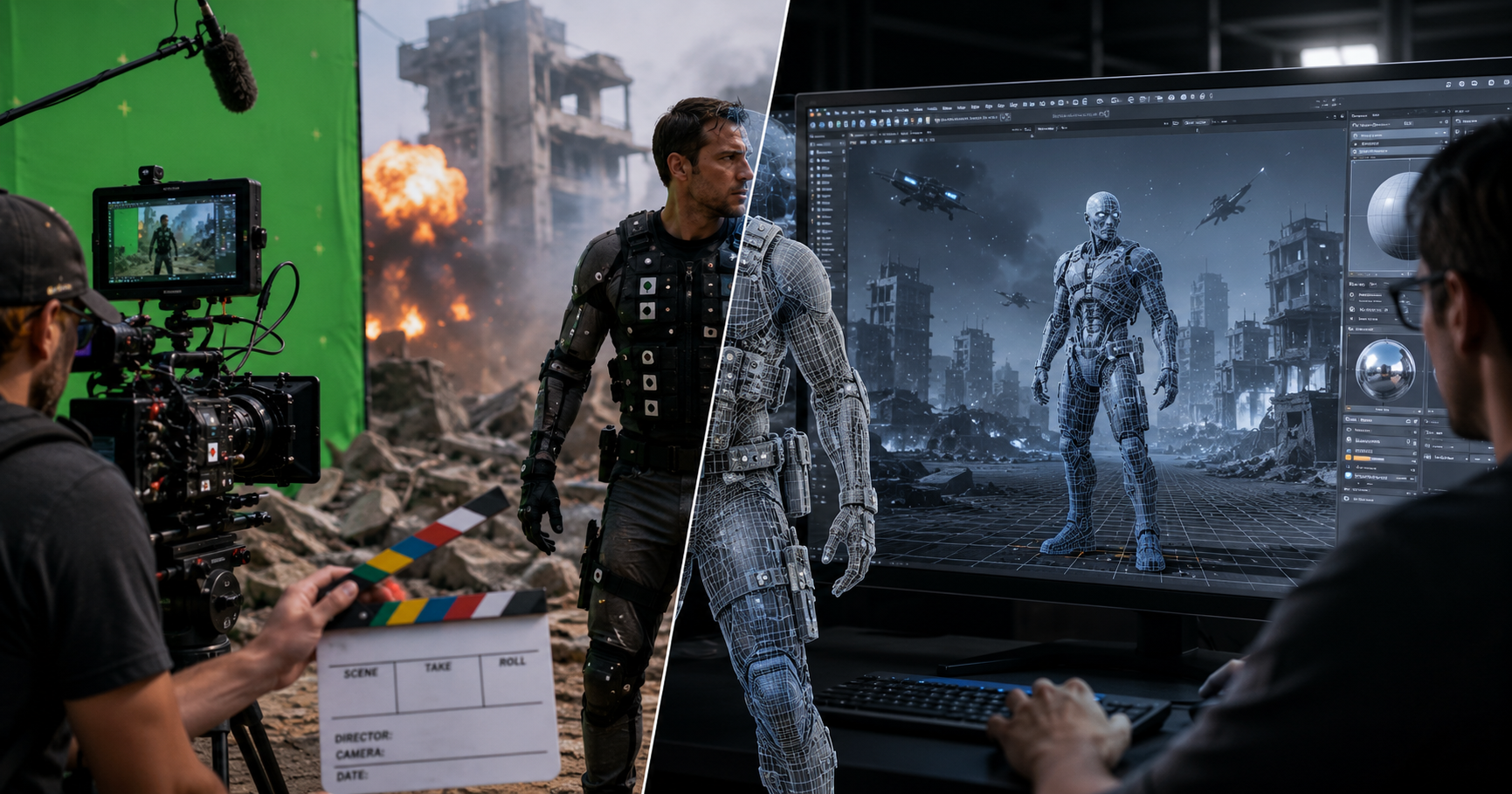
In the realm of filmmaking and visual storytelling, terms like VFX (Visual Effects) and CGI (Computer-Generated Imagery) are often used interchangeably, leading to confusion about their meanings and applications. However, VFX and CGI are distinct but related elements of the visual effects pipeline, each serving unique purposes in bringing imagination to life on screen. Let’s unravel the differences between VFX and CGI to gain a clearer understanding of these essential components of modern filmmaking.
Visual Effects (VFX): Enhancing Reality with Digital Magic
Visual Effects (VFX) encompass a broad spectrum of techniques used to manipulate or enhance live-action footage, adding elements that would be impractical, dangerous, or impossible to capture during filming. Education at VFX Institute in Kolkata can range from subtle enhancements like removing wires or blemishes to elaborate creations such as alien creatures, explosions, and fantastical environments. The key characteristic of VFX is that they are integrated with live-action footage to create seamless, believable visual experiences for the audience.
Examples of VFX:
- Adding CGI dinosaurs to live-action scenes in “Jurassic Park.”
- Creating realistic explosions and destruction in action movies like “Transformers.
- Enhancing environments and landscapes in fantasy epics like “The Lord of the Rings
Computer-Generated Imagery (CGI): Crafting Entirely Digital Worlds
Computer-Generated Imagery (CGI) refers to the creation of visual elements entirely through digital means, without the need for live-action footage. CGI allows filmmakers to construct entire environments, characters, and objects from scratch using specialized software and computer-generated imagery. Unlike VFX, which augment real-world footage, CGI is used to build virtual worlds that exist entirely within the digital realm.
Examples of CGI:
- The creation of iconic characters like Gollum in “The Lord of the Rings” trilogy.
- Building entire cities and landscapes in animated films like “Frozen” or “Toy Story.
- Designing futuristic spacecraft and alien planets in science fiction epics like “Avatar
Key Differences Between VFX and CGI
- Integration with Live Action: VFX classes are usually integrated with live-action footage, blending digital elements seamlessly with real-world environments and actors. CGI, on the other hand, constructs entirely digital worlds and characters, often with minimal or no live-action elements. You can learn about it in detail in B.Sc in VFX filmmaking classes.
- Purpose: VFX are used to enhance or manipulate live-action footage, adding elements that complement the story and enhance visual storytelling. CGI is used to create entire environments, characters, and objects from scratch, often in scenarios where practical effects are impractical or impossible.
- Workflow: VFX typically involves a combination of shooting live-action footage on set and then adding digital elements in post-production using specialized software. CGI, on the other hand, relies entirely on digital creation, with artists using 3D modeling, texturing, and rendering software to bring imaginary worlds to life. Check out the multimedia courses list for more information about the same.
Conclusion: Complementary Elements of Visual Storytelling
In conclusion, while VFX and CGI are distinct components of the visual effects toolkit, they often work hand in hand to create immersive and captivating visual experiences for audiences. Whether enhancing real-world footage with digital magic or crafting entire worlds from scratch, both VFX and CGI play integral roles in modern filmmaking and visual storytelling. By understanding the differences between VFX and CGI, filmmakers and audiences alike can gain a deeper appreciation for the artistry and technical expertise involved in bringing imagination to life on screen.
FAQs
1. What is the difference between VFX and CGI?
VFX (Visual Effects) is the broad umbrella term for any imagery created or manipulated outside of live-action filming — including compositing, color grading, wire removal, and digital effects. CGI (Computer-Generated Imagery) is a subset of VFX specifically referring to visuals created entirely using computer software, like 3D models, animated characters, or digital environments. In short: all CGI is VFX, but not all VFX is CGI
2. Is CGI a type of VFX?
Yes. CGI is one technique used within the larger VFX process. While VFX can include practical effects, compositing, and post-production enhancements, CGI specifically refers to computer-generated visuals, such as animated creatures, digital sets, or simulated explosions built entirely in software like Maya, Blender, or Houdini.
3. Can a movie have VFX without CGI?
Yes. A film can use VFX techniques — like green screen compositing, rotoscoping, motion tracking, or digital paint-outs — without necessarily relying on fully computer-generated elements. For example, removing a visible wire from a stunt shot is VFX but not CGI, since no 3D or digital asset is being generated.
4. Which is more expensive, VFX or CGI?
Since CGI is a component of VFX rather than a separate discipline, cost comparisons depend on complexity, not category. Highly detailed CGI (like photorealistic creatures or digital doubles) tends to be more time- and resource-intensive than simpler VFX tasks like color correction or basic compositing, making CGI-heavy shots generally more expensive per frame.
5. Do VFX artists and CGI artists do the same job?
Not exactly. VFX artists often specialize in broader post-production tasks like compositing, tracking, and effects integration. CGI artists typically focus specifically on 3D modeling, texturing, animation, and rendering. Many professionals work across both areas, but the skill sets and software used can differ significantly depending on the specialization.

Pooja Sharma is a creative education content writer who creates engaging articles on career guidance, skill development, and learning opportunities to help students make informed decisions.