In today’s digital-first world, creative skills are becoming just as valuable as technical ones. Whether it’s gaming, animation, cybersecurity simulations, or product design, 3D modeling is everywhere. That’s why enrolling in a 3D Modeling Course can be a smart move for students who want to build a strong, future-proof career.
Many students struggle with choosing the right career path, especially when traditional degrees don’t guarantee job security. Parents also worry about whether their children will have stable and high-paying opportunities. This is where a structured learning path like a 3D modeling course comes in. It offers practical skills, real-world applications, and access to multiple industries, including cybersecurity, where 3D simulations are increasingly used.
In this guide, you’ll learn everything about 3D modeling, course structure, fees, certifications, and career opportunities so you can make a confident decision.
What Is a 3D Modeling Course?
A 3D Modeling Course is a professional training program that teaches you how to create digital objects, environments, and characters using specialized software like Blender. These models are used in films, video games, architecture, simulations, and even security engineering projects.
Key Skills You Will Learn
- Creating 3D objects and environments
- Texturing and lighting techniques
- Rendering realistic visuals
- Animation basics
- Understanding design principles
These skills are not just creative—they are highly technical and in demand across industries.
Why 3D Modeling Is Important in 2026 and Beyond

Technology is evolving rapidly, and industries are shifting toward immersive experiences like AR (Augmented Reality) and VR (Virtual Reality). According to industry reports, the global 3D modeling market is expected to grow significantly due to demand in gaming, film production, and digital simulations.
- Cybersecurity simulations and training environments
- Game development and animation
- Architecture and interior design
- Product visualization and marketing
- Virtual reality training programs
For students interested in cybersecurity, 3D modeling plays a key role in creating simulated environments for testing and training purposes.
Types of 3D Modeling Courses
There are beginner, intermediate, and advanced courses available depending on your skill level. Students can also choose between online and offline 3d modeling classes, based on their learning preferences and flexibility.
Choosing the right course depends on your goals, experience level, and career plans.
Beginner-Level Courses
Perfect for students with no prior experience. These courses cover basics like modeling, tools, and simple projects.
Intermediate Courses
Focus on advanced techniques like texturing, lighting, and rendering. Ideal for students who already understand the basics.
Advanced or Professional Programs
These are often part of a 3d modeling certificate program, designed to prepare students for industry-level work.
3D Modeling Course Fees
The 3d modeling course fees vary depending on the course level and institute. Beginner courses are affordable, while advanced programs cost more due to deeper training, certifications, and hands-on projects.
One of the most common concerns is affordability. The 3d modeling course fees can vary based on several factors.
- Beginner courses: ₹5,000 – ₹20,000
- Advanced certification programs: ₹30,000 – ₹1,00,000+
- Professional diploma courses: ₹1,00,000+
Always compare course content, not just price. A slightly higher fee can offer better career opportunities and ROI.
What Is a 3D Modeling Certificate Program?
A 3d modeling certificate program is a structured course that provides official certification after completion. This certificate validates your skills and improves your chances of getting hired.
Benefits of Certification
- Industry recognition
- Better job opportunities
- Portfolio development
- Higher salary potential
Employers often prefer candidates who have both skills and certifications, as it shows commitment and expertise.
Key Skills You’ll Master
A 3D modeling certificate program helps you learn technical skills such as modeling, texturing, and rendering, as well as creative skills such as design thinking and storytelling. These skills prepare you for real-world projects and job opportunities.
A good 3d modeling certificate program focuses on both creative and technical skills.
Technical Skills
- Modeling and sculpting
- UV mapping and texturing
- Lighting and rendering
- Animation basics
Creative Skills
- Visual storytelling
- Design thinking
- Attention to detail
Industry Skills
- Portfolio development
- Working with clients
- Understanding project workflows
These skills make you job-ready and versatile across industries.
Career Opportunities After a 3D Modeling Course
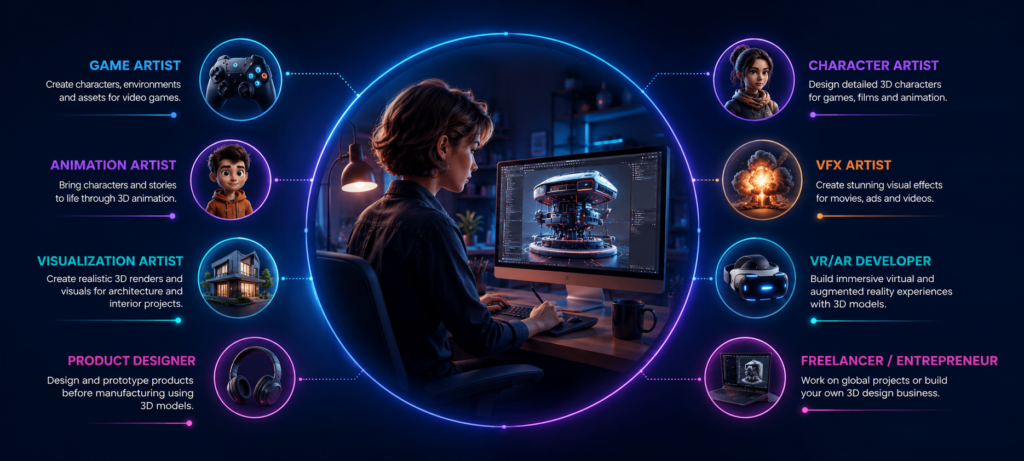
Completing a 3D Modeling Course opens the door to a wide range of exciting and high-demand career opportunities across multiple industries. From entertainment and gaming to architecture and cybersecurity, skilled 3D artists are needed to create realistic visuals and simulations. With the right skills and a strong portfolio, students can choose between full-time roles, freelancing, or even starting their own creative business.
Top Career Options
3D Modeler
A 3D modeler creates digital objects, characters, and environments used in games, movies, and simulations. This role focuses on shaping and designing models with accuracy and creativity, making it one of the most common entry-level jobs.
Game Designer
Game designers use 3D modeling skills to build characters, environments, and assets for video games. They work closely with developers to create immersive gaming experiences that engage users.
Animation Artist
Animation artists bring 3D models to life by adding movement and expressions. They work in films, advertisements, and digital media, making characters and scenes visually dynamic.
VFX Artist (Visual Effects Artist)
VFX artists create realistic effects like explosions, weather, and digital environments for movies and TV shows. This role combines creativity with technical expertise to enhance visual storytelling.
Product Designer
Product designers use 3D modeling to create product prototypes before manufacturing. This is widely used in industries like automotive, electronics, and consumer goods.
Architectural Visualizer
These professionals create 3D representations of buildings and interiors. Architects and real estate companies use these visuals to present designs to clients before construction begins.
Simulation Designer (Cybersecurity & Training)
Simulation designers build virtual environments used in cybersecurity training and testing. This role is especially valuable in defense, corporate training, and security engineering sectors.
Freelance 3D Artist
Freelancers work independently on projects for global clients. They can take up assignments in gaming, animation, advertising, and more, offering flexibility and high earning potential.
AR/VR Developer
With the rise of augmented and virtual reality, 3D artists are needed to create immersive experiences. This field is growing rapidly in education, healthcare, and gaming industries.
UI/UX 3D Designer
These designers integrate 3D elements into user interfaces for apps and websites. It enhances user experience by making digital platforms more interactive and visually appealing.
According to the U.S. Bureau of Labor Statistics, multimedia and animation careers are expected to grow steadily, driven by demand in digital media.
How to Choose the Right 3D Modeling Classes
Choosing the right 3D modeling classes is important for building strong skills and ensuring good career opportunities. With many options available, students should focus on factors like course quality, practical training, and career support. A well-chosen course can help you learn faster, build a strong portfolio, and prepare for real-world industry demands.
Key Factors to Consider
- Course Curriculum
- Certification
- Practical Projects
- Placement Support
- Faculty Experience
- Software and Tools Covered
- Class Mode (Online/Offline)
- Student Reviews and Ratings
Tools and Software You Will Learn
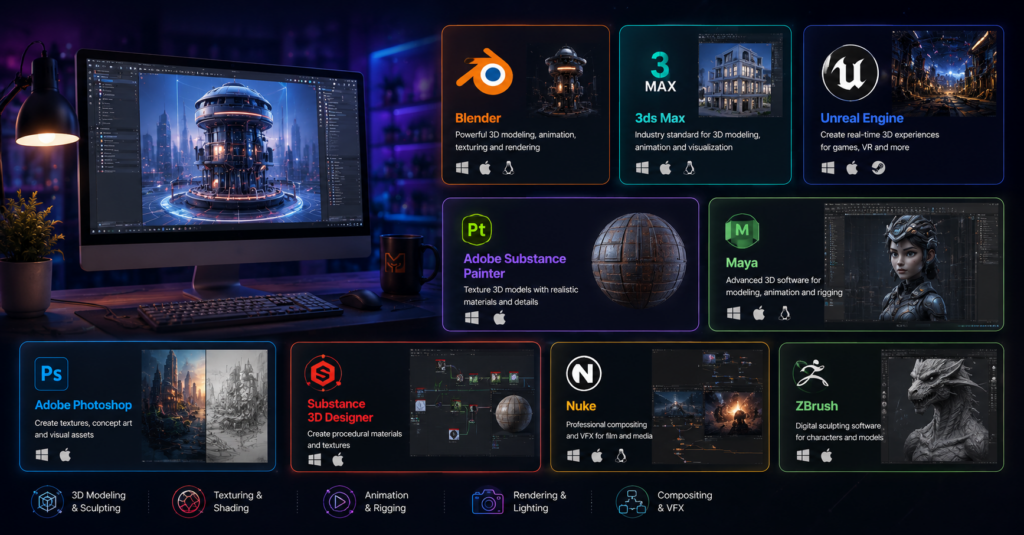
In a 3D Modeling Course, students are trained using industry-standard tools that help them create professional-quality 3D designs, animations, and simulations. Learning these tools not only builds technical skills but also prepares students for real-world projects across industries like gaming, animation, architecture, and cybersecurity.
Key Tools and Software
Blender: Blender is a free and powerful 3D modeling software widely used by beginners and professionals. It allows users to create models, animations, and visual effects, making it a great starting point for learning all aspects of 3D design.
Autodesk Maya: Maya is an advanced software used in the film and gaming industry for animation and character modeling. It is known for its strong animation tools and is often used by professionals working on high-end projects.
3ds Max: 3ds Max is commonly used for architectural visualization and game design. It helps in creating detailed 3D models, interiors, and realistic renderings, making it popular among designers and architects.
ZBrush: ZBrush is a digital sculpting tool used to create highly detailed characters and models. It is widely used in character design for movies and video games, especially for adding fine details and textures.
Substance Painter: This tool is used for texturing 3D models with realistic materials and colors. It helps bring models to life by adding surface details like scratches, paint, and lighting effects.
Unity / Unreal Engine: These are real-time engines used to create interactive 3D experiences, including games and simulations. They are especially useful for students interested in AR, VR, and cybersecurity simulations.
Blender is especially popular among beginners because it is free, powerful, and widely accepted in the industry.
How 3D Modeling Complements Cybersecurity Careers
This might surprise many students—3D modeling is becoming relevant in cybersecurity.
Use Cases
- Visualizing cyberattack scenarios
- Creating virtual training environments
- Simulating real-world security threats
Combining cybersecurity knowledge with 3D modeling gives you a unique edge in the job market.
FAQs
Most courses range from 3 months to 1 year, depending on the level and depth of training.
No, beginner courses are designed for students with no prior knowledge.
Yes, certification improves your credibility and increases job opportunities.
Yes, with the right skills and portfolio, you can get jobs in gaming, animation, design, and cybersecurity-related fields.
Conclusion
A Blender-based 3D Modeling Course is more than just a creative skill—it’s a gateway to future-ready careers. From gaming and animation to cybersecurity and simulation design, the opportunities are vast and growing.
By choosing the right 3d modeling classes, understanding 3d modeling course fees, and completing a recognized 3d modeling certificate program, you can build a strong foundation for success.
If you’re serious about building a career that blends creativity with technology, now is the perfect time to start. Take the first step today and explore a 3D Modeling Course that aligns with your goals.
Ready to take the next step?
Start exploring the best 3d modeling classes today and invest in a skill that will shape your future.

Farhat Jabeen is passionate about documenting the student enrollment journey in the fields of technology, design, and digital media. Through her writing, she shares practical guidance, industry insights, and real-world learning experiences that help aspiring students confidently navigate their path toward creative and technology-driven careers. Her goal is to empower learners with the knowledge they need to choose the right educational journey.