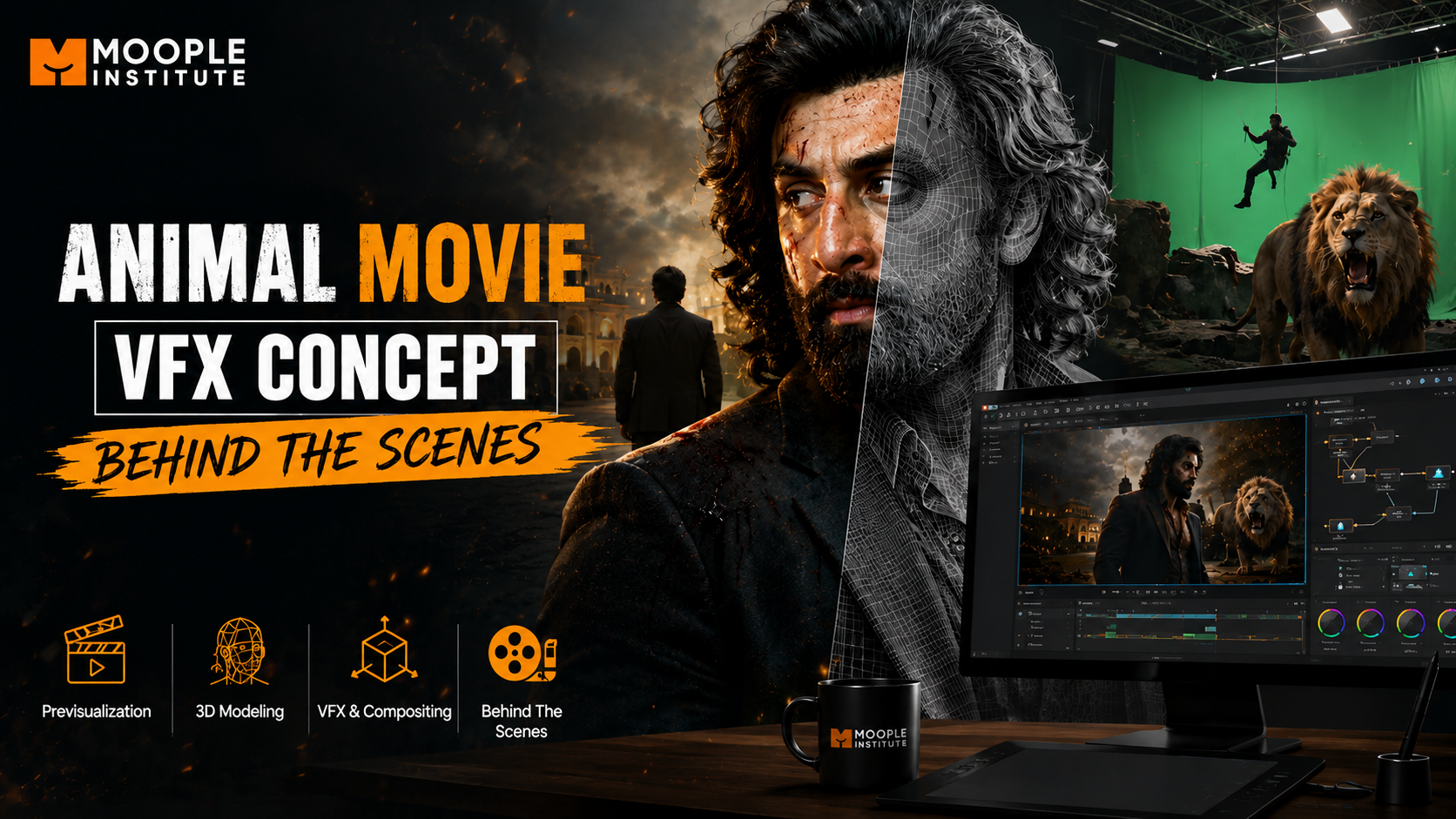
When a CG tiger locks eyes with you on screen and you forget it was never there, hundreds of artists spent months on that moment. Animal VFX is among the hardest work in the industry because audiences know exactly how animals move, and they notice when something is off.
If you’re a student in Kolkata wondering how this work happens, and whether a BSc in VFX and filmmaking can lead to it, this is the behind-the-scenes version.
What Is a BSc in VFX and Filmmaking?
It’s an undergraduate degree that combines visual effects (creating or enhancing imagery with computers) with filmmaking fundamentals like storytelling, cinematography, and editing. A good VFX course at this level teaches you the full pipeline, not just software buttons. That matters for creature work, where the tech serves the story.
The Animal VFX Pipeline, Step by Step
1. Concept and Design
Everything starts on paper or in a sculpting app. Artists decide how realistic the animal should be. A talking lion needs a face that can show emotion without looking like a human in a lion costume. Designers study anatomy, fur patterns, and silhouettes. A photoreal animal and a stylised one need completely different design rules.
2. Reference Gathering
Animators watch hours of real footage: how a cat’s shoulder blades rise when it prowls, how a horse shifts weight before a gallop. Filmmakers often shoot real animals as reference. For Life of Pi, the tiger was largely computer-generated, with real tiger footage guiding the work.
3. Modelling and Sculpting
Artists build the 3D body in tools like ZBrush and Maya, with muscles, skeleton, and skin layered underneath. Getting the underlying anatomy right makes the movement convincing later.
4. Rigging
A rig is the digital skeleton and control system animators use to pose the character. Animal rigs are notoriously tricky: spines flex, tails whip, ears twitch, and four-legged gaits behave differently from two-legged ones.
5. Animation
This is where performance happens. Some studios use motion capture with actors, as in the Planet of the Apes films. Others rely on hand-keyed animation, where animators pose the creature frame by frame. Many productions mix both. The Jungle Book (2016) is a famous example of a film with nearly everything around its single live actor created digitally.
6. Fur, Feathers, and Skin (Grooming and Simulation)
Millions of individual hairs need to react to wind, water, and muscle movement. Technical artists build “grooms” and run simulations so fur clumps when wet and ripples when the animal runs. Muscle and skin simulation adds the jiggle and slide of real flesh.
7. Lighting, Rendering, and Compositing
The creature is lit to match the live-action plate, rendered, and blended in with shadows, dust, and depth of field. Compositors make the final call on whether an animal “sits” in the shot.
Why Animal Shots Are So Hard
- Audiences are expert judges. Everyone has seen a dog run.
- Fur and eyes are hard to get right. Dead-looking eyes break the illusion instantly.
- Weight and contact are tough. The animal must visibly press into grass, snow, or water.
- Emotion without words requires subtle facial acting, especially for talking animals.
Indian cinema has produced its own memorable examples. S.S. Rajamouli’s Eega gave a housefly a full revenge arc, showing that a creature doesn’t need to be a lion or tiger to carry a film when the VFX and storytelling work together.
What You’ll Actually Learn in a Good VFX Course
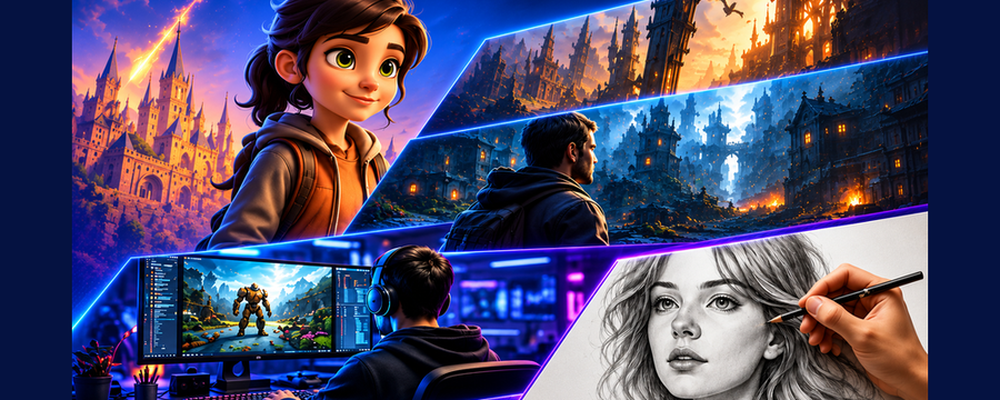
A strong programme builds skills across the pipeline. Typical areas include:
- Drawing and anatomy fundamentals: the base for every creature artist
- 3D modelling and sculpting
- Rigging and character animation
- Compositing and rotoscoping
- Lighting and rendering
- Film language: shot composition, editing rhythm, and story structure
The filmmaking side is what separates a technician from a visual storyteller. Knowing why a shot works helps you decide where to spend your effort.
Career Paths After a BSc in VFX and Filmmaking
Animal-heavy projects need many roles, so there’s room for different strengths:
| Role | What you’d do |
|---|---|
| Modeller / Sculptor | Build creature bodies and details |
| Rigging artist | Create the control skeleton |
| Animator | Perform the creature on screen |
| Groom / FX artist | Fur, feathers, water, dust |
| Compositor | Blend everything into the final shot |
| Previs artist | Plan complex scenes before filming |
Studios, OTT productions, advertising, games, and independent film all use these skills, so you aren’t limited to one path.
Studying VFX in Kolkata: A Practical Note
Students commute to Kolkata’s film and creative hubs from across the region, including Baguiati, Barasat, Berhampore, Chandannagar, Chowringhee, Jodhpur Park, New Alipore, Sealdah, Serampore, and Sonarpur. Before choosing an institute, visit in person and check:
- Student work: Ask to see final-year showreels, not just brochures.
- Hardware and software access: Rendering needs capable machines.
- Faculty with industry experience: Ask who teaches and what they have worked on.
- Project-based learning: You should finish with a portfolio, not just a certificate.
- Course structure: Confirm the curriculum balances VFX and filmmaking.
How to Start Before You Enrol
- Watch “breakdown” reels for films like The Lion King (2019) and The Jungle Book, which show shots in layers.
- Sketch animals from life or photos. Anatomy practice pays off in 3D.
- Download Blender, which is free, and model a simple animal.
- Study how real animals walk by slowing down videos frame by frame.
FAQs
What is the main difference between a VFX course and a BSc in VFX and filmmaking?
A short VFX course often focuses on software skills. A BSc is a full degree that adds filmmaking theory, storytelling, and broader training over several years.
Do I need to know drawing to join?
Not necessarily, but drawing helps, especially for character and creature work. Good programmes teach fundamentals.
Can I work on animal VFX without being a great animator?
Yes. Modelling, grooming, simulation, lighting, and compositing all contribute to creature shots.
Is animal VFX harder than other VFX?
Often, yes. Fur, weight, and believable movement make it among the more demanding areas.
Which software should I learn first?
Blender is a good starting point because it’s free. Professional pipelines commonly use tools like Maya, ZBrush, Houdini, and Nuke, which you’ll explore during formal training.
Is VFX a good career in India?
Demand exists across film, OTT, advertising, and gaming, but outcomes depend on portfolio quality and skill, not just a degree.
How long does a BSc in VFX and filmmaking take?
Undergraduate degrees typically run three years, but check the institute’s official course page for the exact duration.
Conclusion
Behind every believable CG animal is a chain of artists who studied real movement, built anatomy from the inside out, and polished every frame. A BSc in VFX and filmmaking gives you the technical foundation and the storytelling sense to join that chain. If you’re in Kolkata and want to see what the programme covers, explore the details at Moople Institute’s BSc in VFX page.

Pooja Sharma is a creative education content writer who creates engaging articles on career guidance, skill development, and learning opportunities to help students make informed decisions.