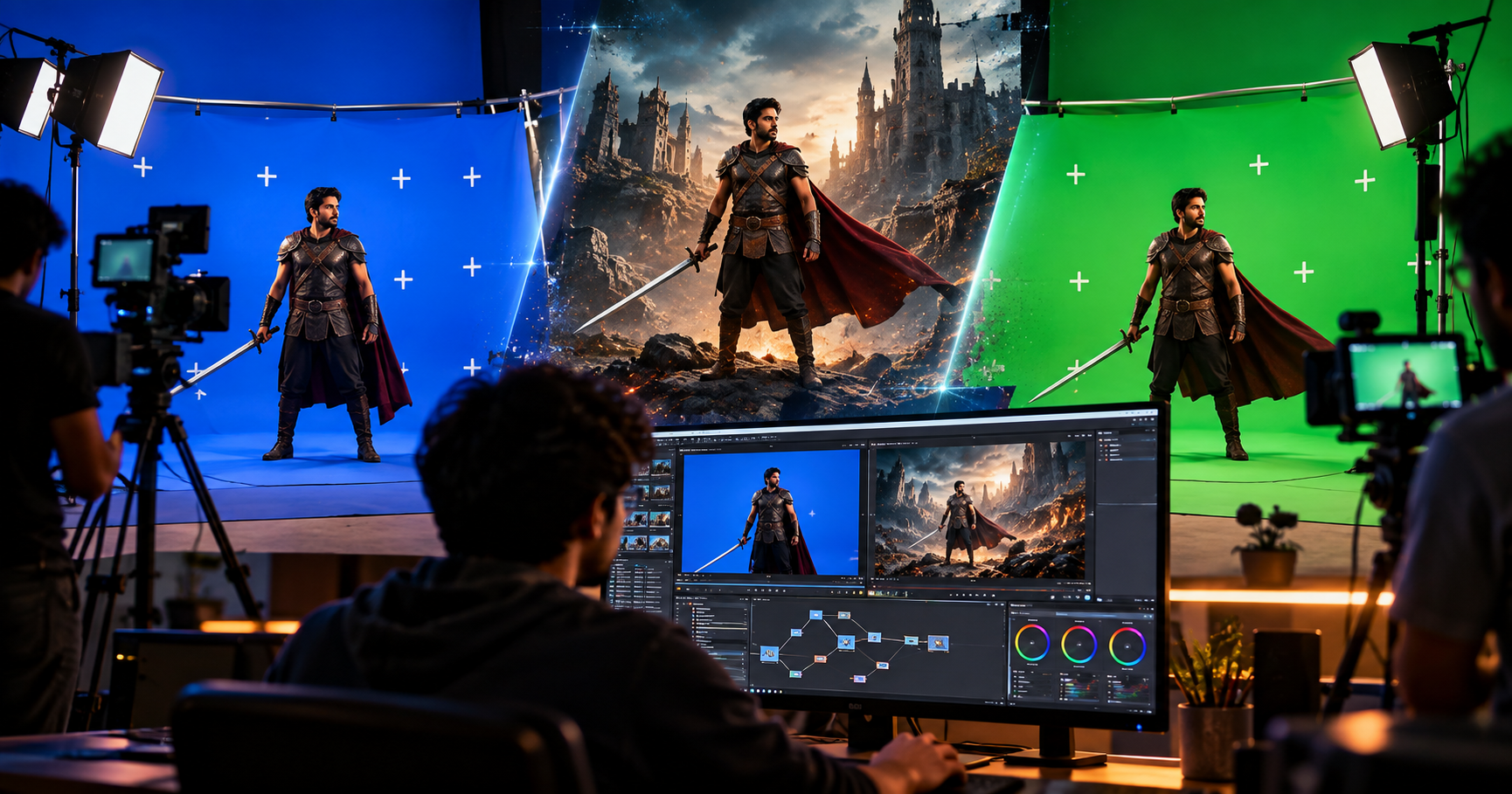
If you’ve ever watched a superhero soar through the sky, a weather reporter point at a moving storm map, or a fantasy creature battle it out in a mythical land, chances are you’ve seen the magic of chroma keying at work. Two colors dominate this world of visual effects: blue and green. But have you ever wondered why filmmakers choose one over the other? Or what actually happens behind the scenes to turn a plain colored backdrop into a breathtaking cinematic universe?
This is exactly the kind of question aspiring VFX artists explore when they enroll in a Visual Effects Course in Kolkata. Understanding the difference between blue screen and green screen isn’t just academic trivia — it’s a foundational skill that separates amateur compositing from professional-grade visual effects work. In this blog, we’ll break down everything you need to know about Blue Screen Vs Green Screen, and how a structured VFX course can help you master these techniques from scratch.
What Is Chroma Keying, Really?
Before diving into the blue vs green debate, it’s important to understand the underlying technology: chroma keying. Chroma keying is a post-production technique where a specific color (or a narrow range of colors) is digitally removed from a video frame and replaced with another image or video. This is how actors appear to be standing on the moon, flying through space, or walking through a city that doesn’t actually exist.
The process relies on the color being as uniform, evenly lit, and distinct from the subject’s skin tone, clothing, and props as possible. This is precisely why blue and green were chosen as the industry standards — they’re colors rarely found in human skin tones, hair, or typical wardrobe choices, which makes them easy to isolate and remove digitally.
Blue Screen: The Original Standard
Blue screens were the first widely adopted chroma key color, especially in traditional film production. Here’s why blue became the go-to choice for decades:
Advantages of Blue Screen:
- Film-friendly properties: Blue screens work exceptionally well with traditional film stock, which is less sensitive to blue light spillage compared to digital sensors.
- Better for dark scenes: Because blue has less luminance than green, it tends to blend more naturally in low-light or nighttime shots, reducing the “glow” effect around the subject.
- Ideal for certain skin tones: Blue contrasts well against most skin tones, making it a strong choice for close-up shots where precision matters.
- Historical reliability: Big-budget films throughout the 20th century relied heavily on blue screens, and much of the older VFX pipeline software was optimized around this color.
Disadvantages of Blue Screen:
- Blue spill (unwanted blue reflections on the subject) can be tricky to remove, especially on shiny surfaces or light-colored clothing.
- Digital cameras are generally less sensitive to blue than green, meaning you often need more lighting to get a clean key, which increases production costs.
- Not ideal if the actor is wearing blue clothing or has blue eyes, as it can create keying errors.
Green Screen: The Digital Era Favorite
With the rise of digital cameras and modern film production, green screens have largely taken over as the industry standard — especially in television, YouTube content, gaming streams, and independent filmmaking.
Advantages of Green Screen:
- Higher luminance: Green is brighter than blue, meaning digital camera sensors — which are naturally more sensitive to green light — can capture a cleaner, crisper key with less lighting required.
- Cost-effective: Because less lighting equipment is needed to achieve a good key, green screens are generally more budget-friendly, making them popular among students, YouTubers, and small studios.
- Cleaner edges: Fine details like hair strands and semi-transparent objects (smoke, glass, fabric) key out more precisely against green due to the higher contrast in luminance.
- Widely supported software: Most modern VFX and editing software, including After Effects, Nuke, and DaVinci Resolve, are optimized for green screen keying by default.
Disadvantages of Green Screen:
- Green spill is a common issue, particularly on actors with lighter or pale skin tones, giving an unnatural green tinge.
- Not suitable if the subject is wearing green clothing, accessories, or has green-colored props.
- In very dark or moody scenes, green can sometimes appear too vibrant, requiring extra correction work in post-production.
So, Which One Should You Use?
The truth is, there’s no universal “better” choice — it entirely depends on the context of your shoot. Here’s a quick breakdown:
| Scenario | Recommended Screen |
|---|---|
| Digital/DSLR camera shoots | Green Screen |
| Low-light or night scenes | Blue Screen |
| Budget-conscious productions | Green Screen |
| Traditional film stock | Blue Screen |
| Subject wearing dark clothing | Green Screen |
| Subject wearing light/pale clothing | Blue Screen |
Professional VFX studios often keep both setups available and choose based on wardrobe, lighting conditions, and the final creative vision. This is a critical decision-making skill that students learn hands-on during a well-structured Visual Effects Course in Kolkata, where practical shoots and real compositing software give learners direct experience with both techniques.
Why Learning Chroma Keying Matters for Aspiring VFX Artists
Understanding blue screen vs green screen isn’t just about picking a backdrop color — it’s about mastering the entire pipeline of digital compositing, lighting setup, camera settings, and post-production correction. Here’s what a comprehensive vfx course typically covers around this topic:
- Lighting Fundamentals: How to evenly light a chroma key backdrop to avoid shadows and hotspots that make keying difficult.
- Camera Settings: Understanding exposure, white balance, and compression settings that affect how clean your key will be.
- Software Mastery: Hands-on training in industry-standard tools like Adobe After Effects, Blackmagic Fusion, and Nuke for pulling clean keys.
- Spill Suppression: Techniques to remove unwanted color reflections from the subject without degrading image quality.
- Edge Refinement: Learning to preserve fine details like hair and motion blur while removing the background cleanly.
- Color Grading & Matching: Ensuring the foreground subject blends seamlessly with the new background in terms of lighting direction, color temperature, and shadows.
These are not skills you can pick up from watching a few YouTube tutorials — they require structured, hands-on training with real equipment, real footage, and expert guidance.
Why Choose Kolkata for Your VFX Education?
Kolkata has steadily emerged as a growing hub for creative and media education in Eastern India. The city’s rich cultural heritage combined with an increasing demand for skilled digital artists in film, advertising, gaming, and animation industries makes it an excellent place to build a career in visual effects.
A quality Visual Effects Course in Kolkata typically offers:
- Industry-relevant curriculum covering compositing, rotoscoping, matte painting, 3D integration, and of course, chroma keying techniques like blue and green screen work.
- Practical, project-based learning where students work on real footage rather than just theoretical concepts.
- Access to professional-grade software and hardware, including render farms and licensed VFX tools.
- Portfolio development support, helping students build a demo reel that showcases their compositing and keying skills to potential employers.
- Placement assistance connecting graduates with studios, production houses, and freelance opportunities in animation, film, and advertising.
Whether you’re a complete beginner or someone with a background in photography, filmmaking, or graphic design looking to specialize, a well-designed vfx course can fast-track your journey into this exciting industry.
Career Opportunities After Learning VFX
Once you’ve mastered techniques like chroma keying, compositing, and digital effects, a world of career opportunities opens up:
- Compositing Artist: Specializing in blending live-action footage with digital elements seamlessly.
- Rotoscoping Artist: Creating precise mattes for scenes where traditional keying isn’t possible.
- VFX Supervisor: Overseeing the visual effects pipeline for films, commercials, or web series.
- Motion Graphics Designer: Using compositing skills for branded content, title sequences, and advertisements.
- Freelance VFX Artist: Working independently with production houses, YouTubers, and content creators who need professional-grade effects.
The demand for skilled VFX professionals continues to grow as OTT platforms, YouTube content, gaming cinematics, and regional film industries expand rapidly across India.
Final Thoughts
The debate between blue screen vs green screen ultimately comes down to understanding your specific production needs — lighting conditions, camera equipment, subject wardrobe, and the final creative outcome you’re aiming for. Both colors have stood the test of time for good reason, and knowing when and how to use each one is a mark of a skilled visual effects artist.
If you’re serious about building a career in this exciting field, investing in a proper Visual Effects Course in Kolkata will give you the hands-on training, industry exposure, and technical foundation you need to succeed. From mastering chroma keying to advanced 3D compositing, a comprehensive vfx course equips you with everything required to turn your creative vision into stunning, professional-grade visuals.
So the next time you watch your favorite film and wonder how that impossible scene was created, remember — it likely started with a simple colored screen, and a skilled artist who knew exactly how to make magic happen behind it.

Pooja Sharma is a creative education content writer who creates engaging articles on career guidance, skill development, and learning opportunities to help students make informed decisions.