In today’s digital world, websites are everywhere, from business portals and e-commerce stores to cybersecurity dashboards and educational platforms. If you dream of building websites or starting a career in technology, learning HTML and CSS is the perfect first step.
Whether you are a student planning your future career, a beginner interested in coding, or a parent looking for valuable career options for your child, mastering HTML and CSS can open doors to numerous opportunities in web development, software engineering, cybersecurity, and digital design. This guide will explain everything you need to know about learning HTML and CSS, the skills you will gain, career opportunities, and how to choose the right course.
What Is HTML and CSS?
HTML and CSS are the fundamental technologies used to create websites. HTML structures the content of a webpage, while CSS enhances its appearance and layout. Together, they help developers build attractive and functional websites.
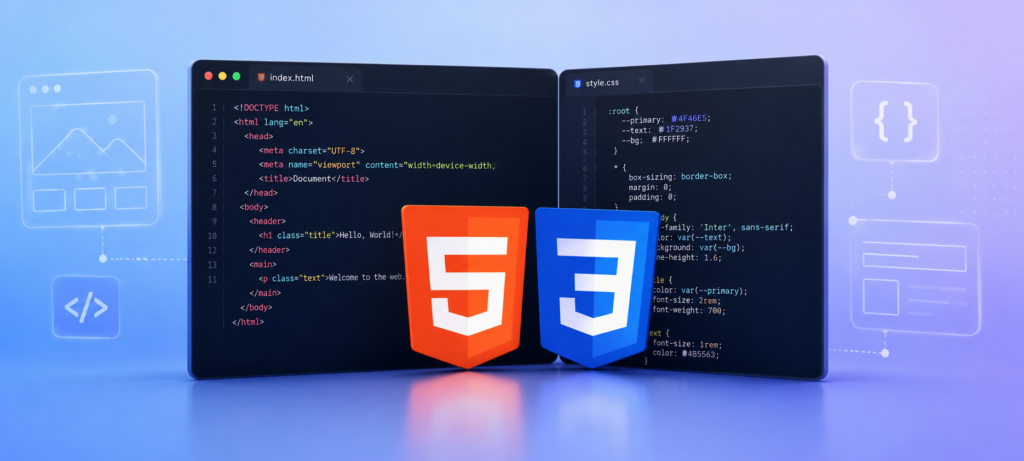
HTML (HyperText Markup Language)
HTML provides the structure of a webpage. It helps developers define elements such as:
- Headings
- Paragraphs
- Images
- Videos
- Forms
- Navigation menus
- Tables
Think of HTML as the skeleton of a website that organizes content in a meaningful way.
CSS (Cascading Style Sheets)
CSS controls the appearance and design of web pages. It allows developers to customize:
- Colors
- Fonts
- Layouts
- Animations
- Responsive designs
- Spacing and alignment
If HTML creates the structure, CSS brings the website to life with an attractive visual design.
Together, HTML and CSS form the foundation of front-end web development and are essential skills for anyone entering the tech industry.
Why Learn HTML and CSS in 2026?
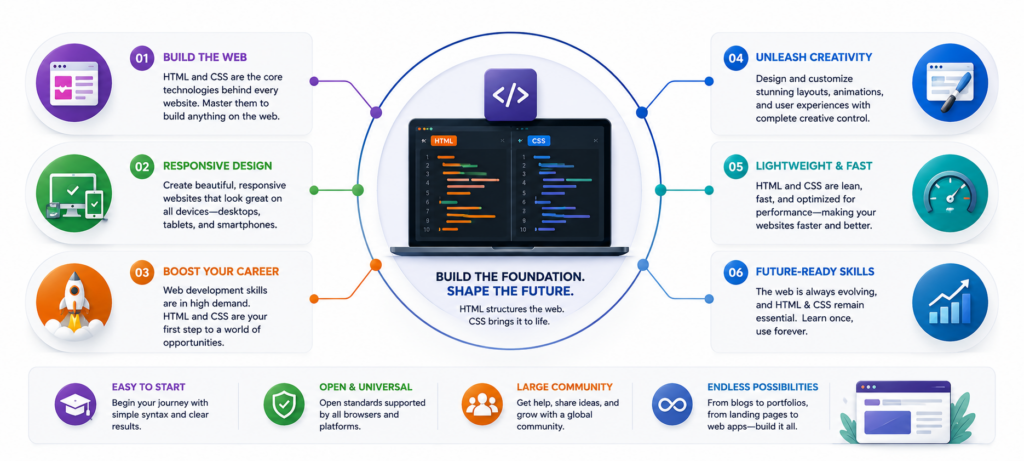
As the digital world continues to grow, websites remain the foundation of online communication, business, and technology. Whether you want to become a web developer, cybersecurity professional, or software engineer, learning HTML and CSS is an excellent starting point. These technologies are beginner-friendly, highly relevant, and provide the essential skills needed to create modern websites and web applications. In 2026, HTML and CSS remain among the most valuable skills for students entering the tech industry.
Learning HTML and CSS offers several benefits:
Easy to Learn for Beginners
HTML and CSS are among the easiest coding languages to learn. Their simple syntax makes them ideal for students with no prior programming experience, helping beginners gain confidence in coding.
High Demand in the Job Market
Businesses of all sizes need websites to establish their online presence. As a result, professionals with HTML and CSS skills are in demand across industries, creating numerous job opportunities.
Foundation for Advanced Web Development
HTML and CSS serve as the building blocks for learning advanced technologies such as JavaScript, React, Angular, and full-stack development. A strong foundation makes it easier to learn these technologies later.
Supports Freelancing Opportunities
Students can use HTML and CSS skills to build websites, landing pages, and portfolios for clients. This creates opportunities to earn income through freelancing while gaining practical experience.
Useful for Cybersecurity Professionals
Understanding website structure and design helps cybersecurity professionals analyze web applications, identify vulnerabilities, and perform security assessments more effectively.
Opens Multiple Career Paths
Learning HTML and CSS can lead to careers in web development, UI/UX design, front-end development, digital marketing, and many other technology-related fields, making it a versatile and future-ready skill.
What Will You Learn in an HTML and CSS Full Course?
An HTML and CSS Full Course is designed to build a strong foundation in web development. From creating basic web pages to designing responsive and visually appealing websites, the course covers essential concepts that are widely used in the industry. By the end of the training, students gain practical skills to develop professional websites and prepare for advanced web development technologies.
A comprehensive HTML and CSS Full Course covers both basic and advanced concepts.
HTML Fundamentals
Learn the core structure of a webpage using HTML tags and elements. This includes creating headings, paragraphs, lists, links, images, tables, and forms to organize content effectively.
CSS Styling and Design
Understand how to enhance the appearance of websites using CSS. You’ll learn to customize colors, fonts, backgrounds, spacing, and layouts to create attractive web pages.
Website Layout Creation
Discover how to structure web pages using modern layout techniques such as Flexbox and CSS Grid. These tools help create clean, organized, and responsive website designs.
Responsive Web Design
Learn how to build websites that automatically adjust to different screen sizes, including desktops, tablets, and smartphones, ensuring an optimal user experience across all devices.
Forms and User Input Elements
Gain the skills to create interactive forms such as contact forms, registration forms, and login pages that allow users to submit information securely and efficiently.
Navigation Menus and Website Structure
Learn how to create user-friendly navigation systems and organize website content to improve accessibility and enhance the browsing experience.
CSS Animations and Transitions
Explore animation effects and transitions that make websites more engaging and interactive. These features help improve user experience and website aesthetics.
Real-World Projects and Portfolio Development
Apply your knowledge by building practical projects such as personal portfolios, landing pages, and business websites. These projects help showcase your skills to potential employers.
Industry-Ready Web Development Skills
Develop the practical coding and design skills required for entry-level web development roles. The course prepares students for careers in web design, front-end development, and related technology fields.
Google recommends responsive design as a best practice for modern websites, making this a critical skill for aspiring developers.
Essential Skills You’ll Master with an HTML and CSS Course
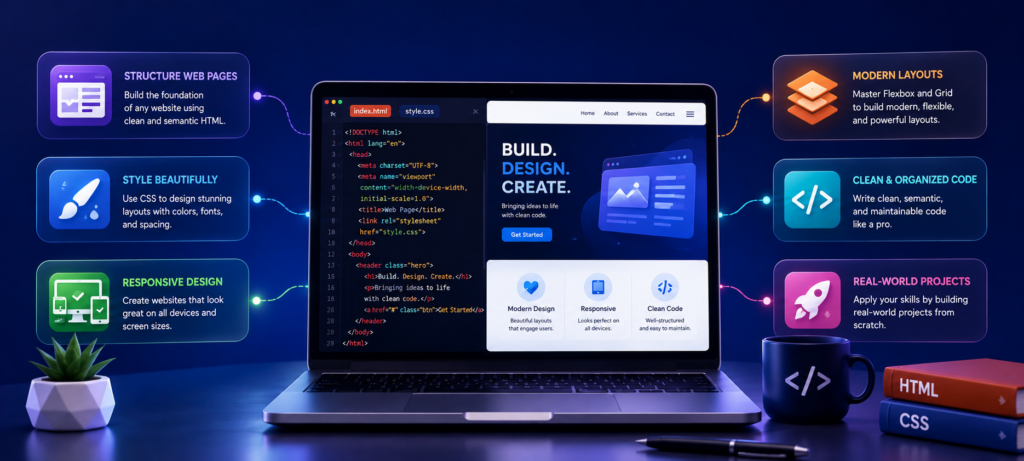
Completing an HTML and CSS Full Course equips students with essential web development skills that are highly valued in today’s digital world. These skills help learners create professional websites, improve problem-solving abilities, and build a strong foundation for advanced programming and web technologies.
Completing a professional course helps students develop practical industry skills.
Website Development Skills
Learn how to create fully functional web pages using HTML and CSS. You’ll gain the ability to structure content and design attractive websites from scratch.
Responsive Design Expertise
Develop the skills to build websites that adapt seamlessly to different screen sizes, ensuring a smooth user experience on desktops, tablets, and smartphones.
Front-End Development Knowledge
Gain a strong understanding of front-end development concepts, allowing you to create visually appealing and user-friendly website interfaces.
UI Design Fundamentals
Learn basic user interface (UI) design principles such as layout organization, typography, color selection, and visual hierarchy to improve website aesthetics.
Problem-Solving and Debugging Skills
Understand how to identify and fix coding errors, layout issues, and styling problems, helping you become a more efficient and confident developer.
Form Creation and User Interaction
Learn to create interactive forms, buttons, navigation menus, and other website elements that enhance user engagement and functionality.
Website Optimization Techniques
Gain knowledge of best practices for improving website performance, loading speed, and overall user experience.
Project Development Experience
Work on real-world projects such as portfolios, landing pages, and business websites, helping you build a professional portfolio that showcases your skills.
Cross-Browser Compatibility Skills
Learn how to ensure websites function properly across different browsers such as Chrome, Firefox, Edge, and Safari, providing a consistent user experience.
Foundation for Advanced Technologies
Build a strong base for learning advanced web technologies like JavaScript, React, Angular, Full-Stack Development, and even Cybersecurity-related web concepts.
Career Opportunities After Learning HTML and CSS
Learning HTML and CSS can open the door to a wide range of career opportunities in the technology and digital industries. These foundational web development skills are highly valued by employers and provide a strong starting point for students interested in web design, front-end development, freelancing, and other tech-related careers. With continuous demand for websites and digital platforms, HTML and CSS remain essential skills in today’s job market.
HTML and CSS skills are valuable across multiple industries.
Web Developer
Web developers use HTML and CSS to create and maintain websites. They design webpage structures, ensure functionality, and help businesses build a strong online presence.
Front-End Developer
Front-end developers focus on creating the visual and interactive elements of websites. They use HTML, CSS, and other technologies to deliver engaging user experiences across different devices.
UI Developer
UI (User Interface) developers work on the look and feel of websites and applications. They transform design concepts into functional and visually appealing interfaces that enhance user satisfaction.
Web Designer
Web designers create attractive website layouts, choose color schemes, and organize content effectively. HTML and CSS help them turn creative ideas into professional website designs.
Freelance Web Developer
Freelancers can offer website design and development services to clients worldwide. This career path provides flexibility, independent work opportunities, and the potential to earn income from multiple projects.
Email Template Developer
Many companies require responsive email templates for marketing campaigns. HTML and CSS skills allow developers to create professional email designs that display correctly across various email platforms.
WordPress Developer
HTML and CSS knowledge is valuable for customizing WordPress websites, themes, and layouts. WordPress developers help businesses create and manage user-friendly websites efficiently.
Digital Marketing Specialist
Digital marketers with HTML and CSS skills can optimize landing pages, improve website performance, and enhance online campaigns, making them more effective and user-friendly.
Cybersecurity Professional
Understanding HTML and CSS helps cybersecurity professionals analyze website structures and identify potential web application vulnerabilities, supporting better security assessments and testing.
Full-Stack Developer (Future Growth Path)
HTML and CSS serve as the foundation for becoming a full-stack developer. By learning additional technologies such as JavaScript, databases, and back-end programming, students can advance into more specialized and higher-paying development roles.
How to Choose the Right HTML and CSS Training Program
Choosing the right HTML and CSS training program is an important step toward building a successful career in web development. With many courses available online and offline, students should focus on programs that offer practical learning, industry-relevant skills, and career support. A well-structured training program not only teaches coding fundamentals but also helps learners gain hands-on experience and confidence to work on real-world projects.
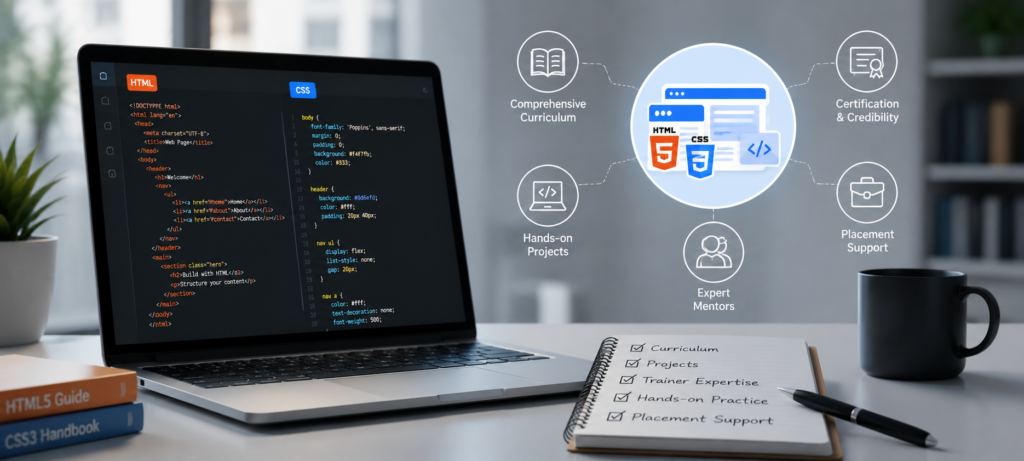
Before enrolling, evaluate the following factors:
Comprehensive Curriculum
A good training program should cover all essential topics, including HTML5, CSS3, responsive web design, Flexbox, Grid, and basic website development. A complete curriculum ensures students build a strong foundation and stay aligned with industry standards.
Hands-On Project Training
Practical learning is crucial for mastering web development skills. Choose a course that includes live projects, assignments, and portfolio-building activities so you can apply your knowledge in real-world scenarios.
Experienced Trainers
Learning from industry professionals can make a significant difference in your understanding of HTML and CSS. Experienced trainers provide valuable insights, practical tips, and guidance based on real industry experience.
Industry-Recognized Certification
A certification from a reputable institute can enhance your resume and demonstrate your skills to potential employers. It also adds credibility to your profile when applying for internships or jobs.
Placement and Career Support
Look for training programs that offer career assistance, interview preparation, resume-building sessions, and placement support. These services can help students transition smoothly from learning to employment.
Flexible Learning Options
Many students prefer courses that offer both online and classroom learning. Flexible schedules allow learners to study at their own pace while balancing academics or other commitments.
Student Reviews and Success Stories
Before enrolling, check reviews, testimonials, and success stories from previous students. Positive feedback often indicates quality training, effective teaching methods, and good career outcomes.
Updated Course Content
Web development technologies evolve regularly. Ensure the training program includes the latest HTML and CSS features, modern design practices, and responsive development techniques to keep your skills relevant in the job market.
FAQs
HTML and CSS can help you secure entry-level web design roles. However, learning JavaScript and modern frameworks can expand career opportunities significantly.
Most beginners can learn the fundamentals within 1–3 months with regular practice and project-based learning.
No. HTML and CSS are beginner-friendly technologies and require no prior coding knowledge.
Yes. Understanding website structure and design helps cybersecurity professionals analyze web applications and identify vulnerabilities.
Beginners can create portfolio websites, landing pages, blogs, business websites, and responsive web pages to strengthen their skills.
Conclusion
An HTML and CSS Full Course is one of the best starting points for anyone looking to enter the technology industry. These foundational skills enable students to build websites, understand web technologies, and prepare for advanced fields such as front-end development, full-stack development, and cybersecurity.
Whether your goal is to become a web developer, strengthen your cybersecurity knowledge, or launch a freelance career, investing time in learning HTML and CSS can provide long-term benefits. Start practicing today, build real-world projects, and take the first step toward a successful technology career. The sooner you begin your HTML and CSS journey, the closer you’ll be to achieving your professional goals.

Farhat Jabeen is passionate about documenting the student enrollment journey in the fields of technology, design, and digital media. Through her writing, she shares practical guidance, industry insights, and real-world learning experiences that help aspiring students confidently navigate their path toward creative and technology-driven careers. Her goal is to empower learners with the knowledge they need to choose the right educational journey.