Think about the last time you picked one brand over another without reading a single review. The packaging, the logo, the colours on the shelf probably made the call. Someone designed that moment on purpose.
Graphic design is the craft of communicating through visuals: type, colour, layout, imagery. If you are between 18 and 30 and wondering whether a graphic design course is worth your time, the short answer is yes, provided you want a skill that nearly every business needs. Below is why design matters, where it leads, and how to judge a course.
What graphic design actually does
Design is not decoration. A good designer solves a communication problem: what should the viewer notice first, what should they feel, and what should they do next?
A hospital’s patient leaflet, a food delivery app’s menu screen and a college festival poster all answer those questions differently. The tools are shared; the thinking is what separates a trained designer from someone who simply knows software.
Why graphic design is important
It builds first impressions. People judge a business in seconds. A consistent logo, clean layout and readable typography signal that a company is organised and trustworthy, long before anyone reads the copy.
It makes information easier to absorb. Infographics, brochures and e-books turn dense material into something a reader can scan. Hierarchy (size, contrast, spacing) tells the eye where to go.
It creates brand memory. Recognisable colours and shapes help customers find a brand again among hundreds of competitors, on a shelf or a social feed.
It keeps messaging consistent. A brand appears on street hoardings, Instagram feeds, product boxes and landing pages. Designers set shared rules for colour, type and spacing so customers recognise it wherever they meet it. Designers build the systems that make that possible.
It opens more than one career path. Design skills carry into branding, packaging, publishing, motion graphics and interface design, so you are not locked into a single job title.
Where graphic designers work
Moople’s career map for its graphic design program lists these sectors and roles:
| Sector | Example roles |
| Advertising and marketing | Brand designer, art director, marketing designer |
| Publishing | Editorial designer, layout artist, typography specialist |
| Technology and software | UI/UX designer, icon designer, product designer |
| Retail and e-commerce | Packaging designer, e-commerce designer, visual merchandiser |
| Education | Infographic designer, e-learning designer |
| Film and television | Motion graphics designer, title designer |
The takeaway: design is a skill that travels between industries. That matters if you are unsure which field you want to settle in.
What a good graphic design course should cover
Not every course is built the same. Before you enrol, check for these:
- Fundamentals first. Colour, typography, composition and layout, taught before software shortcuts.
- Real briefs. Logo systems, brochures, packaging and social campaigns, not just exercises on sample files.
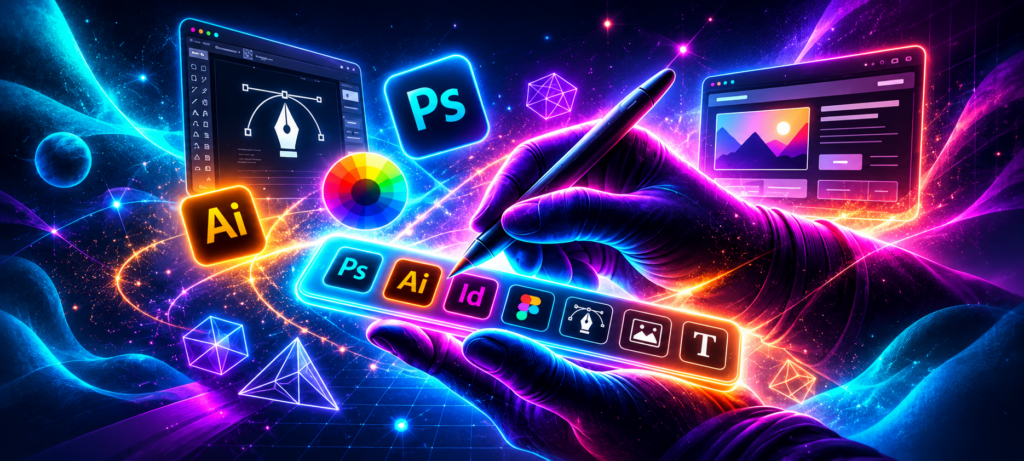
- Industry tools. Photoshop, Illustrator, InDesign, CorelDRAW and Figma remain standard in studios.
- Motion basics. Brands increasingly want animated logos and short explainer videos.
- AI literacy. Prompting well and editing AI output with a designer’s eye is now a practical skill.
- A portfolio at the end. Employers hire on work samples more than certificates.
How Moople structures its program
According to the program page, Moople’s Advanced Graphic Design & AI course runs 192 hours across eight modules:
- Vector art and logo design (Illustrator)
- Image retouching and AI image editing (Photoshop)
- Outdoor, social media and print advertisement design
- Corporate identity, brochure and packaging design (CorelDRAW)
- Digital publishing and e-book design (InDesign)
- Desktop and mobile website layout (Figma)
- Explainer and corporate video creation (After Effects)
- Logo animation and brand promotion videos (After Effects and Premiere Pro)
That sequence moves from identity, to print and publishing, to screen layouts, to motion, which mirrors how real brand projects tend to grow. Moople also offers a shorter four-month Graphic Design and AI option for students who want a faster start.
Choosing a graphic design course in Kolkata
Kolkata has plenty of options, so compare on substance:
- Eligibility. Moople asks for a 12th pass from a recognised board, with 50% aggregate preferred. The page lists no design background or portfolio as a condition, so beginners can apply
- Location. Moople lists centres at Chowringhee, Jodhpur Park, New Alipore, Sealdah, Baguiati, Sonarpur, Barasat, Serampore, Chandannagar and Berhampore, so most students can find one reasonably close. Confirm the course is offered at your preferred branch.
- Faculty. Ask who teaches and how long they have worked professionally. Moople’s page lists graphics and web faculty with 7 to 18 years of experience.
- Placement support. Ask what it actually involves: portfolio reviews, interview preparation, recruiter connections. Treat any vague promise with caution.
- Fees and payment. Ask for the full fee in writing and what instalment options exist.
A practical tip: visit a centre, look at student work from the last batch, and ask to sit in on a class. Thirty minutes will tell you more than a brochure.
Frequently asked questions
1. Is a graphic design course worth it?
It is if you practise. A course gives you structure, feedback and tools, but your portfolio determines how far it takes you.
2. How many months should I plan for before I can work as a designer?
Basics can be picked up in a few months. Professional comfort usually takes longer. Moople’s advanced program is 192 hours, and its shorter AI-focused course is four months.
3. Which software will I learn?
At Moople: Photoshop, Illustrator, InDesign, CorelDRAW, Figma, After Effects and Premiere Pro.
4.Will AI replace graphic designers?
AI speeds up certain tasks, but clients still need someone to judge, direct and refine the result. Designers who understand both craft and AI tools are better placed than those who ignore either.
5.Can I study graphic design after 12th?
Yes. A 12th pass is the stated entry requirement for Moople’s course.
6. What jobs can I get after a graphic design course?
Brand designer, layout artist, packaging designer, social media designer, motion graphics designer and UI-focused roles are all common routes. What you land will hinge on the quality of the work you show and how consistently you practise.
Conclusion
Graphic design shapes how people trust, understand and remember brands, and that is why the skill stays in demand across industries. If you are ready to move from admiring good design to making it, a structured graphic design course in Kolkata gives you the fundamentals, the software and a portfolio to show for it.
Explore the full curriculum, branches, and admission details on Moople’s graphic design course page, or book a free counselling session to see which program fits you.
Pooja Sharma is a creative education content writer who creates engaging articles on career guidance, skill development, and learning opportunities to help students make informed decisions.