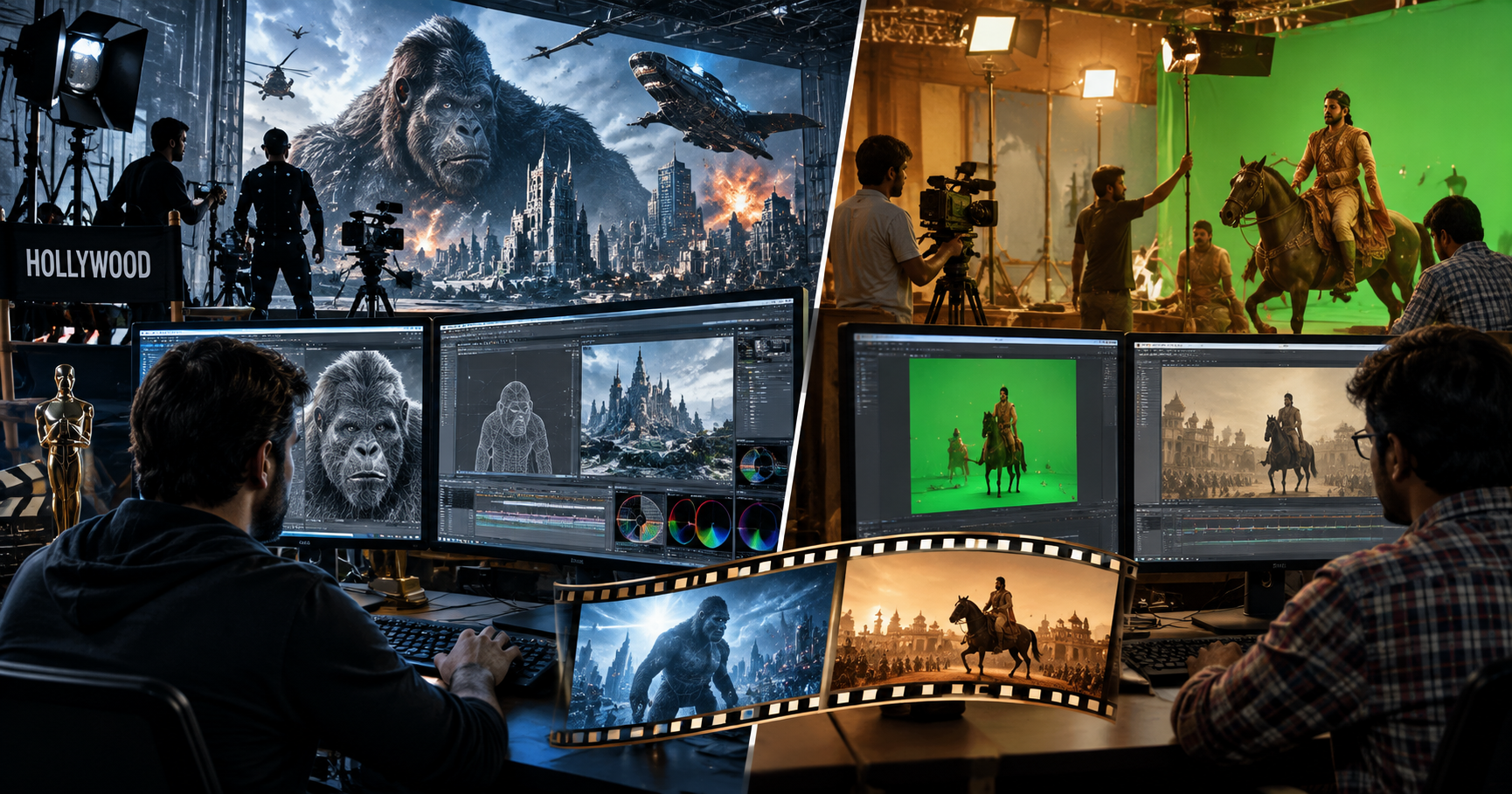
VEvery time a big-budget film releases, audiences can’t help but compare the visual effects of Hollywood blockbusters with Bollywood productions. From towering superhero battles to breathtaking fantasy worlds, Hollywood has consistently set the benchmark for cinematic visual effects. Bollywood, on the other hand, despite producing some visually ambitious films in recent years, still struggles to match that same level of polish and realism.
So why exactly does this gap exist? Is it a matter of talent, technology, budget, or something deeper rooted in the industry’s approach to filmmaking? In this blog, we’ll break down the real reasons behind this disparity and explore how aspiring artists can bridge this gap by pursuing the right education, such as a VFX course or even a BSc in VFX filmmaking.
The Budget Gap: Money Talks in VFX
One of the most obvious reasons Hollywood VFX looks superior is the sheer difference in production budgets. A single Marvel or DC film can have a VFX budget that rivals the entire production cost of several Bollywood films combined. Films like Avatar, Avengers: Endgame, or Dune spend hundreds of millions of dollars purely on effects, employing thousands of artists across multiple studios worldwide.
Bollywood films, even the big-ticket ones, often work with a fraction of that budget. When the money isn’t there, studios are forced to cut corners, rush timelines, or rely on cheaper outsourced VFX houses that may not have the same level of expertise or resources as top-tier Hollywood studios like Industrial Light & Magic, Weta Digital, or Framestore.
Time Constraints and Rushed Production Schedules
Hollywood productions typically allow years of pre-production, principal photography, and post-production before a film hits theaters. This extended timeline gives VFX artists the breathing room they need to refine shots, iterate on designs, and correct mistakes.
Bollywood, in contrast, often works under tighter deadlines dictated by release dates, festival schedules, or star availability. VFX teams are frequently brought in late in the process and given unrealistic turnaround times, which inevitably affects the final quality. Rushed compositing, unfinished renders, and inconsistent lighting are common results of this compressed workflow.
Access to Advanced Technology and Tools
Hollywood studios invest heavily in cutting-edge software, motion capture technology, render farms, and proprietary tools developed in-house. Studios like Weta Digital built entirely new software systems just to create realistic creatures and environments for films like Avatar and the Planet of the Apes series.
While Bollywood does use industry-standard software such as Maya, Houdini, Nuke, and Blender, access to the same scale of hardware infrastructure, render farms, and specialized proprietary tools is limited. This technological gap directly impacts the realism and complexity that can be achieved within a given timeframe.
The Talent Pipeline and Skill Development
Perhaps the most overlooked factor is talent development. Hollywood benefits from decades of institutionalized training through globally recognized film schools, specialized VFX academies, and structured career pipelines. Artists there often begin with a strong foundational education, whether through a dedicated VFX course or a formal degree program, before entering the industry.
India has a massive pool of raw talent, but access to world-class training has historically been limited. This is changing rapidly, though. Institutes across India now offer specialized programs, including a BSc in VFX filmmaking, that combine theoretical knowledge with hands-on production experience. These programs teach compositing, 3D modeling, rotoscoping, matte painting, motion graphics, and simulation work, giving students the same foundational skills that Hollywood artists rely on.
The difference isn’t a lack of talent in India; it’s a matter of structured training, mentorship, and industry exposure at scale.
Outsourcing and the “Invisible” Contribution of Indian Artists
Here’s an interesting twist: many of the VFX shots you admire in Hollywood films are actually created by Indian artists. Studios like DNEG, Prime Focus, Tata Elxsi, and MPC have offices in Mumbai, Hyderabad, and Bangalore, where thousands of skilled Indian VFX artists work on Hollywood productions every single day.
This means the talent gap isn’t really about capability, it’s about how that talent is utilized. When Indian artists work under Hollywood’s budgets, timelines, and creative direction, they produce work indistinguishable from any other global studio. But when the same artists work on Bollywood productions with limited resources and compressed schedules, the output naturally suffers.
Storytelling and Creative Priorities
Another factor worth mentioning is how VFX is integrated into storytelling. Hollywood often builds entire narratives around what their visual effects can achieve, planning shots meticulously during pre-visualization stages. Every VFX shot is storyboarded, tested, and refined before filming even begins.
Bollywood has traditionally prioritized music, drama, and star power over technical spectacle, though this is shifting with films like Brahmastra, RRR, and Kalki 2898 AD pushing visual boundaries. As more filmmakers begin treating VFX as a core storytelling tool rather than an afterthought, quality is expected to improve significantly.
The Changing Landscape: Bollywood Is Catching Up
It’s important to note that the gap is narrowing. Films like RRR won international acclaim, including an Oscar, partly due to its impressive action sequences and effects work. Indian VFX studios are increasingly recognized globally, and production houses are beginning to allocate larger budgets toward post-production quality.
As streaming platforms create demand for higher production values and international audiences, Indian filmmakers are investing more in effects-driven storytelling. This shift is also creating massive career opportunities for young artists who want to enter the field.
How Aspiring Artists Can Bridge the Gap
If you’re passionate about visual effects and want to be part of closing this quality gap, the path starts with proper education. Enrolling in a well-structured VFX course helps you build core technical skills like 3D modeling, texturing, lighting, compositing, and simulation, all essential building blocks for a career in this industry.
For those looking for a more comprehensive academic path, pursuing a BSc in VFX filmmaking offers a deeper, degree-level understanding of both the technical and creative aspects of visual effects. These programs typically cover:
- Fundamentals of 3D animation and modeling
- Compositing and rotoscoping techniques
- Motion graphics and simulation
- Industry-standard software training (Maya, Nuke, Houdini, After Effects)
- Portfolio-building projects and internships
- Exposure to real-world production pipelines
A formal degree combined with hands-on practice gives students an edge when applying to top studios, whether in India or abroad. Many graduates from such programs go on to work on major international productions, contributing to the very Hollywood films audiences admire.
Conclusion
The gap between Hollywood and Bollywood VFX isn’t about a lack of Indian talent, it’s a combination of budget constraints, compressed production timelines, limited access to cutting-edge technology, and how VFX is prioritized within the filmmaking process. Indian artists already prove their world-class capabilities every day while working on Hollywood productions through global outsourcing studios.
As Bollywood continues to invest more in post-production and treats visual effects as a storytelling essential rather than an afterthought, this gap will keep shrinking. For aspiring artists who want to be part of this transformation, now is the perfect time to invest in the right education. Whether through a focused VFX course or a full BSc in VFX filmmaking, building strong technical foundations today can open doors to a thriving career in tomorrow’s film industry, whether that’s in Mumbai, Hollywood, or anywhere else in the world.
FAQs
Q1. Why does Hollywood have better VFX than Bollywood?
Hollywood benefits from significantly larger budgets, longer production timelines, advanced proprietary technology, and decades of institutionalized training pipelines, all of which contribute to higher-quality visual effects.
Q2. Are Indian VFX artists less skilled than Hollywood artists?
No. Indian VFX artists work on many major Hollywood productions through global studios like DNEG and Prime Focus. The skill level is comparable; the difference lies in budgets, timelines, and resources available for domestic productions.
Q3. Is Bollywood improving its VFX quality?
Yes. Films like RRR, Brahmastra, and Kalki 2898 AD demonstrate a clear shift toward higher production values and more ambitious visual effects work.
Q4. What skills do I need to start a career in VFX?
Core skills include 3D modeling, compositing, texturing, lighting, rotoscoping, and simulation, along with proficiency in industry-standard software like Maya, Nuke, and Houdini. A structured VFX course can help you build these skills systematically.

Pooja Sharma is a creative education content writer who creates engaging articles on career guidance, skill development, and learning opportunities to help students make informed decisions.