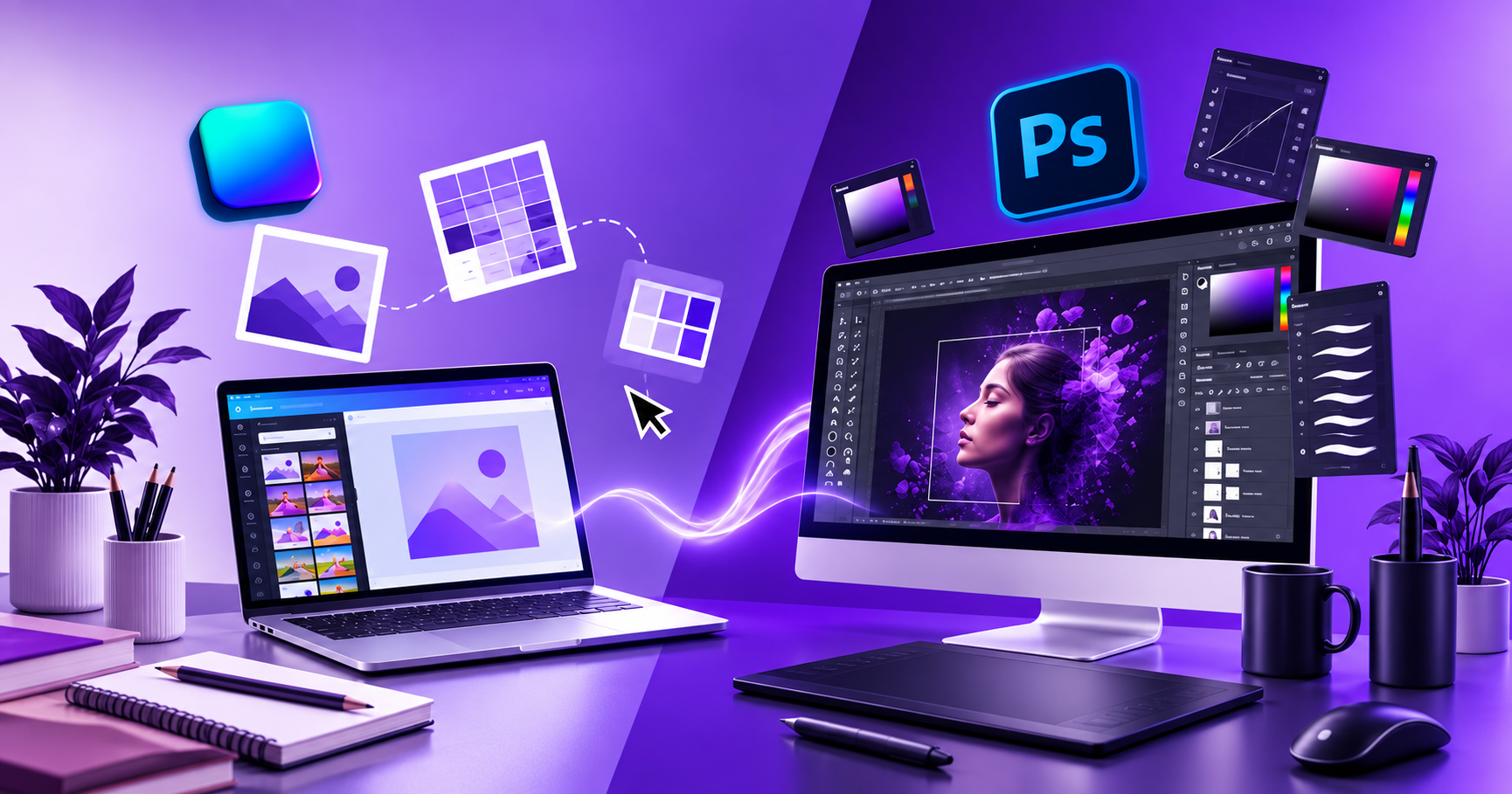
Graphic design and web design used to live in separate worlds. One dealt with print — posters, brochures, packaging, branding. The other dealt with screens, code, and user interaction. For a long time, designers happily picked a lane and stayed in it. But that division has been quietly dissolving for years, and today, the line between a “graphic designer” and a “web designer” is thinner than ever.
If you’re a graphic designer who has ever felt a pang of curiosity about how your designs actually get built into a website, or if you’ve watched a project slip out of your hands the moment it moved from Photoshop to a live site, this is worth thinking about seriously. Learning web design isn’t just a nice bonus skill anymore — for many designers, it’s becoming essential. Let’s talk about why.
The Design World Has Changed
A decade ago, a graphic designer could build an entire career designing logos, brochures, and print ads without ever touching HTML or CSS. That’s still possible today, but the opportunities are shrinking. Most businesses now operate primarily online. Whether it’s a startup, a local bakery, or a multinational brand, their most important piece of visual communication isn’t a flyer — it’s their website.
This shift means that the demand for pure print design has slowed, while the demand for digital design — especially web design — has exploded. Designers who only know print tools are competing for a smaller pool of work, while designers who understand both visual design and web design are positioned to take on a much wider range of projects.
This is exactly why so many working designers are going back to enroll in a web design course alongside the graphic design foundation they already have. It’s not about abandoning graphic design — it’s about extending it into the space where most of the work actually lives now.
1. You’ll Understand How Your Designs Actually Come to Life
One of the most frustrating experiences for a graphic designer is handing off a beautifully crafted homepage design to a developer, only to see it come back looking nothing like what was intended. Spacing is off. Fonts render differently. That subtle hover effect you imagined never made it into the final build.
This disconnect happens because print design and web design operate under different rules. A poster is static — what you design is exactly what gets printed. A website, on the other hand, is dynamic. It needs to adapt to different screen sizes, browsers, loading speeds, and user interactions. A designer who understands web design principles — grids, responsive layouts, typography scaling, and basic front-end logic — designs with those constraints in mind from the very beginning, rather than discovering them after the fact.
When you understand how HTML and CSS work, even at a basic level, you stop designing in a vacuum. You start designing for reality. Your mockups become easier to translate into functioning websites, developers spend less time interpreting your intentions, and the final product ends up looking much closer to your original vision.
2. It Makes You Significantly More Employable
Let’s be practical for a moment. Employers and clients increasingly want designers who can do more than create static visuals. They want people who understand user experience, responsive design, and at least the fundamentals of how a website is structured and coded.
A graphic designer who has also completed a solid graphic design course combined with web design training brings a rare, valuable combination to the table: strong visual instincts paired with technical fluency. This combination opens doors to roles like UI/UX designer, front-end developer, digital product designer, or freelance web designer — all of which tend to pay better and offer more flexibility than traditional graphic design roles alone.
Freelancers especially benefit from this dual skill set. Imagine being able to offer a client a complete package — branding, logo design, marketing materials, and a fully designed, functional website — without needing to outsource the web development portion. That’s not just more valuable to clients; it’s more profitable for you.
3. Web Design Teaches You to Think About Users, Not Just Aesthetics
Graphic design, especially in its traditional print form, is largely about visual impact. Does it look good? Does it communicate the right emotion? Does it fit the brand?
Web design adds another layer entirely: usability. A beautiful website that’s confusing to navigate, slow to load, or difficult to use on a phone is a failed website, no matter how stunning it looks. Learning web design forces you to think about user experience — how people move through a page, where their eyes go first, what makes them click a button versus abandon a page.
This shift in thinking doesn’t just make you a better web designer. It makes you a better graphic designer too. You start applying the same user-centered thinking to print materials, packaging, and branding — asking not just “does this look good?” but “does this actually work for the person interacting with it?”
4. Responsive Design Is a Skill Every Modern Designer Needs
Here’s something print design never had to deal with: the same design needing to look good on a 6-inch phone screen, a 13-inch laptop, and a 27-inch monitor, all at once. Responsive design — the practice of creating layouts that adapt fluidly across screen sizes — is one of the core skills taught in any good web design course, and it’s become non-negotiable for modern digital design work.
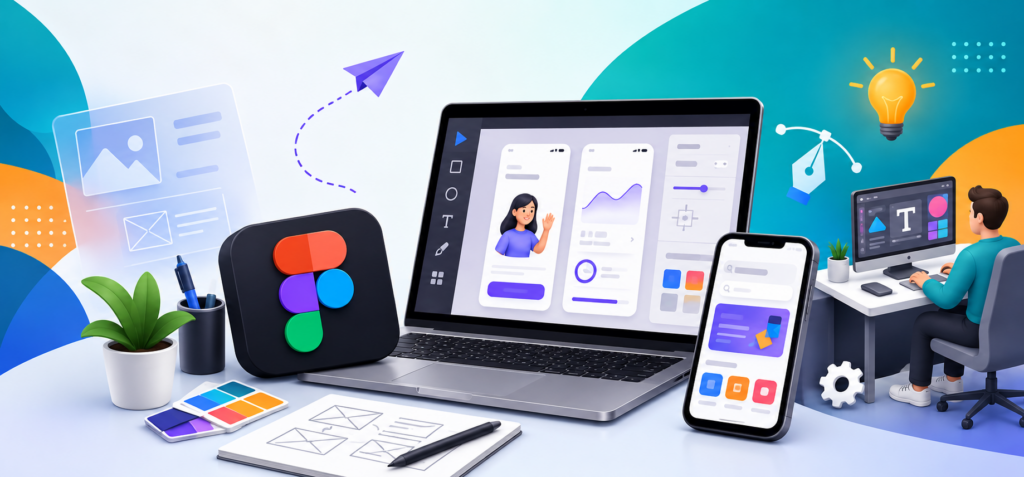
Even if you never intend to write a single line of code yourself, understanding how responsive grids, breakpoints, and flexible layouts work will fundamentally change how you approach any digital design project. You’ll start designing with real-world constraints in mind rather than assuming everything will look exactly like your Figma or Photoshop file.
5. It Future-Proofs Your Career
Design trends come and go, but one trend that isn’t reversing anytime soon is the continued merging of design and development. Tools like Figma, Webflow, and various no-code platforms are already blurring the line between “designer” and “builder.” The designers who thrive in this environment are the ones who aren’t intimidated by that overlap — they lean into it.
Learning web design alongside graphic design isn’t about becoming a full-stack developer overnight. It’s about future-proofing your skill set so that as the industry continues to shift toward digital-first, interactive, and code-adjacent design work, you’re not left behind. Designers who invest in both a graphic design course and a web design course are essentially hedging their careers against an industry that keeps moving in one clear direction: online.
6. You Gain More Creative Control
There’s something deeply satisfying about being able to take an idea from concept to completion without depending entirely on someone else. When you understand web design, you’re not limited to handing off static files and hoping for the best. You can prototype interactive elements yourself, make small adjustments without waiting on a developer, and even build simple websites entirely on your own for smaller clients or personal projects.
This kind of creative control is empowering. It means fewer compromises between what you envisioned and what actually gets built, and it means you can take on a wider variety of projects with confidence, rather than turning down work because “that’s not really my area.”
7. The Skills Complement Each Other Naturally
It’s worth emphasizing that graphic design and web design aren’t competing disciplines — they’re deeply complementary. Typography, color theory, visual hierarchy, composition, and branding principles that you learn in graphic design all apply directly to web design. You’re not starting from scratch when you move into web design; you’re building on a foundation you already have.
This is one of the biggest reasons why so many design schools and online platforms now offer combined learning paths, where a graphic design course naturally leads into or overlaps with a web design course. The transition feels less like learning an entirely new craft and more like expanding the toolkit you already use every day.
Getting Started Doesn’t Have to Be Overwhelming
If all of this sounds appealing but also a little intimidating, know that you don’t need to become a coding expert to benefit from learning web design. Even a foundational understanding of HTML, CSS, responsive layout principles, and basic UX thinking can dramatically improve how you work and how employable you are.
Many designers start with a structured web design course that builds on the visual skills they already developed through graphic design training. Others take a combined approach, pairing a graphic design course with web-focused modules so both skill sets grow together from the start. Either path works — what matters is taking that first step rather than staying comfortably within familiar territory.
Final Thoughts
The design industry no longer asks designers to choose between print and digital — it asks them to be fluent in both. Graphic designers who take the time to learn web design don’t just add a new skill to their resume; they fundamentally change how they think about design itself, becoming more versatile, more employable, and more capable of bringing their ideas fully to life.
If you’ve been on the fence about expanding your skill set, consider this your sign. The overlap between graphic design and web design isn’t going away — it’s only going to grow. Investing in that overlap today positions you for a design career ready for whatever comes next.

Pooja Sharma is a creative education content writer who creates engaging articles on career guidance, skill development, and learning opportunities to help students make informed decisions.