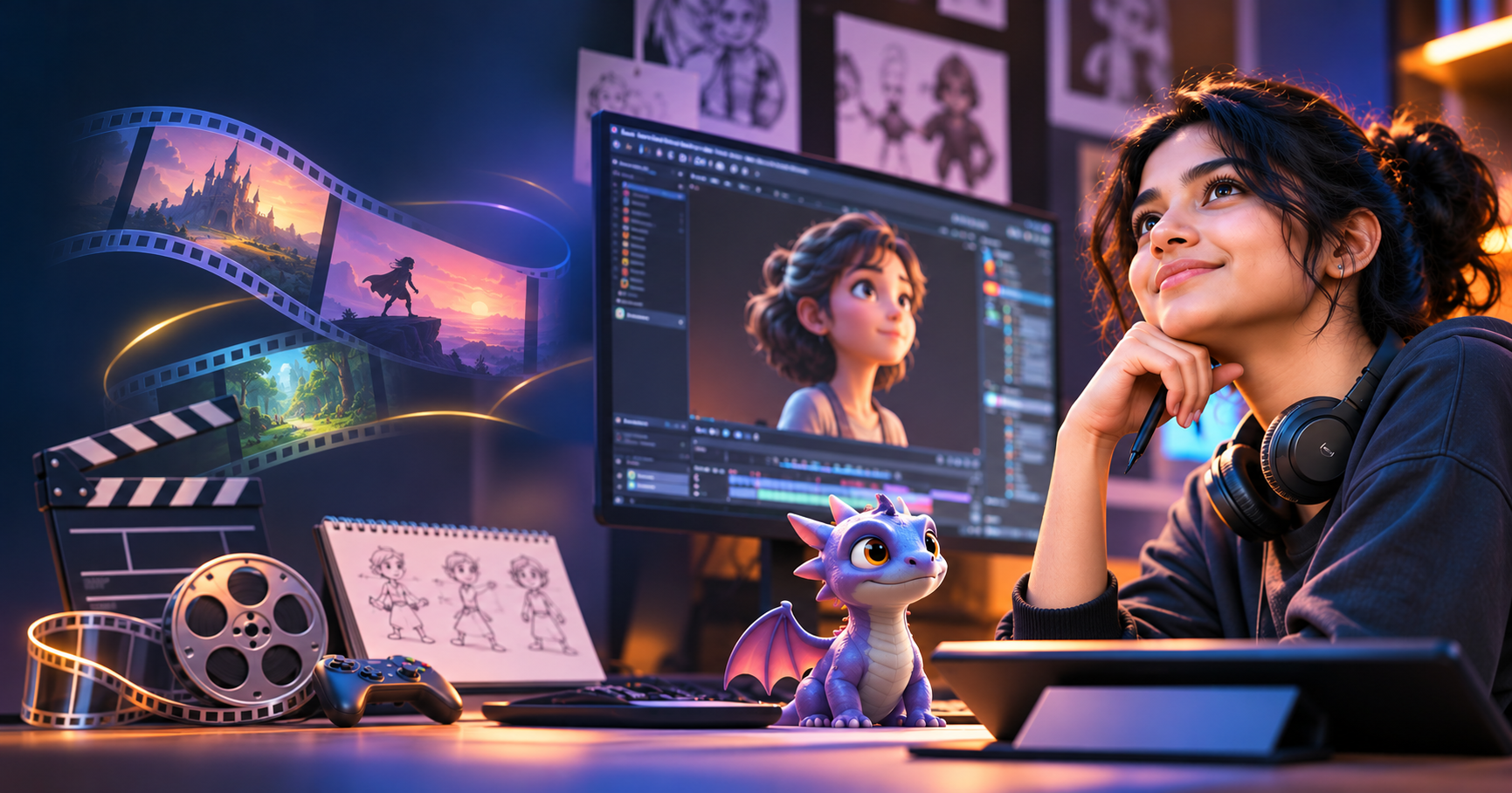
A BSc in Animation is a undergraduate degree that teaches you to tell stories through moving images, combining drawing, storyboarding, 2D/3D animation, VFX, sound and filmmaking basics. Most programmes run for three years and typically ask for a 10+2 pass, though eligibility varies by institute. If you want to turn sketches and film obsessions into a career, this degree gives you structured training, a portfolio and industry exposure.
For students across Kolkata, from Sealdah and Chowringhee to Barasat and Serampore, here is why the course deserves a serious look.
What Does a BSc in Animation Actually Teach?
Expect modules on drawing and design principles, character design, storyboarding, 3D modelling, rigging, texturing, compositing, motion graphics and scriptwriting. Many programmes also cover filming basics, which is why students often search for a BSc in animation and filmmaking combination. Syllabus details differ by institute, so always request the module list before enrolling.
10 Reasons Animation Is Shaping Modern Storytelling
1. Stories no camera can capture
Live action is bound by physics and budgets. Animation isn’t. A talking river, a collapsing galaxy or a childhood memory drawn as watercolour are all possible.
2. Streaming platforms need huge volumes of content
OTT services commission animated series, shorts and films for every age group. That ongoing demand creates steady work for trained animators.
3. Games are a storytelling medium too
Modern games rely on character animation, cinematics and world-building. Skills from a BSc in Animation transfer directly to game studios.
4. Indian stories are finding global audiences
Folklore, mythology and regional tales from Bengal and beyond are being retold in animation. Local storytellers who understand the culture have a real edge.
5. VFX is now part of almost every film
Even a drama shot on real streets uses compositing, clean-up and digital extensions. Animation graduates understand how those layers are built.
6. Advertising and brands love motion
Explainer videos, social media reels and product animations are standard marketing tools. Freelance and agency work is a realistic path for 18–30-year-olds.
7. Education and training rely on animation
Complex ideas in science, medicine and engineering are easier to grasp when animated. This opens roles in ed-tech, corporate training and museums.
8. New technology expands the canvas
AR, VR and real-time engines need people who understand character movement, timing and visual composition. Tools change; storytelling fundamentals don’t.
9. A degree builds depth, not just software skills
Short courses teach tools. A degree adds time to learn anatomy, acting for animators, cinematic language and critique. That depth shows in a portfolio.
10. Your portfolio becomes your passport
Studios hire on demo reels. A three-year programme gives you time to build several finished pieces, including a short film.
BSc Animation vs Short-Term Courses
| Factor | BSc in Animation | Short certificate course |
|---|---|---|
| Duration | About 3 years | A few months to a year |
| Depth | Art, story, tech, film | Mostly software |
| Portfolio | Multiple projects, short film | Limited pieces |
| Eligibility for further study | Degree recognised for higher studies | Usually not |
| Best for | Career-focused beginners | Upskilling or testing interest |
Practical Tips Before You Choose a Course
- Ask to see student work. Showreels reveal more than brochures.
- Check the software and hardware. Ask what students actually use in labs.
- Look for filmmaking exposure. Storytelling improves when you understand shots, editing and sound.
- Confirm affiliation and recognition directly with the institute.
- Start sketching now. Observation drawing and a short story idea beat any entrance prep.
Studying in Kolkata: Why It Works
Kolkata has a long film and art tradition, and students from Baguiati, Barasat, Berhampore, Chandannagar, Jodhpur Park, New Alipore, Serampore and Sonarpur can reach the city’s creative hubs by train, metro or bus. Studying here puts you close to theatre, cinema, literature and galleries, all useful fuel for a storyteller. At Moople Institute, you can ask the counselling team about the curriculum, projects and batch schedules before deciding.
Frequently Asked Questions
Is a BSc in Animation a good career choice?
Yes, if you are committed to building a strong portfolio. Opportunities exist in studios, games, advertising, OTT and freelancing, but your showreel matters as much as your certificate.
What is the eligibility for a BSc in Animation?
Usually a 10+2 pass from a recognised board. Some institutes accept any stream; others may prefer or require specific subjects. Confirm with the institute.
Do I need to draw well to join?
Basic drawing helps, but you can build skill during the course. Curiosity, observation and a love for stories matter more at the start.
What is the difference between BSc in Animation and a filmmaking course?
Animation focuses on creating moving images frame by frame or digitally. Filmmaking centres on live-action production. Programmes combining animation and filmmaking teach both sides of visual storytelling.
What jobs can I get after the degree?
Common roles include 2D/3D animator, character designer, storyboard artist, VFX artist, motion graphics designer and game artist.
Can I freelance as a student?
Often yes, once you have polished samples. Start with small projects such as social media animations or explainers.
Is Kolkata a good place to study animation?
Kolkata offers a rich cultural environment, and many students commute from nearby areas. Your choice of institute and the quality of training matter most.
Conclusion
Animation lets storytellers go where cameras can’t, and the demand for visual narratives keeps growing across platforms. A BSc in Animation gives you the time, structure and portfolio to turn that demand into a career. If you are in Kolkata or nearby and ready to start, visit Moople Institute or contact the team to discuss the course, see student work and plan your first steps.
Pooja Sharma is a creative education content writer who creates engaging articles on career guidance, skill development, and learning opportunities to help students make informed decisions.