Animation has grown from a niche art form into one of the most in-demand creative careers in the world. From feature films and OTT series to mobile games, ad campaigns, and social media content, animators are needed everywhere. Naturally, this growing demand has led many aspiring artists to ask a very practical question: Can I study animation online?
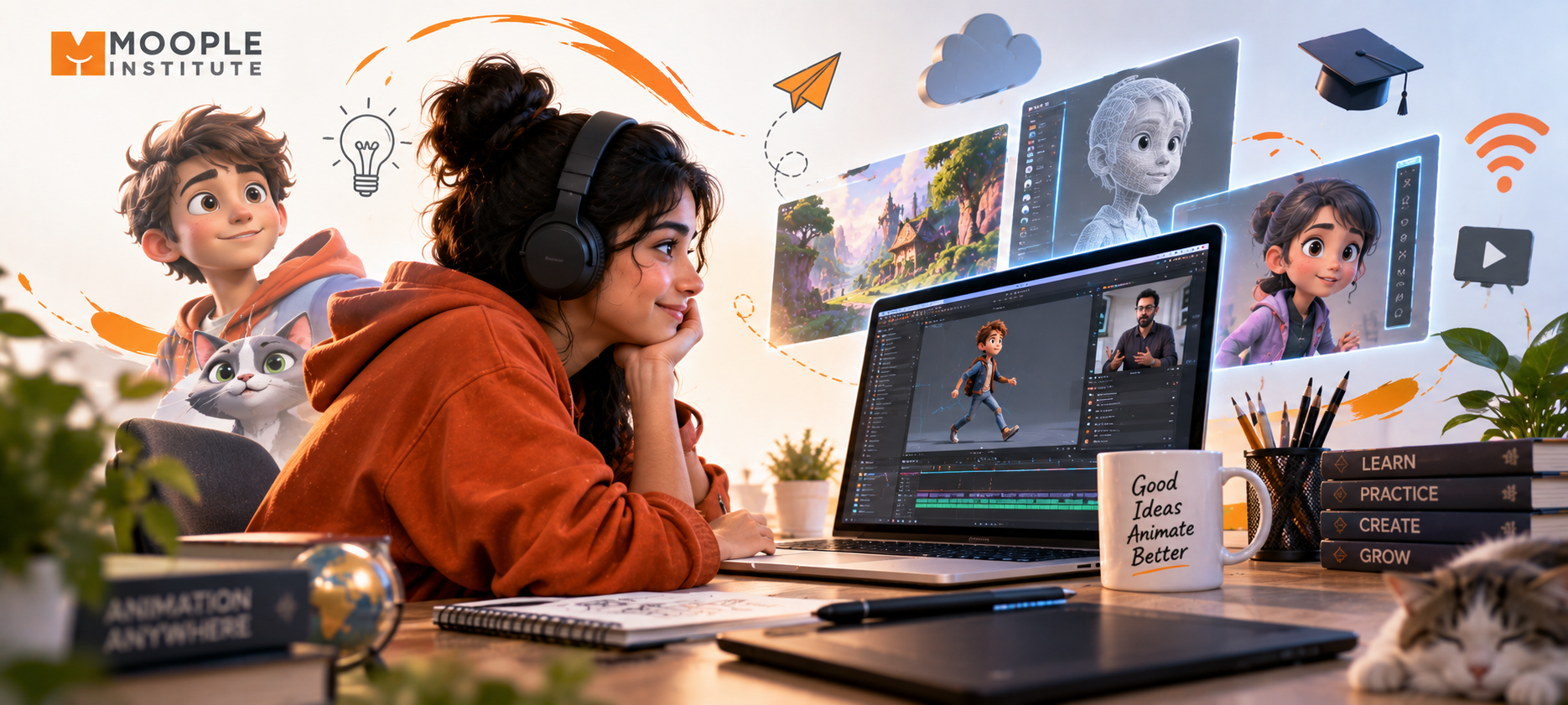
The short answer is yes. Thanks to advances in software, cloud rendering, video conferencing, and digital learning platforms, it is now entirely possible to learn animation from the comfort of your home. But like any creative discipline, the quality of your learning experience depends heavily on the structure of the course, the mentorship you receive, and how consistently you practice. In this blog, we’ll break down everything you need to know about studying animation online — how it works, what to expect, and how to choose the right animation course for your goals.
The Rise of Online Animation Education
A decade ago, animation was taught almost exclusively in physical classrooms, where students needed access to expensive workstations and specialized software. Today, that barrier has largely disappeared. Cloud-based software, affordable graphic tablets, and high-speed internet have made it possible for institutes to deliver full-fledged animation training over the internet without compromising on quality.
Online animation education typically includes:
- Live interactive classes with instructors who demonstrate techniques in real time
- Recorded video lectures you can revisit at your own pace
- Software tutorials for tools like Adobe Animate, Toon Boom Harmony, Blender, Maya, and After Effects
- Assignment-based learning where you apply concepts to real projects
- One-on-one mentorship and portfolio reviews
- Peer collaboration through community forums or group projects
This hybrid approach means students no longer have to relocate or commute to access high-quality training. A well-structured animation course can now replicate almost everything a physical classroom offers, including hands-on feedback and industry exposure.
What You Can Actually Learn Online
Many people assume online learning is only suitable for theory-heavy subjects, but animation is surprisingly well-suited to digital delivery. Screen recording and screen-sharing tools allow instructors to walk through every click, keyframe, and adjustment in real time, which is often even more precise than watching someone work on a whiteboard or physical desk.
Depending on the institute and the level of the course, you can learn:
- 2D Animation — traditional frame-by-frame animation, character walk cycles, and squash-and-stretch principles
- 3D Animation — modeling, rigging, texturing, and animating characters in 3D space
- Motion Graphics — creating dynamic visuals for advertisements, title sequences, and explainer videos
- Storyboarding and Visual Storytelling — planning shots, camera angles, and narrative pacing
- VFX and Compositing — blending animated elements with live-action footage
- Game Animation — animating characters and environments for interactive media
A comprehensive online animation course usually blends these skill areas into a structured curriculum, moving from fundamentals like the 12 principles of animation to advanced software-specific techniques.
Do You Need Expensive Equipment?
One common concern is whether you need high-end hardware to study animation online. While professional-grade workstations certainly help, most beginner and intermediate courses can be completed with:
- A mid-range laptop or desktop with a decent processor and graphics capability
- A stable internet connection
- A drawing tablet (optional for 2D animation, though not mandatory at the start)
- Free or trial versions of industry-standard software
As you progress and take on more complex 3D or VFX projects, you may eventually want to upgrade your system. But for someone just starting out, there’s no need to make a large investment before you’re even sure animation is the right path for you.
Why Location No Longer Limits Your Learning
Traditionally, students would only consider institutes within their own city, largely because attending classes required physical presence. This often meant compromising on quality simply because of geography. Online education has changed this completely.
For instance, someone searching for an animation course in Kolkata is no longer restricted to institutes physically located within the city. They can now enroll in top-rated online programs from anywhere in India — or even internationally — while still studying from home in Kolkata. At the same time, several reputed institutes based in Kolkata have also expanded into online delivery, allowing local students to benefit from city-based mentorship, industry connections, and placement support without needing to travel for every class.
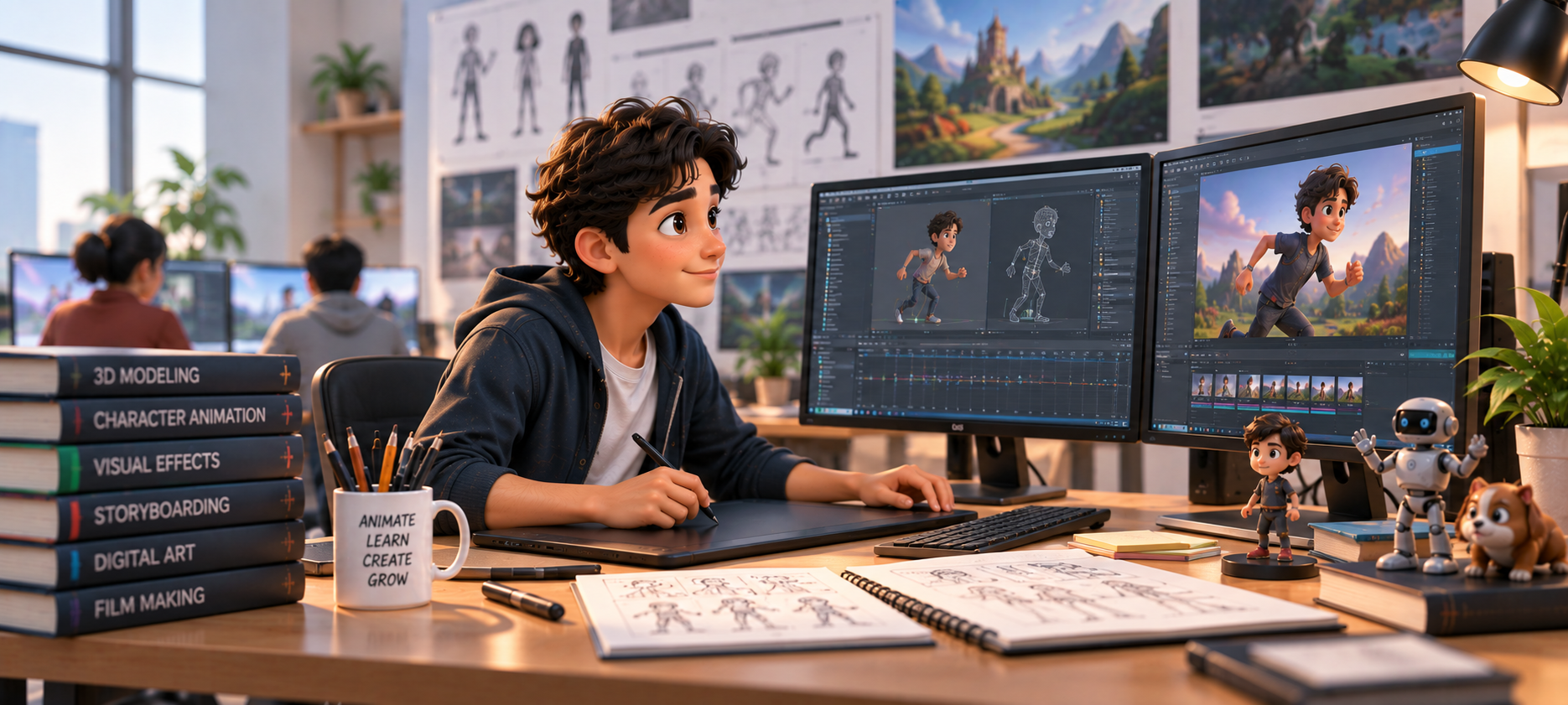
This shift has been particularly valuable for students in tier-2 and tier-3 cities, where access to specialized creative education was historically limited. Now, a strong internet connection is often the only prerequisite for accessing world-class animation training.
How to Choose the Right Online Animation Course
Not all online programs are created equal, and choosing the right one can make a significant difference in your learning outcomes. Here are a few factors to evaluate before enrolling:
1. Curriculum Depth Look for a course that covers fundamentals thoroughly before moving into advanced techniques. A rushed curriculum often leaves gaps in foundational skills like timing, spacing, and weight — concepts that are difficult to unlearn later.
2. Live Interaction vs. Pre-Recorded Content While recorded lectures are useful for revision, live sessions with real-time feedback are crucial for skill development in a visual, technique-driven field like animation.
3. Industry-Relevant Software Training Make sure the course teaches tools that are actually used in the industry, such as Toon Boom Harmony, Adobe Animate, Blender, Maya, or Cinema 4D, depending on your specialization.
4. Portfolio Development Support A strong portfolio is often more important than a certificate when it comes to job placement. Choose a course that dedicates time to helping you build showreel-worthy projects.
5. Mentor Experience Instructors with real industry experience can offer insights that go beyond textbook knowledge — from studio pipelines to client expectations.
6. Placement Assistance Some institutes offer internship opportunities, portfolio reviews by studios, or direct placement assistance, which can be extremely valuable for beginners entering the field.
Online vs. Offline: Which Should You Choose?
This is a common dilemma for students evaluating any animation training institute. Both formats have their strengths:
Online learning offers flexibility, cost savings on commuting or relocation, and access to instructors regardless of geography. It’s ideal for working professionals, students in remote areas, or those who prefer self-paced learning combined with scheduled live sessions.
Offline learning offers hands-on studio-like environments, immediate in-person feedback, and networking opportunities with classmates who share physical space and equipment. It can be beneficial for students who thrive in structured, distraction-free environments.
Many institutes today offer a hybrid model — combining online theory and software training with occasional in-person workshops or portfolio review sessions. This blended approach is quickly becoming the preferred choice for serious students who want flexibility without sacrificing mentorship quality.
Career Opportunities After Studying Animation Online
Completing an online animation program doesn’t limit your career prospects compared to traditional classroom training — what matters most to employers is the quality of your portfolio and your technical proficiency. Graduates from strong programs, whether online or offline, go on to work as:
- 2D/3D Animators
- Motion Graphics Designers
- VFX Artists
- Storyboard Artists
- Game Animators
- Freelance Animation Consultants
- YouTube/Content Creation Specialists
The animation and VFX industry in India has been growing steadily, driven by increased demand from OTT platforms, gaming studios, and advertising agencies. This growth has created strong demand for well-trained animators, regardless of whether their training was completed online or in a physical classroom.
Tips for Succeeding in an Online Animation Course
Studying animation online requires a certain level of self-discipline, since you won’t have the same physical accountability as a traditional classroom. Here are a few tips to make the most of your online learning journey:
- Set a consistent practice schedule — animation is a skill built through repetition
- Actively participate in live sessions rather than passively watching
- Seek feedback regularly from mentors and peers
- Build a portfolio as you learn, rather than waiting until the end of the course
- Join online animation communities to stay motivated and inspired
- Practice fundamentals daily, even simple exercises like bouncing balls or walk cycles
Conclusion
So, can you study animation online? Absolutely — and for many students today, it’s not just a viable option but often the more practical one. With the right animation course, strong mentorship, and consistent practice, online learning can offer the same depth and quality as a traditional classroom setting, minus the geographical restrictions.
Whether you’re searching for an animation course in Kolkata or exploring options from any other city, the key is to choose a program that balances structured curriculum, live interaction, and portfolio-building support. And if you’re evaluating a specific animation training institute, look beyond the marketing — check their curriculum depth, mentor experience, and student outcomes before enrolling.
Animation is a craft that rewards patience and practice, and the internet has made it more accessible than ever to start that journey — right from wherever you are.
Frequently Asked Questions (FAQs)
1. Is it possible to become a professional animator through online learning alone?
Yes. Many working animators today have built their entire skill set through online courses combined with consistent self-practice and portfolio development. What matters most to studios and employers is the quality of your work, not where you learned it.
2. How long does it take to complete an online animation course?
This varies depending on the program’s depth. Short-term courses may take a few weeks to cover software basics, while comprehensive diploma-level programs covering 2D, 3D, and VFX can take anywhere from six months to two years.
3. Do I need prior drawing skills to start an animation course?
Basic drawing skills help, especially for 2D animation, but they are not mandatory to begin. Many courses start with fundamentals and gradually build your artistic and technical abilities alongside each other.
4. What software will I need for an online animation course?
Commonly used tools include Adobe Animate, Toon Boom Harmony, Blender, Autodesk Maya, and Adobe After Effects. Most institutes guide you on installation and provide access to trial or educational versions.
5. Are online animation courses recognized by employers in the industry?
Yes, as long as the institute has a credible curriculum and industry-experienced faculty. Employers in animation and VFX studios typically evaluate candidates based on their showreel and technical skills rather than the mode of learning.
6. Can I find a good animation training institute that offers both online and offline options?
Yes, many institutes now offer hybrid models, allowing students to attend live online classes while also participating in occasional in-person workshops, portfolio reviews, or studio visits.
7. Is an animation course in Kolkata available online for students outside the city?
Many Kolkata-based institutes have expanded their reach through online platforms, making their courses accessible to students across India and beyond, not just those living locally.
Watch the video and learn more :

Pooja Sharma is a creative education content writer who creates engaging articles on career guidance, skill development, and learning opportunities to help students make informed decisions.