The demand for skilled 3D artists is growing faster than ever. From blockbuster movies and gaming to architecture, advertising, and product design, businesses now rely heavily on 3D visuals to engage audiences. For students dreaming of a creative and future-ready career, enrolling in a 3D animation course can be the perfect starting point.
But becoming a successful 3D modeler requires more than talent alone. You need industry-focused training, practical exposure, and the right mentorship. That is where a reputed animation institute plays a major role. With professional guidance, students can transform their creativity into real-world skills and career opportunities.
In this blog, we will explore how animation training can help students excel as professional 3D modelers, what skills are required, career opportunities, industry trends, and how to choose the right course for long-term success.
Why 3D Modeling Is One of the Most In-Demand Creative Careers
3D modeling is the process of creating digital objects and environments used in films, games, animation, virtual reality, architecture, and advertising. Every animated movie, gaming character, or CGI advertisement starts with a skilled 3D modeler.
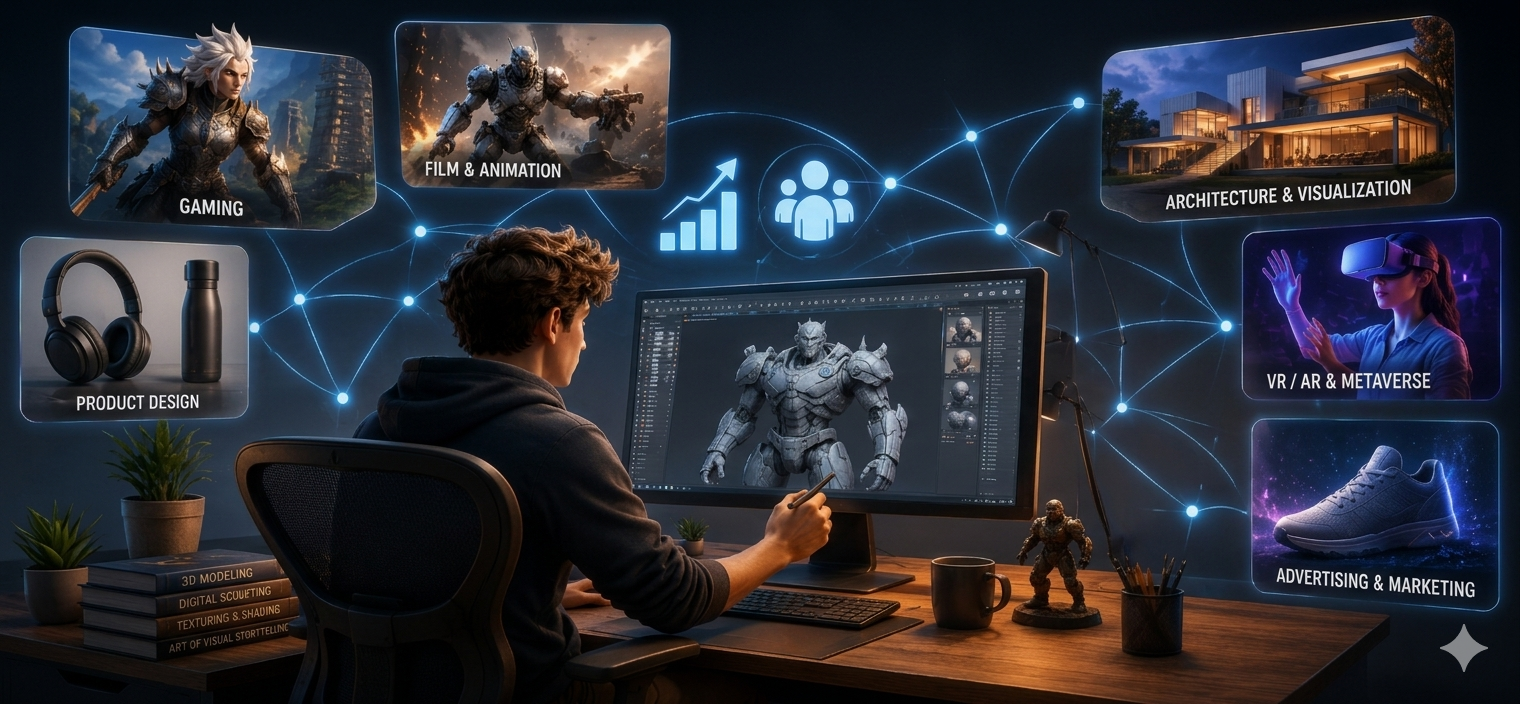
According to the global market research published by Statista, the animation and VFX industry continues to grow due to increasing demand for streaming content, gaming, and immersive technologies. Additionally, the gaming industry alone is expected to cross billions in revenue worldwide over the next few years.
This rapid industry expansion means studios and companies are constantly searching for trained professionals who can create high-quality digital assets.
Students who join an animation training course with placement support often gain a strong advantage because they receive both technical knowledge and career guidance.
What Does a Professional 3D Modeler Actually Do?
A professional 3D modeler creates realistic or stylised digital models for different industries. Depending on the project, they may work on:
- Characters for animated films and games
- Product prototypes
- Interior and architectural designs
- Visual effects assets
- Virtual reality environments
- Advertising visuals
- Motion graphics elements
A 3D modeler combines creativity with technical precision. Their job is not only artistic but also problem-solving oriented.
Key Responsibilities of a 3D Modeler
Creating Detailed Digital Models
Artists use software like Autodesk Maya, Blender, ZBrush, and 3ds Max to build digital structures and characters.
Texturing and Lighting
Once the model is created, textures and lighting are added to make the object realistic and visually appealing.
Collaboration with Teams
Modelers often work with animators, game designers, VFX artists, and creative directors.
Optimising Assets
Models must be optimised for gaming engines, animation pipelines, or rendering systems.
A good 3D animation course teaches all these stages systematically through hands-on practice.
How a 3D Animation Course Helps You Become Industry-Ready
Many students believe they can learn everything from free tutorials online. While self-learning helps, professional training offers structured learning, mentorship, practical projects, and placement support that are difficult to access on one’s own.
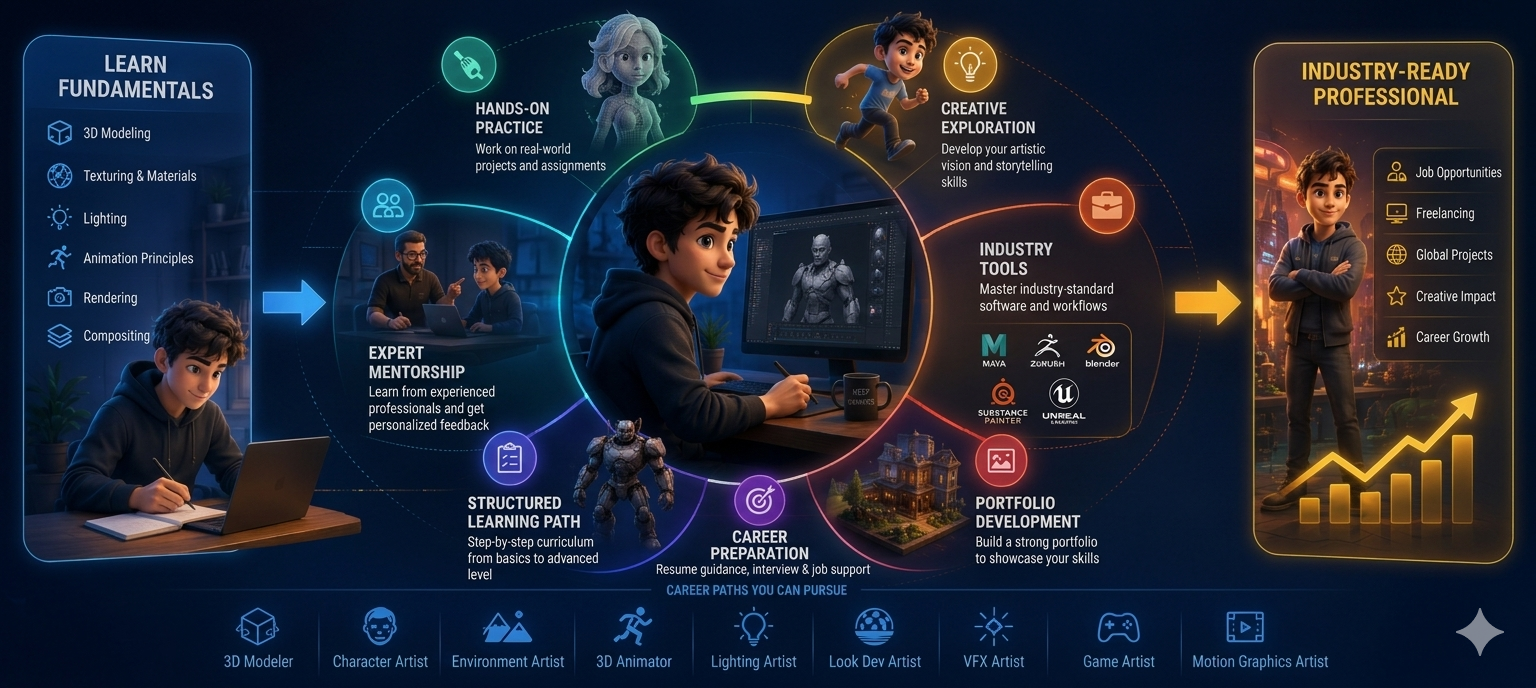
Industry-Focused Curriculum
A quality course teaches students industry-standard software and workflows used by professionals.
Common Topics Covered
- 3D Modeling
- Character Design
- Texturing and Shading
- Rigging
- Animation Principles
- Lighting and Rendering
- Motion Graphics
- VFX Basics
- AI-Assisted Design Tools
Today, many institutions are also introducing AI-integrated modules because AI is changing the way artists create digital content.
Students researching advanced 3D animation & AI course fees should focus not only on affordability but also on curriculum quality and placement opportunities.
The Importance of Practical Training in Animation Education
The creative industry values portfolios more than marksheets. Employers want to see what you can create.
That is why project-based learning is extremely important.
Real-World Projects Build Confidence
Students gain practical experience by working on:
- Character modeling projects
- Short animation films
- Game environment design
- Product visualisation
- VFX compositions
This hands-on approach improves creativity, problem-solving, and software mastery.
Many reputed institutes also conduct workshops, studio simulations, and live projects to prepare students for real production environments.
According to insights shared by AutodeskEducation, practical training significantly improves employability in digital design careers.
Essential Skills You Learn in a 3D Animation Course
A successful 3D modeler needs both technical and creative skills.
Technical Skills
3D Software Expertise
Students learn industry-standard tools like:
- Autodesk Maya
- Blender
- ZBrush
- Unreal Engine
- Adobe Substance Painter
Sculpting and Texturing
Understanding shapes, anatomy, textures, and materials is critical for realistic designs.
Rendering Techniques
Students learn lighting, rendering engines, and compositing workflows.
Creative Skills
Visual Storytelling
Every design should communicate emotion, purpose, or functionality.
Observation Skills
Strong observation helps artists create realistic models and environments.
Creativity and Innovation
Creative thinking helps students stand out in competitive industries.
A professional animation institute helps students develop both technical and artistic abilities.
Career Opportunities After Completing a 3D Animation Course
One of the biggest reasons students choose animation is the wide range of career paths available.
Popular Career Roles
3D Modeler
Create characters, objects, and digital environments.
Character Artist
Design detailed game and film characters.
Environment Artist
Build immersive gaming or cinematic worlds.
VFX Artist
Work on visual effects for movies, OTT content, and advertisements.
Game Designer
Develop interactive gaming experiences.
Motion Graphics Artist
Create animated graphics for marketing and media.
Product Visualisation Artist
Create realistic product renders for brands and e-commerce companies.
According to reports from NASSCOM, India’s gaming and animation industry continues to create new job opportunities due to increasing digital consumption.
Why Students Are Searching for the Best Animation Courses in Kolkata
Kolkata is becoming a growing hub for creative education and digital media careers. Students now have access to modern learning facilities, experienced mentors, and industry-oriented programs.
When searching for the Best animation courses in Kolkata, students should evaluate institutes based on:
- Faculty expertise
- Placement support
- Studio infrastructure
- Industry software training
- Internship opportunities
- Portfolio development
- Student project exposure
Parents should also check whether the institute offers career counselling and placement assistance after course completion.
Understanding Advanced 3D Animation & AI Course Fees
Course fees vary depending on course duration, curriculum depth, software training, and placement support.
What Influences Course Fees?
Course Duration
Longer diploma or degree programs generally cost more than short-term certifications.
Software and Infrastructure
Institutes investing in advanced labs and licensed software may charge higher fees.
Placement and Internship Support
Courses with guaranteed placement assistance often provide greater long-term value.
AI Integration
Modern AI-based animation training programs may include advanced modules that increase course value.
Instead of focusing only on low fees, students should evaluate return on investment, industry exposure, and career opportunities.
The Growing Impact of AI on 3D Animation Careers
Artificial intelligence is changing the creative industries rapidly. AI tools can now assist artists with modeling, rendering, texturing, and motion generation.
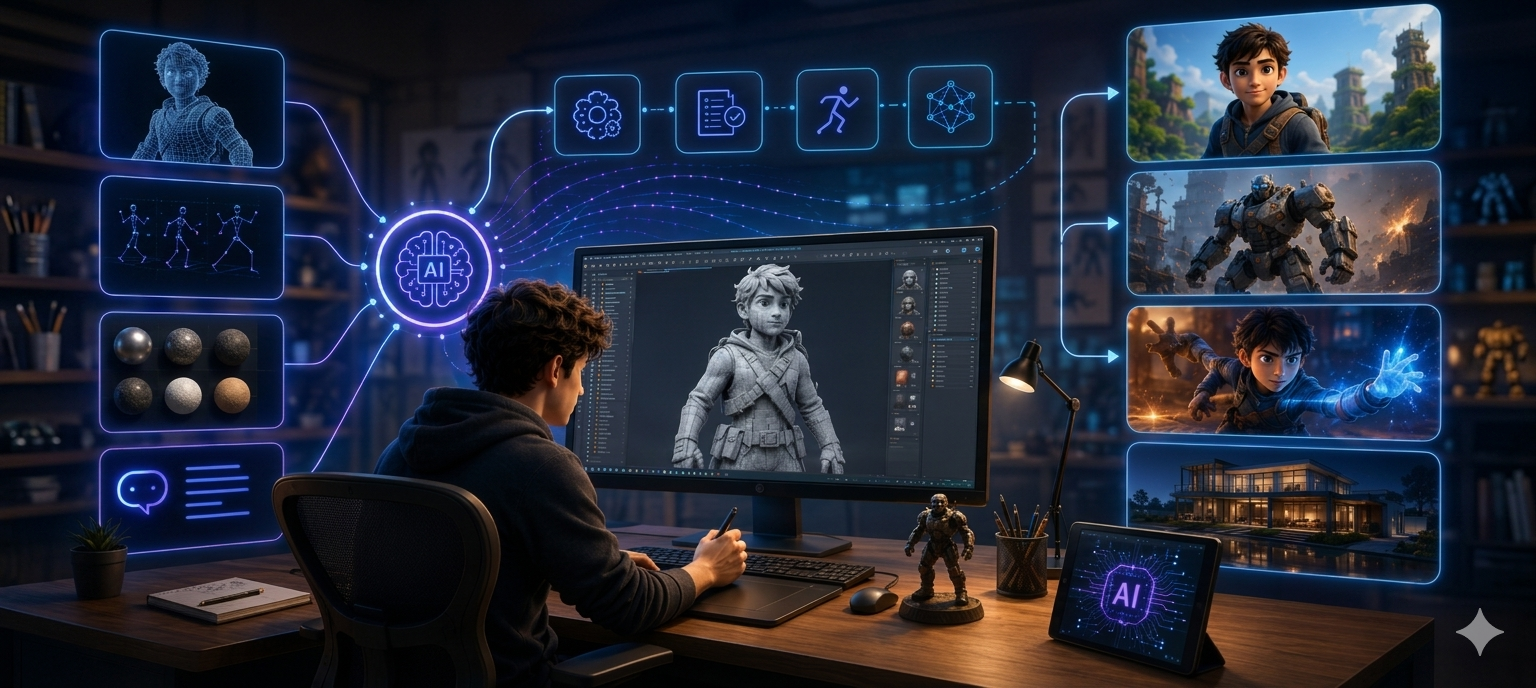
However, AI is not replacing artists completely. Instead, it is helping professionals work faster and more efficiently.
Why Human Creativity Still Matters
AI can automate repetitive tasks, but storytelling, originality, emotional expression, and artistic direction still require human creativity.
Students who learn both traditional animation techniques and AI-assisted workflows will have a competitive advantage in future job markets.
Recent updates from Adobe Blog and Unity Technologies show how AI-powered creative tools are becoming integrated into professional production pipelines.
Tips to Succeed as a Professional 3D Modeler
Build a Strong Portfolio
Your portfolio is your biggest career asset. Include:
- Character models
- Environment designs
- Wireframe examples
- Render outputs
- Animation projects
Quality matters more than quantity.
Practice Every Day
Consistency improves artistic and technical skills over time.
Spend time observing shapes, lighting, textures, and real-world objects.
Learn Industry Trends
Follow creative platforms and communities such as:
- ArtStation
- Behance
- CGSociety
Staying updated helps students understand modern design expectations.
Work on Personal Projects
Personal projects help students experiment and showcase originality.
Many recruiters prefer candidates who demonstrate initiative and creative passion.
Improve Communication Skills
Creative professionals often work in teams. Communication and collaboration are equally important for career growth.
Why Placement Support Matters in Animation Education
Students and parents often worry about career security after completing creative courses.
This is why choosing an animation training course with placement support becomes important.
Good institutes help students with:
- Portfolio reviews
- Mock interviews
- Resume building
- Internship opportunities
- Studio placement drives
Placement assistance increases confidence and helps students transition smoothly into professional careers.
Future Scope of 3D Animation and Modeling Careers
The future of 3D animation is extremely promising. Industries using 3D technology are expanding rapidly.
Industries Hiring 3D Professionals
- Gaming
- Film and OTT
- Advertising
- Architecture
- Healthcare visualisation
- E-learning
- AR/VR development
- Metaverse platforms
The increasing popularity of immersive technologies means skilled 3D artists will continue to remain in demand globally.
FAQs
- What is the eligibility for a 3D animation course?
Most institutes allow students after Class 10 or 12. Some advanced programs may require basic creative or computer knowledge.
- What software is taught in animation institutes?
Students usually learn Autodesk Maya, Blender, ZBrush, Adobe tools, Unreal Engine, and other industry-standard software.
- Is 3D modeling a good career option in India?
Yes. The gaming, VFX, advertising, and OTT industries are growing rapidly, creating strong demand for skilled 3D professionals.
- What are the career opportunities after completing animation training?
Students can become 3D modelers, VFX artists, game designers, character artists, motion graphics designers, and more.
- How important is placement support in animation courses?
Placement support helps students with internships, portfolios, interviews, and job opportunities, making career entry easier.
Conclusion
A professional 3D animation course can open the door to exciting and future-ready creative careers. With the right training, mentorship, and practical exposure, students can develop the technical and artistic skills needed to succeed as professional 3D modelers.
As industries increasingly rely on digital content, animation, gaming, and immersive experiences, the demand for skilled artists will continue to rise. Choosing the right animation institute and enrolling in an industry-focused animation training course with placement support can give students the confidence and career direction they need.
If you are passionate about creativity, storytelling, gaming, or digital design, now is the perfect time to explore professional animation education and start building your future in the world of 3D design and animation.

Farhat Jabeen is passionate about documenting the student enrollment journey in the fields of technology, design, and digital media. Through her writing, she shares practical guidance, industry insights, and real-world learning experiences that help aspiring students confidently navigate their path toward creative and technology-driven careers. Her goal is to empower learners with the knowledge they need to choose the right educational journey.