If you have ever paused a film to study how a character’s hair moves, or replayed a game trailer to see how the light hits a sword, you already think like an animator. The question most students in Kolkata ask next is more practical: which animation course in Kolkata actually gets you job-ready, and how do you tell a good animation institute from one that is just selling software tutorials?
This guide answers that question honestly. It walks through what an animation course actually teaches, how fees and duration compare across formats, which software you need to learn, and — the part most institute websites skip- what genuinely happens between finishing your training and getting your first paid project. By the end, you will know exactly what to check before signing up, whether you are a Class 12 pass-out or someone switching careers into design.
What an Animation Course
An animation course is a structured training program that teaches the technical and artistic skills needed to create moving images — through drawing, 3D modelling, rigging, and software-based animation — for films, television, games, and advertising. Most programs combine foundational art training (sketching, storytelling, anatomy) with software training in industry tools such as Toon Boom Harmony, Autodesk Maya, and Adobe After Effects.
That combination matters more than it sounds. A student who only learns software buttons can produce a technically correct animation that still looks lifeless, because animation is really about timing, weight, and emotion — things you learn through drawing and observation, not menus. This is exactly where several shortcut “quick certificate” programs fall short, and it is the first thing to check before you enrol anywhere.
Who Should Take an Animation Course
An animation course in Kolkata generally suits three kinds of learners:
- Class 12 pass-outs from any stream (Science, Commerce, or Arts) who enjoy drawing, storytelling, or gaming and want a creative career instead of a conventional degree route.
- Graduates from unrelated fields (B.Com, BA, BSc) who want to pivot into a creative, project-based career.
- Working professionals in design-adjacent roles such as graphic designers or video editors — who want to add motion and 3D skills to increase their market value.
There is no strict age cut-off, but most institutes, including Moople Institute, see the bulk of enrolments from the 18–25 age group, which lines up with when students are deciding between a traditional degree and a skill-based creative career.
Types of Animation Courses Available in Kolkata
Not every “animation course” teaches the same thing, and this is where a lot of confusion starts. Broadly, animation training in Kolkata falls into four categories.
2D Animation
Traditional frame-by-frame or digital 2D animation, used heavily in cartoons, explainer videos, and mobile game assets. Tools: Toon Boom Harmony, Adobe Animate.
3D Animation
Character and object animation built on 3D models, used in films, advertisements, and product visualisation. Tools: Autodesk Maya, Blender.
VFX and Compositing
Combining live-action footage with digital effects — explosions, environment extensions, digital doubles. Tools: Nuke, Adobe After Effects, Fusion.
Motion Graphics
Animated text, logos, and graphic elements used in advertising, YouTube intros, and corporate videos. Tools: After Effects, Cinema 4D.
Most reputable animation institutes, including Moople Institute, structure their diploma programs so students get a foundation across all four before specialising — because in real studio jobs, a compositor is often expected to understand basic 3D, and a 3D animator is expected to understand compositing pipelines.
Eligibility and Course Duration
Animation Course After 12th
There is no minimum percentage requirement at most institutes for a diploma-level animation course after 12th. What matters more is a demonstrable interest in art — a portfolio is not mandatory at entry level, but a habit of sketching or storytelling helps significantly during the foundation months.
Animation Course After Graduation
Graduates (any stream) can join the same diploma tracks, and some institutes offer accelerated tracks that compress the foundation art modules if the student already has strong drawing fundamentals.
Typical Duration
| Course Type | Typical Duration |
| Certificate course (single software/skill) | 2–3 months |
| Diploma in Animation | 6–12 months |
| Advanced Diploma (2D + 3D + VFX) | 12–24 months |
| Specialised VFX/Compositing course | 6–9 months |
A quick expert tip: be cautious of any “animation course” advertised as complete in 4–6 weeks. You can learn one software’s interface in that time, but you cannot build the drawing fundamentals, timing sense, and portfolio depth that placement teams actually screen for.
Animation Course Fees in Kolkata:
Animation training course fees in Kolkata vary widely depending on course length, software licenses included, and whether the institute offers hands-on studio-style project work or purely lecture-based teaching.
As a general guide:
| Course Type | Typical Fee Range (Kolkata) |
| Short certificate course (2–3 months) | ₹8,000 – ₹25,000 |
| Diploma in Animation (6–12 months) | ₹40,000 – ₹1,20,000 |
| Advanced Diploma (2D + 3D + VFX, 12–24 months) | ₹1,00,000 – ₹2,50,000 |
These are indicative ranges, not fixed prices — always ask an institute for a written fee structure that separates tuition, software/lab charges, and any certification exam fees, so there are no surprises later. Many institutes, including Moople, also offer EMI or instalment options; it is worth asking specifically whether the EMI is interest-free or carries processing charges, since that detail is often left out of the first conversation.
Common mistake: Comparing two institutes purely on the headline fee, without checking what software licenses, project hours, and placement support are actually included. A lower fee that excludes software access or portfolio review sessions can end up more expensive once you account for extra costs later.
Explore More: Animation Course Fees in Kolkata
Skills You Will Build During Animation Training

A well-structured animation training institute should take you through skills in roughly this order, because each layer depends on the one before it:
- Foundation art skills — sketching, perspective, anatomy, and colour theory, which train your eye before you touch software.
- Storytelling and storyboarding — breaking an idea into shots and sequences, the same skill scriptwriters and film directors use.
- Software fluency — modelling, rigging, and animating in tools like Maya or Blender, or drawing and inbetweening in Toon Boom.
- Timing and weight — the principles of animation (squash and stretch, anticipation, follow-through) that make movement believable.
- Compositing and rendering — combining layers, lighting passes, and effects into a final polished shot.
- Portfolio and showreel building — curating your best 20–30 seconds of work into a reel that recruiters actually watch till the end.
That last point deserves emphasis: recruiters at animation and VFX studios typically spend under a minute on a first look at a showreel. Course quality shows up not in how many shots you made, but in how tightly you can edit down to your strongest work.
Animation Institute vs Animation College: Which Should You Choose?
Students in Kolkata often ask whether a specialised animation institute or a university-affiliated animation college is the better route. Both can work — the right choice depends on your goals.
| Factor | Animation Institute | Animation College (Degree) |
| Duration | 6 months – 2 years | 3–4 years |
| Focus | Industry software, portfolio, job-readiness | Broader academic curriculum, some theory-heavy |
| Cost | Generally lower, pay-per-course | Higher, full-degree fee structure |
| Entry requirement | Class 12 pass, no cutoff | May require entrance exam/percentage cutoff |
| Placement support | Often built into the course | Varies by university, sometimes limited |
| Best for | Students who want to start working sooner | Students who also want a formal degree credential |
If your goal is to start earning as quickly as possible with strong practical skills, an institute-based diploma is usually the faster route. If you specifically need a degree for eligibility reasons (for example, some government or overseas opportunities require one), a college may be worth the extra time and cost.
Software and Tools Used in Animation Classes
A genuinely industry-relevant animation class should cover a combination of the following, rather than just one tool:
- Adobe Photoshop — concept art and texture painting
- Toon Boom Harmony — 2D animation and inbetweening
- Autodesk Maya — 3D modelling, rigging, and character animation
- Blender — open-source alternative to Maya, increasingly used by studios and freelancers
- Adobe After Effects — motion graphics and 2D compositing
- Nuke / Fusion — professional-grade VFX compositing
Expert tip: ask any institute which software licenses are actually included in your course fee, and whether you get lab access outside class hours. Learning Maya only during a 2-hour weekly class is very different from having daily hands-on access to practise.
A Realistic Curriculum Timeline
Here is what a genuinely thorough 12-month animation diploma typically looks like, month by month:
Here is what a genuinely thorough 12-month animation diploma typically looks like, month by month:
Months 1–2: Foundation drawing, anatomy, perspective, colour theory.
Months 3–4: Storytelling, storyboarding, and basic 2D animation principles.
Months 5–6: Software training begins — Toon Boom or Maya fundamentals.
Months 7–8: Character rigging, walk cycles, and lip-sync animation.
Months 9–10: Compositing, lighting, and rendering workflows.
Month 11: Specialisation project — students pick a focus area (2D, 3D, or VFX) and produce a short original piece.
Month 12: Showreel editing, mock interviews, and portfolio review sessions.
If an institute’s syllabus skips straight from “basics” to “software” without the storytelling and timing modules in between, that is a sign the course may produce technically competent but creatively weak animators, a gap that shows up clearly in interviews.
How the Placement Process Actually Works
This is the section most institute websites gloss over, so here is a transparent look at how placement genuinely happens in the animation and VFX field.
It starts with the portfolio, not the resume. Studios hiring junior animators or compositors almost always ask for a showreel before they look at a CV. Your training institute’s job is to help you build and refine that reel — through structured feedback rounds, not just a final “submit your work” instruction.
Mock interviews and technical tests are standard. Many studios give a small practical test — a short animation or compositing task with a deadline — as part of their hiring process. Institutes that run mock versions of this during training give students a real advantage.
Placement support means connections, not guarantees. No ethical institute can promise a guaranteed job, because hiring ultimately depends on the employer and the student’s own portfolio quality. What a good institute can promise is structured placement assistance: resume and reel reviews, interview practice, and introductions to studios and freelance platforms that are actively hiring.
Freelance and remote work are valid first steps. Especially with the rise of remote VFX and animation outsourcing work from Indian studios to global clients, many graduates build their first credits through freelance platforms before landing a full-time in-studio role.
At Moople Institute, this placement-readiness process is built into the later months of the course rather than treated as an afterthought because a strong final month of interview prep and reel polishing often makes the difference between a good portfolio and one that actually converts into an offer.
The student who wants to learn more can explore this blog: Animation Courses with job placement
Career Paths After an Animation Course
An animation course can lead to several distinct roles, not just “animator.” Common entry points include:
- 2D/3D Animator — animating characters and objects for film, TV, or games
- VFX Compositor — combining live footage with digital elements
- Motion Graphics Designer — animated branding, ads, and explainer videos
- Storyboard Artist — visualising scripts into shot sequences
- Game Asset Animator — character and environment animation for games
- Freelance Animator — independent project-based work across platforms like Fiverr, Upwork, or direct studio contracts
According to the FICCI-EY Media & Entertainment Report, India’s animation, VFX, and post-production segment has gone through a mixed cycle in recent years — a period of contraction in 2024 due to global production slowdowns, alongside continued longer-term growth projections for the broader Indian media and entertainment sector through 2027. In practical terms, this means the field rewards animators who build strong, specialised portfolios rather than relying on general demand alone — specialisation in a specific pipeline (say, character rigging or creature compositing) tends to be more resilient than being a generalist.
Common Mistakes Students Make
Choosing a course based only on price. The cheapest option often cuts corners on lab access, portfolio mentoring, or placement support — the exact things that matter most after graduation.
Skipping the foundation art modules. Some students try to jump straight to software, assuming drawing skills do not matter for 3D work. They do — an animator with a trained eye for weight and timing consistently outperforms one who only knows software shortcuts.
Building a portfolio with too many mediocre pieces. Recruiters prefer three excellent, polished shots over fifteen average ones. Quality and editing discipline matter more than volume.
Not asking about software licensing before enrolling. Some institutes only offer trial or shared-lab access, which limits practice time. Always confirm this before paying fees.
Ignoring soft skills. Studio work is collaborative; being able to take feedback well and communicate clearly about creative choices is something interviewers actively screen for, and it is rarely taught explicitly outside of mock review sessions.
How to Choose the Right Animation Training Institute
Before enrolling anywhere in Kolkata, it is worth checking:
- Faculty background — Do trainers have real industry experience, or only teaching experience?
- Software access — Is lab time included beyond scheduled classes?
- Portfolio review structure — Are there scheduled feedback sessions, or just a final submission?
- Placement process transparency — Can the institute clearly explain how placement support works, rather than just claiming a placement percentage?
- Alumni work samples — Can you see actual past student showreels, not just institute marketing material?
- Batch size — Smaller batches generally mean more individual feedback time from instructors.
A good expert habit: ask to sit in on a live class or speak to a current student before enrolling. Most credible institutes, including Moople, are open to this because it reflects confidence in their actual teaching quality rather than just their marketing.
Why Students Choose Moople Institute
Moople Institute, based in Kolkata, offers structured animation, graphic design, web design, and VFX training built around the same principles discussed throughout this guide — foundation art training before software, project-based learning, portfolio mentoring, and placement-readiness support built into the course timeline rather than added at the end.
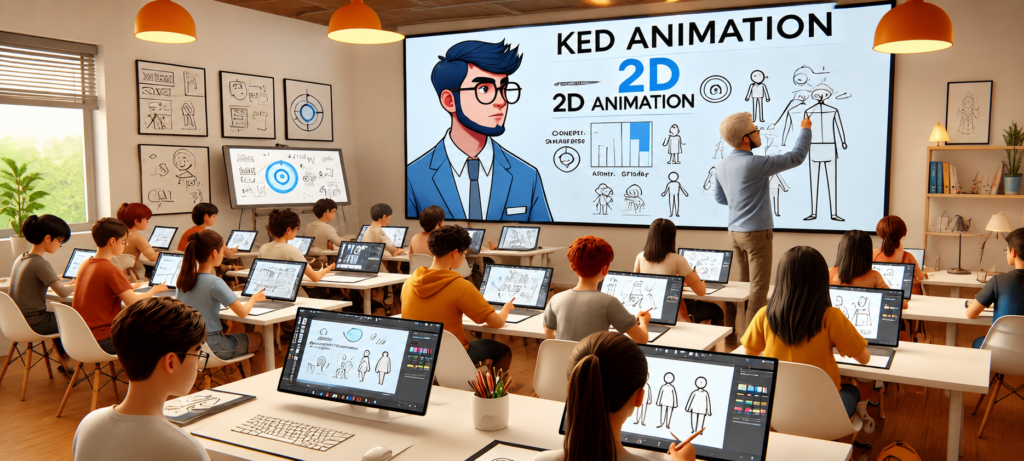
If you are still deciding between a short certificate and a full diploma, or between 2D, 3D, and VFX specialisation, the team at Moople can walk you through a course structure suited to your specific goals and current skill level, rather than a one-size-fits-all package.
FAQs
Q: Is an animation course worth it after 12th in India?
A: Yes, for students genuinely interested in art, storytelling, or design. It offers a faster, more practical route into a creative career compared to a general degree, though it does require consistent practice and portfolio-building, similar to any skill-based field.
Q: What is the average animation training course fee in Kolkata?
A: Fees typically range from around ₹8,000 for short certificate courses to ₹1,00,000–₹2,50,000 for comprehensive 12–24 month diploma programs, depending on software access, project depth, and placement support included.
Q: Do I need a drawing background to join an animation course?
A: No, but a genuine interest in sketching or storytelling helps. Most institutes, including Moople, start with foundation art training so students without a strong drawing background can catch up during the early months.
Q: How long does it take to become job-ready in animation?
A: Most students need 6–12 months of focused training to build a portfolio strong enough for entry-level roles, though timelines vary based on how much time is spent practising outside class hours.
Q: Can I switch from 2D to 3D animation later, or do I need to choose one at the start?
A: Many diploma programs, including advanced tracks at Moople, cover both before specialisation, so students are not forced to choose prematurely. Switching later is possible but requires additional software-specific training.
Q: Is coding required for an animation or VFX career?
A: Not for most animator or compositor roles. Some advanced technical roles (like rigging or pipeline development) benefit from scripting knowledge (Python, MEL), but this is not a requirement to start.
Q: What is the difference between animation and VFX?
A: Animation typically means creating movement from scratch — characters, objects, or graphics. VFX usually means adding digital elements to real, live-action footage. Many careers combine both skill sets.
Conclusion
Choosing an animation course in Kolkata comes down to a few honest questions: does the curriculum build real fundamentals before software, is the fee structure transparent about what is included, and does the institute treat placement support as a genuine process rather than a marketing line? Get those three things right, and the specific software list or course name matters far less than most marketing pages suggest.
If you are ready to take the next step, Moople Institute offers a transparent look at course structure, fees, and placement support before you commit to anything. Reach out for a course counselling session, and bring a few questions from this guide — a good institute should be happy to answer all of them clearly.

Farhat Jabeen is passionate about documenting the student enrollment journey in the fields of technology, design, and digital media. Through her writing, she shares practical guidance, industry insights, and real-world learning experiences that help aspiring students confidently navigate their path toward creative and technology-driven careers. Her goal is to empower learners with the knowledge they need to choose the right educational journey.