The demand for skilled 3D animation professionals is growing rapidly across films, gaming, advertising, architecture, OTT platforms, and digital content creation. If you’re passionate about storytelling, character creation, or visual effects, enrolling in an advanced 3D animation course can be the first step toward building a successful creative career.
Today, companies don’t just look for degrees; they want artists who understand modern animation pipelines, industry software, and real-world production workflows. That’s why choosing the best 3D animation institute with placement support becomes an important decision.
If you’re a Class 12 pass-out, graduate, or someone looking to switch careers, this guide explains everything you need to know about choosing the right BSc in Animation Course, learning industry skills, and securing exciting career opportunities in Kolkata.
Why Choose an Advanced 3D Animation Course?
Animation is no longer limited to cartoons. Today, 3D artists work in blockbuster movies, video games, product visualization, AR/VR experiences, architectural walkthroughs, and digital marketing campaigns.
An advanced 3D animation course prepares students with practical production skills instead of just teaching software tools. You’ll learn how professional studios create animated films, games, advertisements, and visual effects from concept to final render.
Modern animation studios need professionals who understand creativity, storytelling, modeling, texturing, lighting, rigging, rendering, and post-production. A structured course helps students develop all these skills while building an impressive portfolio.
Students who learn 3D animation also improve their creative thinking, visualization, communication, and teamwork—skills valued across multiple industries.
What You’ll Learn in an Advanced 3D Animation Course
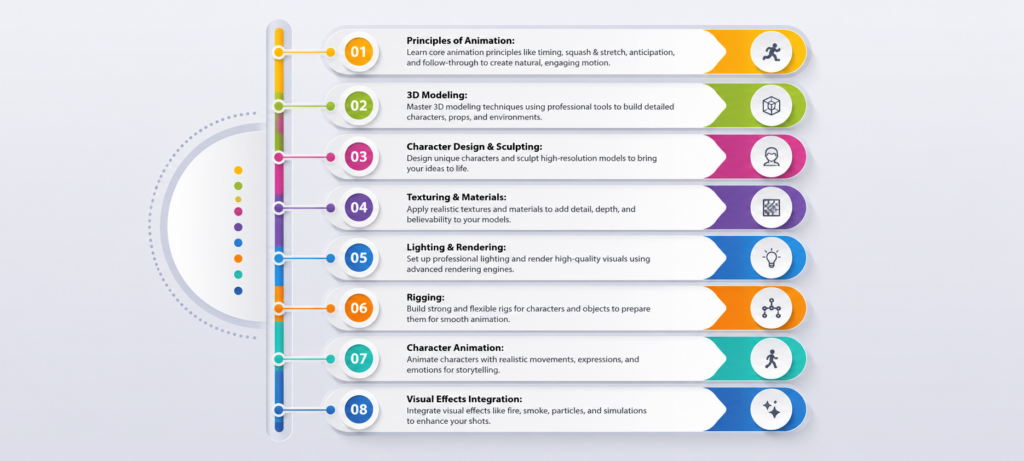
An advanced animation program teaches every stage of the production pipeline, from designing characters to creating realistic animations and visual effects. Students gain hands-on experience while building a professional portfolio that showcases their creativity and technical expertise.
1. Principles of Animation:
Learn the core principles of animation, including timing, movement, balance, and character expressions. These fundamentals help create smooth, realistic, and engaging animations.
2. 3D Modeling:
Students learn to create detailed 3D characters, objects, environments, and props using professional modeling techniques. This skill forms the foundation of every animation project.
3. Character Design & Sculpting:
This module focuses on designing unique characters and sculpting realistic digital models. Students develop artistic skills while learning anatomy, proportions, and character expressions.
4. Texturing & Materials:
Learn how to apply colors, textures, and realistic materials to 3D models. Proper texturing adds depth and makes animated characters and environments look lifelike.
5. Lighting & Rendering:
Students understand how lighting enhances mood and storytelling while learning rendering techniques to produce high-quality final visuals suitable for films and games.
6. Rigging:
Rigging teaches students how to create digital skeletons and control systems that allow characters and objects to move naturally during animation.
7. Character Animation:
This module focuses on bringing characters to life through realistic body movements, facial expressions, emotions, and dialogue-based animations.
8. Visual Effects Integration:
Students learn how animation combines with visual effects, compositing, and motion graphics to create professional-quality scenes used in movies and advertisements.
Software Covered During the Course
Students receive practical training on industry-standard software such as Autodesk Maya, Blender, 3ds Max, ZBrush, Adobe After Effects, Premiere Pro, and Substance Painter. Learning multiple tools improves flexibility and increases career opportunities.
The best institutes train students on industry-standard software, including:
- Autodesk Maya
- Blender
- Autodesk 3ds Max
- ZBrush
- Adobe Photoshop
- Adobe After Effects
- Adobe Premiere Pro
- Substance Painter
- Unreal Engine
- Unity (Basics)
Learning multiple tools increases employability because studios use different production pipelines.
Why Choose a BSc in Animation Course?
A BSc in Animation Course offers a balanced combination of academic education and practical training. It helps students build strong technical skills, creative thinking, and professional knowledge while improving long-term career prospects It is an excellent option after Class 12. Unlike short-term certificate programs, a bachelor’s degree offers deeper learning in animation, multimedia, visual communication, storytelling, and production management.
Benefits of a BSc in Animation Course
- Industry-recognized degree
- Practical project-based learning
- Professional portfolio development
- Internship opportunities
- Better career growth
- Strong foundation for higher studies
- Improved placement opportunities
Students graduate with both technical expertise and theoretical knowledge, making them attractive candidates for studios and creative companies.
Skills You Develop During 3D Animation Training
An advanced animation course helps students improve creativity, storytelling, problem-solving, communication, teamwork, and technical expertise. These skills prepare graduates to work confidently in professional animation studios. An advanced program goes beyond software learning.
Students develop:
- Creative storytelling
- Visual communication
- Character acting
- Digital sculpting
- Environment creation
- Motion design
- Problem-solving
- Team collaboration
- Time management
- Production workflow understanding
These skills help graduates work confidently in professional studio environments.
Career Opportunities After Learning 3D Animation
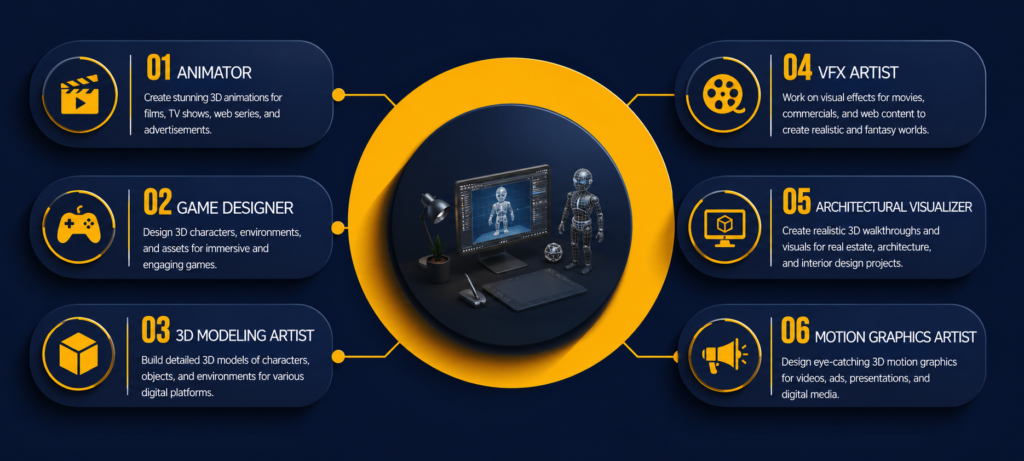
Completing an Advanced 3D Animation Course opens the door to exciting career opportunities across industries such as films, gaming, television, advertising, architecture, and digital media. As the demand for high-quality visual content continues to grow, skilled 3D animation professionals are in high demand by studios and creative companies worldwide.
1. 3D Animator
Create realistic character movements, object animations, and cinematic sequences for films, TV shows, games, and advertisements. A 3D Animator brings stories and ideas to life through engaging visual motion.
2. 3D Modeler
Design detailed characters, environments, vehicles, and props using professional 3D modeling software. These digital assets form the foundation of animation, gaming, and visualization projects.
3. Character Animator
Specialize in animating characters with realistic body language, facial expressions, and emotions. Character Animators help make animated stories more expressive and believable.
4. Rigging Artist
Build digital skeletons and control systems that allow 3D characters and creatures to move naturally. Rigging is an essential step in the animation production pipeline.
5. Lighting Artist
Create realistic lighting setups that enhance mood, depth, and storytelling in animated scenes. Proper lighting improves the visual quality of films, games, and advertisements.
6. Texture Artist
Apply realistic colors, materials, and surface details to 3D models. Texture Artists make characters, environments, and objects appear more lifelike and visually appealing.
7. VFX Artist
Combine computer-generated effects with live-action footage to create stunning visual effects. VFX Artists work on movies, OTT content, commercials, and television productions.
8. Game Artist
Design 3D characters, environments, weapons, and game assets for mobile, PC, console, and AR/VR games. Game Artists play a key role in creating immersive gaming experiences.
9. Motion Graphics Designer
Develop animated graphics, titles, logos, and promotional videos for brands and digital platforms. Motion Graphics Designers are in demand across advertising, marketing, and media industries.
10. 3D Visualization Artist
Create photorealistic architectural walkthroughs, product visualizations, and interior designs. These professionals work with architects, real estate companies, and product manufacturers to showcase concepts effectively.
Industries Hiring 3D Animation Professionals
The demand for skilled 3D animation professionals is growing rapidly as businesses increasingly rely on high-quality visual content to engage their audiences. After completing an Advanced 3D Animation Course, graduates can explore career opportunities across various industries, including entertainment, gaming, advertising, architecture, education, healthcare, and digital media. With the rise of OTT platforms, virtual production, AR/VR, and immersive technologies, 3D animation has become an essential skill, creating excellent job prospects in both India and international markets.
The expanding entertainment and gaming industries continue to increase demand for skilled animation professionals worldwide.
Why Placement Support Matters
Placement support is an important factor when choosing an Advanced 3D Animation Course, as it helps students confidently begin their professional careers. A good institute provides portfolio development, resume building, interview preparation, internships, and campus placement assistance, ensuring students are ready for industry opportunities. With the right career guidance and industry connections, graduates can improve their chances of securing jobs in animation studios, gaming companies, VFX studios, and digital media organizations.
A strong portfolio often plays a bigger role than academic scores when applying for animation jobs.
Why Choose Moople Institute for Advanced 3D Animation?
Among the leading institutes, Moople Institute has established itself as a preferred destination for students seeking to build careers in animation and visual effects. Its practical learning approach helps students build the skills required for successful careers in animation and VFX.
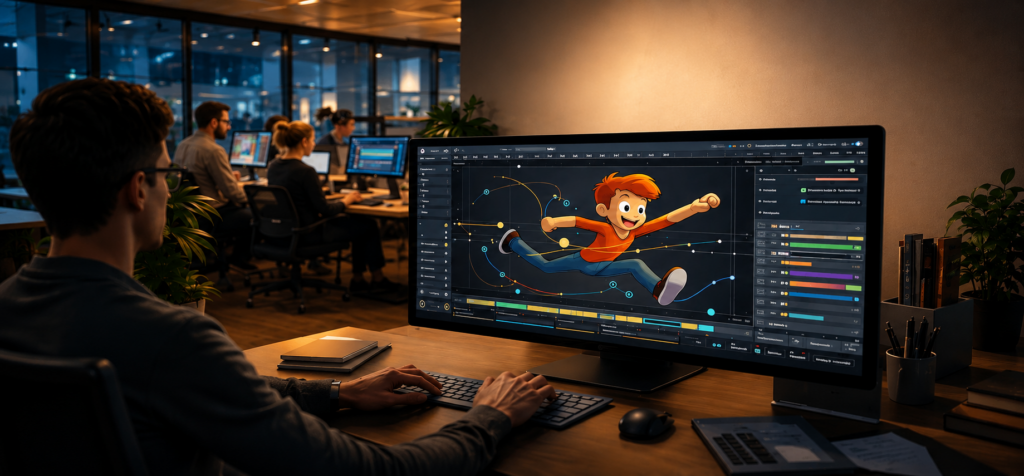
Key highlights include:
- Industry-oriented curriculum
- Experienced mentors from animation and VFX industries
- Hands-on practical training
- Live projects and production workflow
- Modern computer labs
- Portfolio development guidance
- Placement assistance
- Internship opportunities
- Career counselling sessions
- Regular workshops and industry interaction
Students receive practical exposure that helps them confidently enter professional animation studios.
Future Scope of 3D Animation
According to recent industry reports, the global animation market continues to expand due to increasing demand for streaming platforms, gaming, virtual production, and immersive digital experiences.
Technologies such as AI-assisted animation, real-time rendering, virtual production, augmented reality (AR), and virtual reality (VR) are creating exciting opportunities for skilled artists. Professionals who continuously upgrade their skills will enjoy excellent career prospects over the coming years.
Explore More: How a 3D Animation Course Can Help You Build a Successful Career in Gaming
Final Thoughts
If you’re passionate about creativity, storytelling, and digital technology, enrolling in an advanced 3D animation course can open the door to an exciting and rewarding career. Whether your dream is to work in films, gaming, advertising, or digital media, the right training helps you develop practical skills, industry exposure, and a professional portfolio.
A BSc in Animation Course or an industry-focused diploma from a reputed animation institute in Kolkata can give you the knowledge and confidence needed to succeed in today’s competitive creative industry.
Take the next step toward your dream career. Explore Moople Institute’s Advanced 3D Animation programs, build your portfolio, gain hands-on experience, and prepare for placement opportunities in leading animation and media companies.
(FAQs)
A good advanced 3D animation course should offer practical training, industry-standard software, live projects, portfolio development, and placement assistance. Institutes like Moople Institute are known for their industry-oriented curriculum.
A BSc in Animation Course provides both academic qualifications and practical skills, making it suitable for long-term career growth. Diploma courses are ideal for students seeking faster skill-based training.
Most institutes accept students who have completed Class 12 from a recognized board. Some courses also welcome graduates and working professionals.
Career options include 3D Animator, Character Animator, Modeling Artist, Lighting Artist, Rigging Artist, Texture Artist, Motion Graphics Designer, Game Artist, and VFX Artist.

Farhat Jabeen is passionate about documenting the student enrollment journey in the fields of technology, design, and digital media. Through her writing, she shares practical guidance, industry insights, and real-world learning experiences that help aspiring students confidently navigate their path toward creative and technology-driven careers. Her goal is to empower learners with the knowledge they need to choose the right educational journey.