The gaming industry has transformed from a niche entertainment sector into one of the fastest-growing digital industries in the world. From mobile games and PC titles to console games and virtual reality experiences, the demand for skilled game developers is increasing every year. If you are passionate about gaming and want to turn your creativity into a rewarding profession, enrolling in a Game Development Course in Kolkata can be the perfect first step.
Today, game development is much more than simply creating games. It combines creativity, storytelling, programming, animation, artificial intelligence, user experience, and problem-solving. Whether you dream of developing your own indie game or working for a leading gaming studio, the right training can provide the technical knowledge and practical experience needed to succeed.
In this blog, you’ll discover why game development is a promising career, what you’ll learn during a professional course, the career opportunities available, and how to choose the Best Game Design Course that aligns with your goals.
Why Choose a Game Development Course in Kolkata?
Kolkata has become one of India’s emerging education and technology hubs. With a growing IT ecosystem, creative media companies, startups, and educational institutions, students now have access to industry-focused training without relocating to another city.
A professional Game Development Course in Kolkata helps students build practical skills rather than relying only on theoretical knowledge. Most industry-oriented programs focus on project-based learning, allowing students to create playable games while understanding the complete development pipeline.
Some of the biggest advantages include:
- Learn from experienced industry professionals.
- Work on real-world gaming projects.
- Build a strong portfolio for job interviews.
- Gain exposure to modern game engines.
- Improve programming and problem-solving skills.
- Receive placement assistance and career guidance.
As India’s gaming market continues to expand, trained professionals are becoming increasingly valuable across multiple industries.
Why is Game Development a Great Career Choice?
The gaming industry is growing at an impressive pace across the globe. According to recent industry reports by Newzoo and NASSCOM, India’s gaming ecosystem continues to experience significant growth due to increasing smartphone usage, affordable internet access, and rising investments in gaming startups.
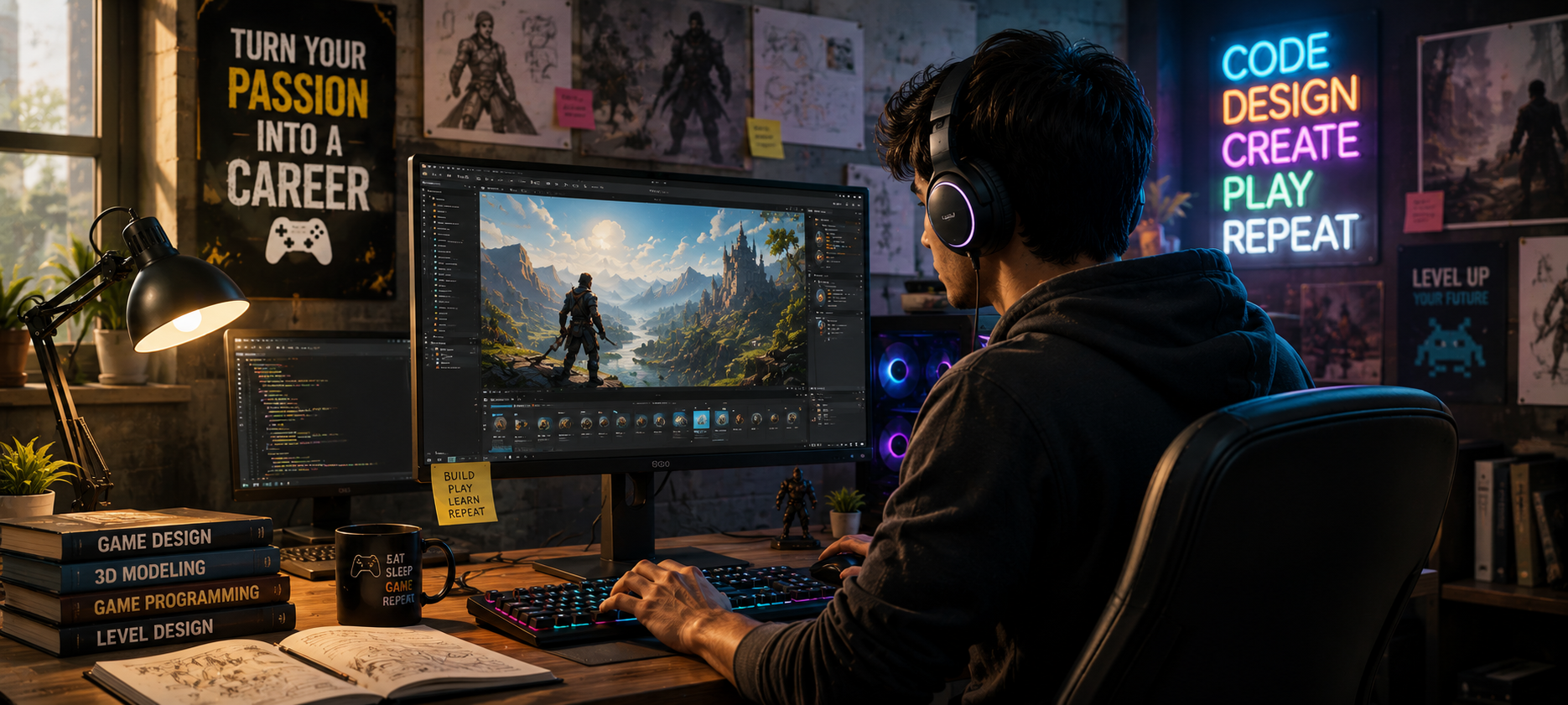
Modern games require professionals from different backgrounds, including programmers, artists, designers, animators, sound engineers, testers, and project managers. This means students with both technical and creative interests can find exciting career opportunities.
A career in game development offers several benefits:
- High demand for skilled professionals.
- Opportunities in India and abroad.
- Competitive salary packages.
- Creative and technically challenging work.
- Freelancing and independent game publishing options.
- Continuous learning with evolving technologies.
The industry also extends beyond entertainment into education, healthcare, military simulation, architecture, and virtual training, making game development skills highly versatile.
What Will You Learn in a Game Development Course?
A professional Game Development Course teaches students the complete game creation process, including programming, game design, 2D and 3D development, artificial intelligence, and game engines like Unity and Unreal Engine. The course focuses on practical learning through real-world projects.
A comprehensive Game Development Course covers every stage of the game creation process, from planning to deployment.
Programming Fundamentals
Programming forms the foundation of game development. Students usually learn:
- C#
- C++
- Object-Oriented Programming
- Data Structures
- Algorithms
- Debugging techniques
Strong coding skills allow developers to build game mechanics, AI systems, and interactive gameplay.
Game Design Principles
Game design focuses on creating engaging player experiences. Students learn:
- Game mechanics
- Level design
- Character progression
- User experience
- Storytelling
- Game balancing
These skills help developers create enjoyable and immersive games.
Unity Game Engine
Unity is one of the world’s most popular game engines for developing 2D and 3D games. Students gain experience in:
- Scene creation
- Physics
- Lighting
- Animation
- UI development
- Mobile game deployment
Unity is widely used by indie developers and major gaming studios alike.
Unreal Engine
Many advanced Best Game Design Course programs also introduce Unreal Engine, which is widely used for AAA games, simulations, architecture visualization, and virtual production.
Students learn:
- Blueprint Visual Scripting
- Real-time rendering
- Environment creation
- Cinematics
- Multiplayer systems
2D and 3D Game Development
Students develop complete games using modern production pipelines, including:
- Character movement
- Enemy AI
- Physics systems
- Inventory systems
- Combat mechanics
- Menus and interfaces
Hands-on practice helps reinforce theoretical concepts.
Artificial Intelligence in Games
AI makes games more interactive and realistic.
Topics often include:
- Enemy behavior
- Pathfinding
- Decision-making systems
- NPC interactions
- State machines
These techniques create intelligent and engaging gameplay.
Mobile Game Development
With millions of mobile gamers worldwide, students also learn to build Android and iOS games by understanding:
- Mobile optimization
- Touch controls
- Monetization
- Performance optimization
- Publishing process
Essential Skills Every Game Developer Should Build
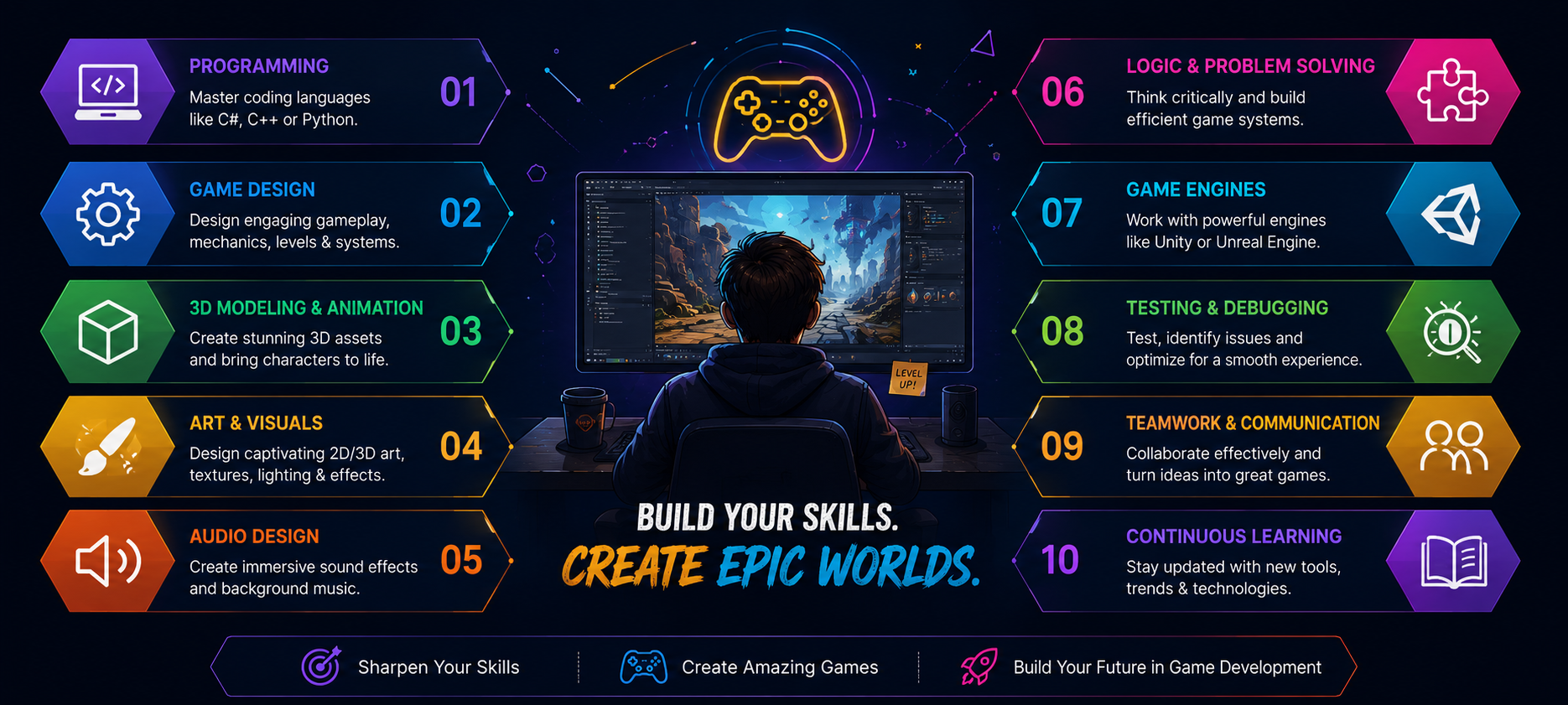
Successful game developers need a combination of technical expertise and soft skills. Along with programming and design knowledge, they should develop creativity, communication, teamwork, problem-solving, and time management skills to succeed in professional game development environments.
Problem Solving
Game developers regularly solve coding challenges, optimize performance, and fix gameplay issues. Strong analytical thinking helps them create smooth and engaging gaming experiences.
Creativity
Creativity is essential for designing unique game mechanics, characters, levels, and stories. Innovative thinking helps developers create memorable games that stand out in the competitive gaming market.
Team Collaboration
Modern games are developed by teams of programmers, designers, artists, and testers. Good collaboration skills ensure smooth communication and successful project completion.
Communication
Clear communication helps developers share ideas, discuss technical challenges, and coordinate with team members throughout the game development process.
Time Management
Managing deadlines is crucial in the gaming industry. Effective time management enables developers to complete projects efficiently while maintaining high-quality work.
Continuous Learning
Game development technologies evolve rapidly. Staying updated with new tools, engines, programming languages, and industry trends helps developers remain competitive throughout their careers.
Career Opportunities After Completing a Game Development Course
A Game Development Course in Kolkata opens doors to various exciting career opportunities in gaming, entertainment, education, and simulation industries. With the right skills and portfolio, graduates can work for game studios, IT companies, or even become independent game developers.
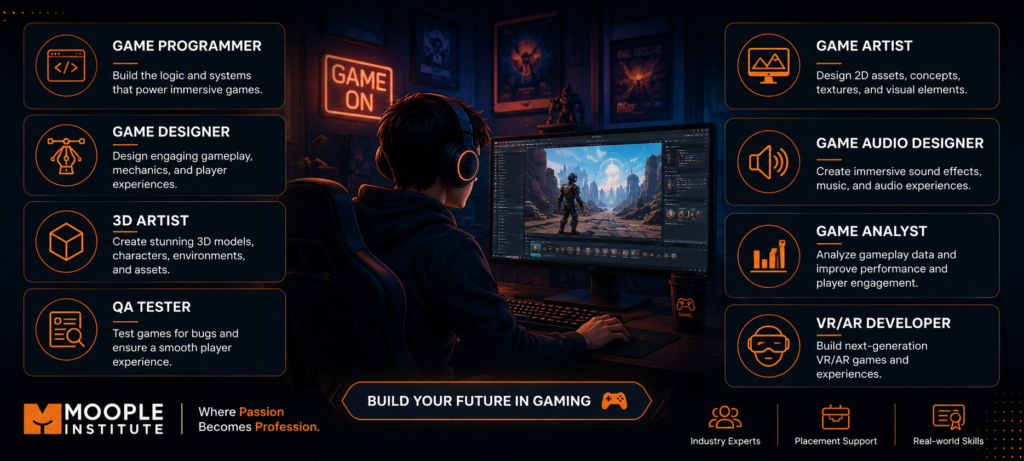
Game Developer
Game Developers build the core gameplay, mechanics, and functionality of games using programming languages and game engines to create engaging player experiences.
Unity Developer
Unity Developers specialize in creating interactive 2D and 3D games using the Unity engine for mobile, PC, web, and console platforms.
Unreal Engine Developer
Unreal Engine Developers create high-quality games, simulations, and virtual reality experiences using advanced rendering and visual scripting tools.
Game Designer
Game Designers plan gameplay mechanics, character progression, level design, and storytelling to create enjoyable and balanced gaming experiences.
Gameplay Programmer
Gameplay Programmers focus on coding player interactions, combat systems, artificial intelligence, and other gameplay features that define how a game feels.
Mobile Game Developer
Mobile Game Developers design and develop engaging games optimized for Android and iOS devices while ensuring smooth performance across different smartphones.
AR/VR Developer
AR/VR Developers create immersive experiences using augmented and virtual reality technologies for gaming, education, healthcare, and simulation industries.
Game Tester (QA)
Game Testers identify bugs, performance issues, and gameplay errors before a game is released, helping ensure a smooth experience for players.
Indie Game Developer
Indie Game Developers independently create, publish, and market their own games, often using platforms like Steam, Google Play, and the App Store
Explore more blog: How Game Development Courses Prepare You for Indie Game Development and AAA Studios
How to Choose the Best Game Design Course
Choosing the Best Game Design Course requires careful research. Look for an institute that offers updated course content, experienced trainers, practical learning, placement support, and opportunities to build a professional portfolio through live projects.
Updated Curriculum
A quality curriculum should include Unity, Unreal Engine, C#, C++, AI, multiplayer game development, and the latest industry-standard tools.
Experienced Faculty
Learning from experienced professionals gives students practical insights into industry workflows, development techniques, and career expectations.
Practical Learning
Project-based learning allows students to apply classroom concepts by creating real games, strengthening both technical skills and confidence.
Placement Support
Institutes offering career guidance, mock interviews, resume preparation, internships, and placement assistance help students transition into professional careers.
Industry Exposure
Workshops, guest lectures, game jams, and industry events expose students to current trends and provide valuable networking opportunities.
Portfolio Development
A strong portfolio showcasing completed game projects significantly improves a student’s chances of securing internships and full-time game development jobs
Future Scope of Game Development
The future of game development looks brighter than ever. Technologies such as Artificial Intelligence, Virtual Reality (VR), Augmented Reality (AR), Cloud Gaming, and the Metaverse are creating new opportunities for skilled professionals.
Game development skills are now used across industries, including education, healthcare, architecture, automotive simulations, defense training, and digital marketing. As these technologies continue to evolve, professionals with strong development skills will remain in high demand.
Students who continuously upgrade their knowledge and build strong portfolios will have excellent career prospects in both India and international markets.
Why Practical Training Matters
Many beginners learn programming through online tutorials but struggle to build complete games. A structured classroom or professional training program bridges this gap by providing:
- Mentor guidance
- Real-world projects
- Team collaboration
- Industry-standard workflows
- Portfolio development
- Interview preparation
Employers often value practical experience more than theoretical knowledge, making project-based learning one of the biggest advantages of professional training.
FAQs
Yes. Most beginner-friendly courses start with programming fundamentals before moving to advanced topics like Unity, Unreal Engine, AI, and multiplayer game development.
Most institutes accept students who have completed Class 12 or graduation. Basic computer knowledge is helpful but not always mandatory.
Students commonly learn Unity, Unreal Engine, Visual Studio, Blender, Git, C#, and C++, depending on the course curriculum.
Graduates can work as Game Developers, Unity Developers, Unreal Developers, Game Designers, Gameplay Programmers, Mobile Game Developers, QA Testers, or AR/VR Developers.
Most professional diploma and certification programs take between 6 and 12 months, depending on the curriculum and learning pace.
Conclusion
The gaming industry is no longer just about entertainment—it has become one of the most exciting technology-driven career fields in the world. A professional Game Development Course in Kolkata provides the technical skills, practical experience, and portfolio needed to enter this rapidly growing industry. Whether you aspire to build mobile games, immersive 3D experiences, or next-generation AR and VR applications, the right training can open the door to countless opportunities.
If you’re passionate about gaming, creativity, and technology, now is the perfect time to enroll in the Best Game Design Course and start building a rewarding career in game development. Invest in your skills today and take the first step toward creating the games of tomorrow.

Farhat Jabeen is passionate about documenting the student enrollment journey in the fields of technology, design, and digital media. Through her writing, she shares practical guidance, industry insights, and real-world learning experiences that help aspiring students confidently navigate their path toward creative and technology-driven careers. Her goal is to empower learners with the knowledge they need to choose the right educational journey.