Every successful brand has one thing in common—a memorable logo. From startups to global companies, logos create the first impression and communicate a brand’s identity in seconds. As businesses continue to invest in digital branding, the demand for skilled logo designers is growing rapidly across industries.
If you are passionate about creativity and want to build a rewarding design career, enrolling in a Logo Design Course is one of the smartest decisions you can make. Whether you dream of working in a design agency, becoming a freelance designer, or joining a leading company, learning logo design provides the foundation for a successful creative career.
In this blog, you’ll discover what a logo design course covers, the skills you’ll gain, career opportunities, salary expectations, and how choosing the right Graphic Design Course can help you achieve your goals.
Why Logo Design Matters in Today’s Digital World
A logo is much more than an attractive graphic. It represents a company’s personality, values, and identity. Consumers often recognize brands by their logos before reading the company name.
Today, businesses compete across websites, social media, mobile apps, and digital advertisements. Because of this, companies require professional logo designers who understand branding, typography, color psychology, and visual communication.
According to the U.S. Bureau of Labor Statistics, employment for graphic designers continues to be driven by digital media demand, particularly in online marketing and branding. Businesses are constantly searching for designers who can create memorable visual identities.
A professionally designed logo helps businesses:
- Build brand recognition
- Increase customer trust
- Create a professional image
- Stand out from competitors
- Improve marketing consistency
This growing demand has made logo design one of the most valuable skills within the graphic design industry.
What is a Logo Design Course?
A Logo Design Course teaches students how to create unique, meaningful, and professional logos using industry-standard design principles and software.
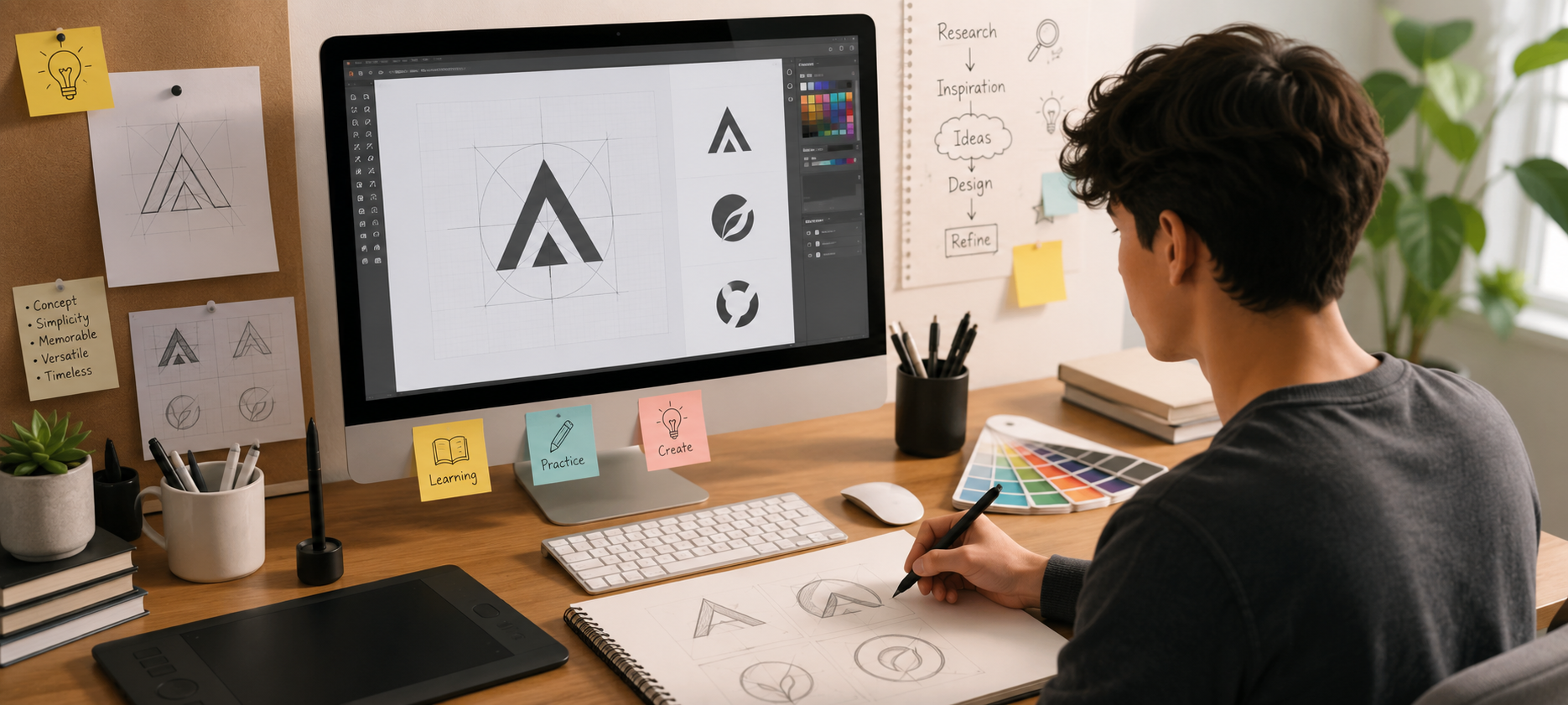
Unlike simply learning software, a professional course focuses on understanding branding strategies, visual storytelling, creative thinking, and design psychology.
Students learn how to transform business ideas into memorable visual identities that work across print and digital platforms.
What Will You Learn in a Logo Design Course?
The course covers the complete logo design process, from understanding design fundamentals to creating professional brand identities. Students gain practical experience with typography, color theory, branding, vector illustration, and industry-standard software through real-world projects.
Design Fundamentals
Design fundamentals provide the foundation for creating visually balanced and attractive logos. Students learn concepts such as alignment, contrast, composition, hierarchy, and spacing, which are essential for producing professional-quality designs.
Typography
Typography is a key element of logo design that influences how a brand is perceived. Students learn to choose the right fonts, create custom lettering, and combine typefaces to design logos that are both readable and memorable.
Color Psychology
Colors have a powerful impact on emotions and brand perception. This module teaches students how to select the right color combinations that align with a company’s identity and effectively communicate its message.
Brand Identity Design
A logo is only one part of a complete brand identity. Students learn how to create consistent branding materials such as business cards, social media graphics, and brand guidelines to build a professional visual identity.
Logo Design Process
Creating a successful logo involves research, brainstorming, sketching, digital design, and refinement. This section teaches students a structured workflow that helps transform creative ideas into effective brand logos.
Industry Software You’ll Master
Students gain hands-on experience with professional design software like Adobe Illustrator, Adobe Photoshop, Adobe InDesign, CorelDRAW, and Figma. Mastering these tools prepares them for real-world graphic design projects.
Why Choose a Graphic Design Course Along with Logo Design?
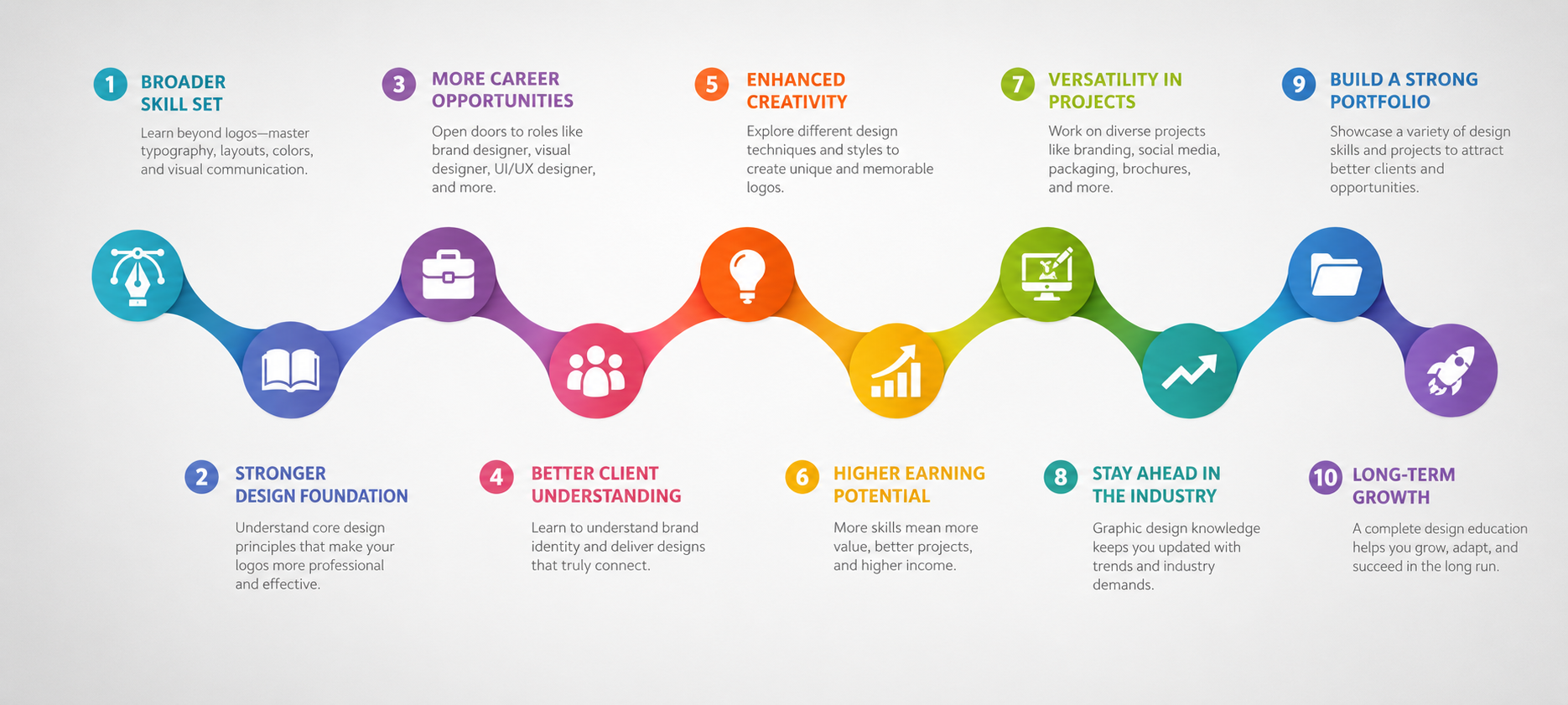
A complete Graphic Design Course expands your creative skills beyond logo creation. It covers branding, advertising, print design, digital marketing graphics, and social media design, making you more versatile and attractive to employers.
While logo design is a specialized skill, employers usually prefer designers with broader graphic design knowledge.
A complete Graphic Design Course teaches:
- Branding
- Print design
- Social media creatives
- Packaging
- Advertising
- UI graphics
- Digital illustrations
- Marketing design
This wider skill set significantly improves career opportunities and earning potential.
Skills You’ll Develop
Throughout the course, students develop creativity, communication, branding knowledge, problem-solving abilities, and technical expertise. These practical skills help them succeed in professional design environments and freelance careers.
Creative Thinking
Creative thinking enables designers to generate original ideas that solve branding challenges. Students learn techniques to transform simple concepts into unique and memorable visual identities.
Branding Strategy
Understanding branding helps designers create logos that reflect a company’s mission, personality, and target audience. This knowledge ensures every design supports long-term brand success.
Client Communication
Successful designers know how to understand client requirements and present their ideas professionally. Students develop communication skills that help them collaborate effectively with clients and teams.
Problem Solving
Every design project comes with unique challenges. Students learn how to analyze client needs and create practical, visually appealing solutions that meet branding objectives.
Portfolio Development
A strong portfolio showcases your creativity and technical skills. Throughout the course, students build professional projects that help them impress recruiters and secure job opportunities.
Career Opportunities After a Logo Design Course
Completing a Logo Design Course opens doors to careers such as Logo Designer, Graphic Designer, Brand Identity Designer, Visual Designer, and Freelancer. Skilled professionals can work in agencies, startups, media companies, or build their own successful freelance business.
The creative industry offers numerous career options.
Popular job roles include:
- Logo Designer
- Graphic Designer
- Brand Identity Designer
- Visual Designer
- Creative Designer
- Marketing Designer
- Packaging Designer
- Digital Designer
- Freelance Graphic Designer
- Brand Consultant
Many designers also build successful freelance careers by working with clients worldwide through online platforms.
Salary Expectations
Logo designers enjoy competitive salary opportunities based on their skills, experience, and portfolio. As designers gain expertise in branding and visual communication, their earning potential continues to grow.
Your salary depends on your skills, portfolio, experience, and location.
Average salary ranges in India:
| Experience | Average Annual Salary |
| Fresher | ₹2.5 – ₹4.5 LPA |
| 2–4 Years | ₹5 – ₹8 LPA |
| Senior Designer | ₹8 – ₹15+ LPA |
| Freelancers | Income varies by projects |
Designers with branding expertise often earn significantly more than general graphic designers.
How to Choose the Best Graphic Institute
Choosing the best graphic institute is essential for building a successful career. Look for institutes that offer experienced faculty, updated curriculum, hands-on projects, professional software training, portfolio development, and placement assistance.
Updated Curriculum
An updated curriculum ensures students learn modern design trends, branding techniques, and industry-relevant software. This helps graduates stay competitive in today’s creative industry.
Practical Projects
Working on practical assignments allows students to apply classroom knowledge to real-world scenarios. These projects also strengthen their portfolios and improve their confidence.
Industry Software
Learning professional software such as Adobe Illustrator and Photoshop is essential for every graphic designer. Hands-on software training prepares students for industry requirements.
Experienced Faculty
Experienced instructors provide valuable industry insights, practical guidance, and personalized feedback that help students improve both creatively and professionally.
Placement Assistance
Institutes with dedicated placement support help students prepare for interviews, improve their resumes, and connect with employers in the design industry.
Portfolio Development
A well-designed portfolio demonstrates your creativity and technical expertise. It is one of the most important tools for securing internships, freelance projects, and full-time design jobs.
Why Practical Learning Matters
Practical learning helps students gain confidence by working on real design challenges. Live projects, workshops, and portfolio reviews ensure graduates are ready to meet industry expectations from day one.
Design is a skill that improves through practice.
- Live client projects
- Logo redesign challenges
- Brand identity assignments
- Case studies
- Portfolio reviews
- Industry workshops
These experiences prepare students for real workplace expectations.
Future Trends in Logo Design
The future of logo design includes minimalist branding, responsive logos, AI-assisted design, motion graphics, and adaptive brand identities. Keeping up with these trends helps designers remain relevant in the evolving creative industry.
The branding industry continues to evolve rapidly.
Popular trends include:
- Minimalist logos
- Responsive logos
- AI-assisted design
- Motion logos
- Sustainable branding
- Variable logo systems
- 3D branding
- Adaptive identities
Learning these trends helps students stay competitive in today’s creative industry.
Is Logo Design a Good Career in 2026?
Yes, logo design is expected to remain a strong and rewarding career choice in 2026. As businesses continue to invest in digital branding, social media marketing, and online presence, the demand for skilled logo designers is steadily growing. Companies of all sizes—from startups to established brands—need unique visual identities that help them stand out in a competitive market. With opportunities in agencies, corporate teams, and freelancing, logo design offers both creative satisfaction and excellent career potential.
Why logo design is a good career in 2026:
- Growing demand for branding
- High freelance opportunities
- Remote work flexibility
- Creative and rewarding profession
- Opportunities across industries
- Strong portfolio-based career growth
- Increasing digital marketing demand
- Potential for higher earnings with experience
With businesses investing more in online branding, professionals who understand both creativity and marketing are expected to remain highly valuable.
Conclusion
A Logo Design Course is more than learning how to create attractive logos. It teaches branding, creativity, problem-solving, and professional design workflows that prepare students for successful careers in the creative industry.
Whether you want to become a graphic designer, branding expert, or freelancer, investing in the right Graphic Design Course can open doors to exciting opportunities. If you’re searching for a graphic design course in Kolkata, choose an institute that combines practical learning, industry software, portfolio development, and placement support.
Start building your creative future today and take the first step toward becoming a professional logo designer.
(FAQs)
1. Who can join a Logo Design Course?
Anyone interested in creativity, branding, and graphic design can join. Students after Class 12, graduates, and working professionals are all eligible.
2. Which software is used in logo design?
The most commonly used software includes Adobe Illustrator, Adobe Photoshop, CorelDRAW, Figma, and Adobe InDesign.
3. Is logo design a good career?
Yes. Logo designers are in demand across branding agencies, digital marketing companies, startups, advertising firms, and as freelancers.
4. How long does it take to learn logo design?
Most professional courses range from 3 months to 12 months, depending on the curriculum and learning format.
5. Can I become a freelancer after completing the course?
Yes. With a strong portfolio and practical skills, many logo designers successfully work as freelancers for clients across India and internationally.

Farhat Jabeen is passionate about documenting the student enrollment journey in the fields of technology, design, and digital media. Through her writing, she shares practical guidance, industry insights, and real-world learning experiences that help aspiring students confidently navigate their path toward creative and technology-driven careers. Her goal is to empower learners with the knowledge they need to choose the right educational journey.