
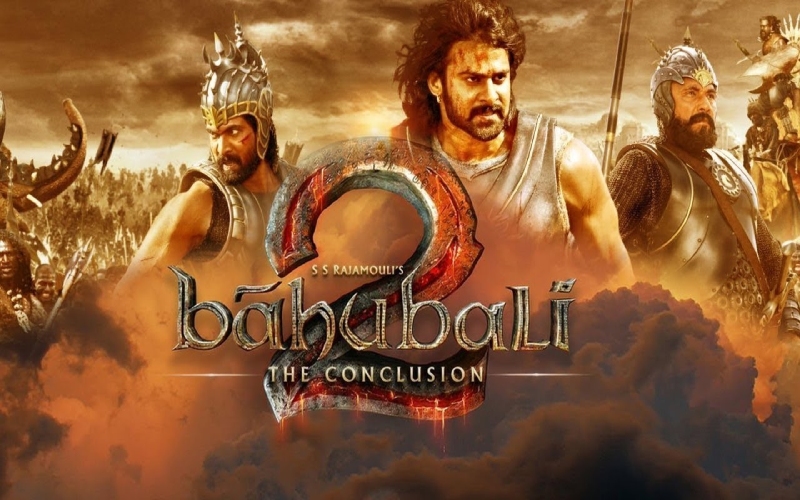
Indian cinema has always been known for its storytelling, music, emotions, and larger-than-life characters. However, the release of Baahubali 2: The Conclusion marked a significant turning point in the technological evolution of Indian filmmaking. Directed by S. S. Rajamouli, the film demonstrated how advanced visual effects, computer-generated imagery, motion capture, digital environments, and sophisticated post-production could be combined to create a cinematic experience that could compete with international productions.
Released in 2017, Baahubali 2 became more than a successful Indian film. It became an example of how technology could expand the creative possibilities of Indian filmmakers. Its success also generated greater interest among young people who wanted to build careers in animation, visual effects, filmmaking, and digital production.
Today, students interested in this field can explore professional programs such as a VFX course or a BSc in VFX and Filmmaking to develop the technical and creative skills required by the modern entertainment industry.
How Baahubali 2 Changed Indian Filmmaking
Before Baahubali, Indian filmmakers had already been using CGI and visual effects in different productions. However, Baahubali 2 demonstrated the potential of using VFX as an integral part of storytelling rather than simply as an additional visual enhancement.
The film presented massive kingdoms, enormous battle sequences, digital landscapes, powerful characters, animals, weapons, and large-scale environments. Many of these elements required a combination of live-action cinematography and digitally created or enhanced visuals.
This approach encouraged filmmakers to think beyond the limitations of physical sets and locations. With the right combination of planning, cinematography, VFX, and post-production, filmmakers could create worlds that would otherwise be extremely difficult or expensive to construct physically.
The Role of VFX in Baahubali 2
Visual effects were one of the most important technological components behind the film’s cinematic scale.
VFX artists worked on a wide range of elements, including:
- Digital environments and backgrounds
- Large-scale battle scenes
- CGI characters and creatures
- Digital set extensions
- Crowd multiplication
- Destruction and action effects
- Water, fire, smoke, and atmospheric effects
- Character enhancements
- Compositing and color integration
One of the biggest lessons from Baahubali 2 was that successful VFX requires more than creating impressive graphics. Every digital element needs to match the lighting, camera movement, perspective, texture, and atmosphere of the original footage.
This increased the importance of skilled VFX professionals in Indian filmmaking.
Advancement of CGI and Digital Environments
Computer-generated imagery, or CGI, became increasingly important in Indian cinema after the success of large-scale productions such as Baahubali.
Digital environments allowed filmmakers to create locations that could combine real sets with computer-generated extensions. Instead of constructing an entire kingdom or battlefield physically, production teams could shoot selected portions on set and digitally expand the environment during post-production.
This technique saves physical space while providing filmmakers with greater creative control.
For students considering a VFX course, understanding CGI, digital environments, 3D modelling, texturing, lighting, and compositing can provide an important foundation for entering the entertainment industry.
Better Integration of Live Action and VFX
Another important contribution of Baahubali 2 was demonstrating the importance of integrating real footage with computer-generated elements.
For VFX to appear believable, the digital elements must feel like they were actually present when the scene was filmed. This requires careful coordination between cinematographers, directors, VFX supervisors, 3D artists, compositors, lighting artists, and other specialists.
Factors such as camera tracking, perspective, shadows, reflections, depth, motion blur, and color matching all contribute to realism.
This collaborative production process helped highlight the fact that filmmaking and VFX are closely connected disciplines.
The Growing Importance of 3D Animation
Large-scale Indian films also contributed to increased demand for professionals with 3D animation and modelling skills.
3D artists can be involved in creating:
- Characters
- Props
- Buildings
- Vehicles
- Creatures
- Weapons
- Digital environments
- Architectural elements
These models can then be textured, rigged, animated, lit, and composited into final scenes.
As Indian cinema continues to adopt advanced digital production methods, knowledge of 3D software and animation principles can become valuable for students interested in entertainment and media careers.
Impact on Film Production and Post-Production
Baahubali 2 also highlighted how much modern filmmaking depends on post-production.
The final cinematic experience is often the result of several stages, including:
- Pre-production planning
- Script and storyboard development
- Production design
- Live-action shooting
- 3D modelling and animation
- VFX creation
- Compositing
- Color grading
- Sound design
- Final editing and mastering
The relationship between these stages is extremely important. A VFX-heavy production requires planning from the earliest stages rather than adding effects only after filming has finished.
This production approach has influenced how large-scale Indian projects plan their visual storytelling.
Creating New Career Opportunities
The technological growth represented by films such as Baahubali 2 has contributed to expanding career opportunities in India’s animation and visual effects industry.
Students can explore careers such as:
- VFX Artist
- Compositor
- 3D Modeler
- 3D Animator
- Character Artist
- Lighting Artist
- Texture Artist
- Motion Graphics Artist
- Roto Artist
- Matchmove Artist
- VFX Supervisor
- Video Editor
- Film Editor
- Pre-visualization Artist
The industry is no longer limited to traditional cinema. VFX and animation professionals can also find opportunities in television, advertising, OTT platforms, gaming, music videos, virtual production, and international entertainment projects.
Why a VFX Course Can Be Valuable for Aspiring Filmmakers
The increasing use of technology in filmmaking has created a need for professionals who understand both creative concepts and technical workflows.
A professional VFX course can introduce students to areas such as compositing, 3D modelling, animation, motion graphics, visual effects, video editing, and post-production.
Practical training can be particularly useful because students need opportunities to work on projects and build portfolios rather than relying only on theoretical knowledge.
For students who want a broader academic pathway, a BSc in VFX and Film Making can combine visual effects education with filmmaking concepts. Such a program can help learners understand the complete creative pipeline, from developing a visual idea to producing and editing the final film.
How Baahubali 2 Inspired the Next Generation
Perhaps the most important impact of Baahubali 2 was inspirational.
The film showed audiences and aspiring filmmakers that Indian cinema could create ambitious visual worlds using technology, creativity, and large-scale production techniques.
It encouraged young creators to explore careers in VFX, animation, filmmaking, cinematography, editing, and digital production.
The film also helped demonstrate that technology does not replace storytelling. Instead, technology can give storytellers more tools to communicate their ideas.
The Future of Indian Film Technology
The technological journey that gained significant visibility through films like Baahubali 2 continues to evolve.
Indian productions are increasingly exploring technologies such as:
- Advanced CGI
- Virtual production
- Real-time rendering
- Motion capture
- Artificial intelligence-assisted workflows
- Digital humans
- Virtual environments
- High-end compositing
- 3D animation
- Advanced color grading
Virtual production, in particular, is changing how filmmakers can combine physical performances with digital environments.
As technology continues to advance, future filmmakers will need a combination of artistic vision, storytelling ability, technical knowledge, and problem-solving skills.
Conclusion
Baahubali 2: The Conclusion holds an important place in the technological development of Indian cinema. Its ambitious use of visual effects, CGI, digital environments, large-scale action design, and post-production demonstrated what could be achieved when filmmaking and technology work together.
Its influence goes beyond box-office success. The film helped create greater awareness of the importance of VFX and digital filmmaking and inspired many aspiring artists to explore careers in this field.
For students passionate about visual storytelling, pursuing a VFX course can be a practical starting point for developing industry-relevant skills. Those looking for a broader academic education can consider a BSc in VFX and Filmmaking to explore both visual effects and filmmaking.
As Indian cinema continues to embrace new technologies, the demand for creative and technically skilled professionals is likely to grow. The legacy of Baahubali 2 therefore represents not only a milestone in Indian cinema but also a glimpse into the future of technology-driven filmmaking.
FAQs
1. How did Baahubali 2 impact Indian film technology?
Baahubali 2 demonstrated how advanced VFX, CGI, digital environments, compositing, and post-production could be used to create large-scale cinematic experiences in Indian cinema.
2. What role did VFX play in Baahubali 2?
VFX helped create and enhance large battle sequences, environments, digital assets, creatures, crowd scenes, action effects, and other visual elements that would have been difficult to produce entirely through traditional filmmaking.
3. Is a VFX course useful for a career in filmmaking?
Yes. A professional VFX course can help students develop skills in areas such as 3D modelling, animation, compositing, visual effects, and post-production, which are used across films, OTT, advertising, gaming, and other media industries.
4. What is a BSc in VFX and Filmmaking?
A BSc in VFX and Filmmaking is an academic program that combines visual effects with filmmaking concepts. Depending on the curriculum, students may learn areas such as VFX, animation, cinematography, editing, storytelling, and post-production.
5. What career opportunities are available after learning VFX?
Students can explore careers such as VFX Artist, 3D Artist, Compositor, 3D Animator, Lighting Artist, Texture Artist, Motion Graphics Artist, Video Editor, Matchmove Artist, and other digital production roles.
6. Did Baahubali 2 influence the future of Indian cinema?
Yes. The film helped demonstrate the potential of technology-driven filmmaking in India and contributed to greater interest in advanced VFX, CGI, animation, and digital production workflows.

Pooja Sharma is a creative education content writer who creates engaging articles on career guidance, skill development, and learning opportunities to help students make informed decisions.