
Choosing the right career is one of the biggest decisions students and parents face today. With industries changing rapidly because of technology and artificial intelligence, many students wonder whether traditional jobs will still exist in the future. This is why careers in cybersecurity are getting massive attention worldwide.
But one important question still remains: Is cyber security a stable career?
The short answer is yes. Cybersecurity has become one of the most stable and future-proof industries because businesses, governments, hospitals, banks, and even schools depend on digital systems every day. As cyber threats increase, organizations urgently need trained professionals who can protect their networks, systems, and data.
A well-structured cybersecurity course or a BSc in Cyber Security can help students build technical skills, gain industry knowledge, and prepare for high-demand roles in the digital security industry. From ethical hacking and cloud security to digital forensics and network defense, cybersecurity offers multiple career paths with long-term growth.
In this guide, we will explore why cybersecurity is considered a stable career, the future scope of the industry, salary opportunities, job roles, required skills, and how students can start their journey with a cybersecurity degree.
Why Cybersecurity Is One of the Fastest-Growing Careers
The digital world is expanding every second. Businesses now store customer data online, banks use digital transactions, companies rely on cloud computing, and governments operate through connected systems. While technology improves convenience, it also creates opportunities for cybercriminals.
Cyberattacks have increased dramatically over the last few years. Ransomware attacks, phishing scams, identity theft, and data breaches are affecting organizations across the globe. Because of this, cybersecurity professionals are becoming essential in almost every industry.
According to recent reports by ISC2, organizations worldwide are still struggling with cybersecurity skill shortages, and companies are investing heavily in training and hiring security professionals.
Experts also estimate that cybercrime damages may cost the global economy trillions of dollars annually, making cybersecurity one of the most important industries of the future.
This growing demand directly impacts career stability. Unlike industries where jobs may disappear due to automation, cybersecurity jobs are expected to grow because businesses constantly need human experts to identify threats, investigate attacks, and secure systems.
Is Cyber Security Really a Stable Career?

1. High Demand Across Every Industry
One of the strongest reasons cybersecurity is considered stable is that every sector needs security professionals.
Cybersecurity experts are required in:
- Banking and finance
- Healthcare
- Government agencies
- IT companies
- E-commerce businesses
- Gaming companies
- Educational institutions
- Manufacturing industries
- Telecommunications
This means students are not limited to one industry after completing a cybersecurity degree. They can explore opportunities across multiple sectors.
Unlike some careers that depend heavily on economic conditions, cybersecurity remains essential even during slowdowns because companies cannot afford security breaches.
2. Rising Cyber Threats Increase Job Security
Cyber threats are becoming more advanced every year. Hackers are now using AI tools, automated attacks, and sophisticated malware to target businesses and individuals.
Even cities like Kolkata are experiencing major financial losses due to cyber fraud and online scams. Reports show that cybercrime cases continue to rise, increasing the need for trained cybersecurity experts.
As long as digital systems exist, cybersecurity professionals will be needed to defend them.
This creates strong long-term career stability.
3. Excellent Salary Growth
Cybersecurity professionals are among the highest-paid technology experts worldwide.
Entry-level professionals may start with moderate salaries, but skilled experts in cloud security, penetration testing, threat intelligence, and ethical hacking often receive impressive salary packages.
Salary growth usually depends on:
- Technical skills
- Certifications
- Internship experience
- Problem-solving ability
- Specialization
- Real-world projects
Students who complete a practical cybersecurity course and build hands-on experience often gain faster career growth compared to many traditional fields.
4. Multiple Career Paths
Cybersecurity is not limited to one job role. Students can specialize in different areas depending on their interests.
Popular cybersecurity jobs include:
Ethical Hacker
Test systems for vulnerabilities and help organizations fix security weaknesses.
Security Analyst
Monitors systems and responds to cyber threats.
Penetration Tester
Simulates cyberattacks to identify vulnerabilities.
Digital Forensics Expert
Investigates cybercrimes and analyzes digital evidence.
Cloud Security Engineer
Protects cloud platforms and online infrastructure.
SOC Analyst
Works in Security Operations Centers to monitor threats in real time.
Cybersecurity Consultant
Provides security advice to companies and organizations.
Because the field is broad, students can switch specializations as technology evolves, which adds even more career stability.
Why Students Are Choosing a BSc in Cyber Security
A BSc in Cyber Security has become one of the most preferred degree programs for students interested in technology and digital protection.
Unlike short-term courses, a degree program provides:
- Strong academic foundation
- Practical lab training
- Industry exposure
- Internship opportunities
- Project-based learning
- Career preparation
Students learn both technical and professional skills that help them become job-ready.
Topics generally covered in a cybersecurity degree include:
- Network security
- Ethical hacking
- Cryptography
- Linux administration
- Cloud security
- Cyber laws
- Digital forensics
- Incident response
- Malware analysis
- Programming fundamentals
A degree also improves credibility during job applications because employers often prefer candidates with structured academic training.
You can explore the detailed curriculum and career opportunities offered in the BSc in Cyber Security program
👉 BSc Cyber Security Course Details: Everything Students Need to Know
What Makes Cybersecurity Different From Other IT Careers?
Many students compare cybersecurity with general IT or software development careers. While all technology fields are growing, cybersecurity offers a unique advantage: continuous demand.
Software technologies may change frequently, but security remains necessary at every stage.
For example:
- New apps require security testing
- Cloud systems require security monitoring
- AI tools require cybersecurity protection
- Online payments require fraud prevention
- Businesses require data privacy
This constant requirement makes cybersecurity more resilient compared to many other tech roles.
Does AI Threaten Cybersecurity Jobs?
Many students worry that artificial intelligence may replace cybersecurity professionals in the future.
In reality, AI is changing cybersecurity jobs, not eliminating them.
AI tools can automate repetitive tasks like monitoring logs or detecting suspicious activity, but human professionals are still needed to:
- Investigate complex attacks
- Make security decisions
- Respond to incidents
- Build defense strategies
- Analyze unusual behavior
- Protect business infrastructure
Industry reports show that companies are increasingly investing in AI-powered security systems while simultaneously requiring skilled cybersecurity professionals to manage them.
This means students who combine cybersecurity skills with AI knowledge may have even stronger career opportunities in the future.
Skills Needed for a Successful Cyber security Career
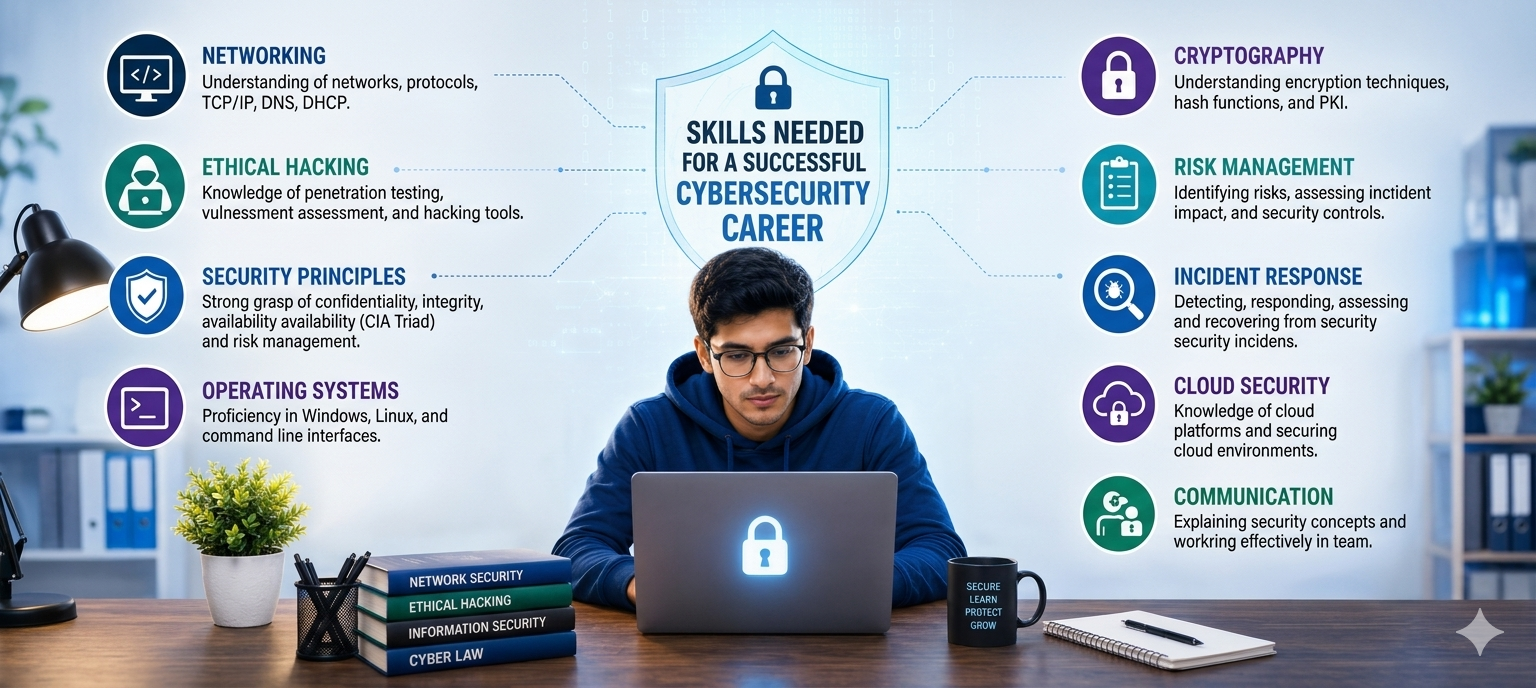
A successful cybersecurity professional requires both technical and non-technical skills.
Technical Skills
Networking Knowledge
Understanding how systems communicate is essential.
Operating Systems
Linux and Windows administration skills are highly valuable.
Basic Programming
Python, JavaScript, and scripting skills help automate tasks.
Cloud Security
Cloud platforms like AWS and Azure are widely used today.
Security Tools
Students should learn firewalls, SIEM tools, penetration testing tools, and monitoring platforms.
Soft Skills
Cybersecurity professionals also need:
- Problem-solving ability
- Communication skills
- Analytical thinking
- Team collaboration
- Attention to detail
Recent industry studies show that employers value communication and teamwork almost as much as technical knowledge.
Is Cybersecurity Difficult for Beginners?
Many students believe cybersecurity is extremely difficult, but beginners can absolutely succeed with proper guidance and consistent learning.
Students from science, commerce, and even arts backgrounds can enter cybersecurity if they are willing to learn technology fundamentals.
The best approach is:
- Learn basic computer networking
- Understand operating systems
- Practice ethical hacking concepts
- Work on projects
- Join internships
- Build practical skills gradually
A structured cybersecurity course simplifies this learning journey and helps students understand industry concepts step by step.
Future Scope of Cybersecurity in India
As India continues its rapid digital transformation, cybersecurity has become a critical requirement for businesses, governments, and individuals. With increasing cyber threats, data breaches, and online transactions, the demand for skilled cybersecurity professionals is growing rapidly. This makes cybersecurity one of the most promising and future-ready career fields in India.
Growing Demand for Cybersecurity Professionals
Organizations across industries are actively seeking cybersecurity experts to protect their digital assets. The demand for skilled professionals is expected to increase significantly in the coming years.
Rise in Cyber Threats and Attacks
As cybercriminals become more sophisticated, businesses need stronger security measures. This creates continuous opportunities for cybersecurity specialists to detect, prevent, and respond to threats.
Expansion of Digital India Initiatives
Government programs promoting digital services and online infrastructure require robust cybersecurity frameworks. These initiatives are generating new job opportunities in both public and private sectors.
Increased Adoption of Cloud Computing
More organizations are moving their data and applications to the cloud. Cybersecurity professionals are needed to secure cloud environments and protect sensitive information from cyber risks.
Growth of AI, IoT, and Emerging Technologies
Technologies such as Artificial Intelligence, Internet of Things (IoT), and smart devices introduce new security challenges. Cybersecurity experts play a key role in safeguarding these advanced systems.
Attractive Salary Packages
Due to the shortage of skilled cybersecurity talent, companies offer competitive salaries and career growth opportunities. Experienced professionals can earn highly rewarding compensation packages.
Diverse Career Opportunities
Cybersecurity offers multiple career paths, including Ethical Hacker, Security Analyst, Penetration Tester, Incident Responder, Security Consultant, and Cyber Forensics Expert. Students can choose a specialization based on their interests.
Global Career Potential
Cybersecurity skills are recognized worldwide, allowing professionals to work with international organizations and multinational companies. This opens doors to global career opportunities and remote work options.
Students completing a BSc in Cyber Security can explore opportunities in both Indian and global companies.
How to Build a Strong Cybersecurity Career as a Student
Cybersecurity is one of the fastest-growing career fields, offering exciting opportunities for students who are passionate about technology and digital security. Building a strong cybersecurity career requires a combination of technical knowledge, practical experience, certifications, and continuous learning. By taking the right steps early, students can create a solid foundation for a successful future in the cybersecurity industry.

Key Steps to Build a Strong Cybersecurity Career
Learn the Fundamentals
Start by understanding core concepts such as networking, operating systems, cybersecurity principles, and computer security basics. A strong foundation makes it easier to learn advanced security topics later.
Gain Hands-On Experience
Practice using cybersecurity tools, virtual labs, and simulated environments. Real-world experience helps students understand how cyber threats work and how security professionals defend against them.
Develop Technical Skills
Learn essential skills such as ethical hacking, network security, vulnerability assessment, and scripting. These technical abilities are highly valued by employers and cybersecurity teams.
Earn Industry Certifications
Certifications validate your knowledge and skills to employers. Entry-level certifications can strengthen your resume and demonstrate your commitment to the cybersecurity profession.
Participate in Cybersecurity Competitions
Join Capture The Flag (CTF) events, hackathons, and security challenges. These activities improve problem-solving abilities and provide practical exposure to real security scenarios.
Build a Professional Portfolio
Document your projects, research, and cybersecurity achievements. A strong portfolio showcases your skills and helps employers assess your practical capabilities.
Stay Updated with Industry Trends
Cyber threats and technologies evolve constantly. Follow cybersecurity news, blogs, and industry updates to stay informed about emerging threats and security practices.
Network with Industry Professionals
Connect with cybersecurity experts, mentors, and communities. Networking can provide valuable guidance, learning opportunities, and potential career connections.
Why Practical Learning Matters in Cybersecurity
Cybersecurity is a hands-on field where theoretical knowledge alone is not enough. As cyber threats continue to evolve, professionals need practical experience to understand real-world attack scenarios, security tools, and defense strategies. Practical learning helps students build confidence, develop technical skills, and become industry-ready cybersecurity experts.
Real-World Threat Understanding
Practical training exposes students to actual cyberattack scenarios such as phishing, malware, and network breaches. This hands-on experience helps them understand how threats occur and how to respond effectively.
Develops Problem-Solving Skills
Cybersecurity professionals must think critically when facing security incidents. Through labs, simulations, and challenges, students learn how to analyze problems and find effective solutions quickly.
Mastery of Security Tools
Practical learning allows students to work with industry-standard tools used for penetration testing, monitoring, and threat detection. Familiarity with these tools improves technical proficiency and workplace readiness.
Builds Confidence Through Experience
Working on real projects and cybersecurity exercises helps students gain confidence in their abilities. Hands-on practice reduces fear of complex tasks and prepares them for professional responsibilities.
Enhances Employability
Employers prefer candidates who can demonstrate practical skills alongside certifications and academic qualifications. Experience with real-world cybersecurity tasks makes graduates more attractive to recruiters.
Prepares for Industry Certifications
Many cybersecurity certifications include practical components and scenario-based questions. Hands-on training helps students better understand concepts and perform well in certification exams.
Encourages Continuous Learning
The cybersecurity landscape changes rapidly, requiring professionals to constantly update their skills. Practical learning fosters curiosity and adaptability, helping students stay current with emerging threats and technologies.
A practical learning environment helps students gain confidence before entering the workforce.
FAQs
Is cybersecurity a stable career in the future?
Yes. Cybersecurity is expected to remain highly stable because organizations will continue to need professionals to protect digital systems and sensitive data.
Does a BSc in Cyber Security have a good career scope?
Yes. A BSc in Cyber Security provides technical knowledge, practical skills, and career opportunities in multiple industries.
Are cybersecurity jobs in demand in India?
Yes. Indian companies, banks, startups, and government organizations are actively hiring cybersecurity professionals due to increasing cyber threats.
Can beginners learn cybersecurity?
Absolutely. Beginners can start with networking, operating systems, and security basics before moving into advanced cybersecurity concepts.
What is the average salary after a cybersecurity course?
Salaries vary based on skills, certifications, experience, and specialization. Skilled professionals often receive competitive salary packages with strong growth potential.
Conclusion
So, is cyber security a stable career?
Without a doubt, yes.
Cybersecurity has become one of the most important industries in the digital age. With rising cyber threats, increasing online businesses, cloud computing growth, and AI-driven technologies, organizations worldwide urgently need skilled professionals who can secure digital systems.
A professional cybersecurity course or a BSc in Cyber Security can help students build practical skills, gain industry exposure, and prepare for high-demand cybersecurity jobs.
For students looking for a future-proof career with strong growth opportunities, cybersecurity offers an exciting path filled with innovation, learning, and long-term stability.
If you are ready to begin your journey, explore the industry-focused BSc in Cyber Security program offered by MoopleInstitute and take the first step toward building a successful cybersecurity career.

Farhat Jabeen is passionate about documenting the student enrollment journey in the fields of technology, design, and digital media. Through her writing, she shares practical guidance, industry insights, and real-world learning experiences that help aspiring students confidently navigate their path toward creative and technology-driven careers. Her goal is to empower learners with the knowledge they need to choose the right educational journey.