
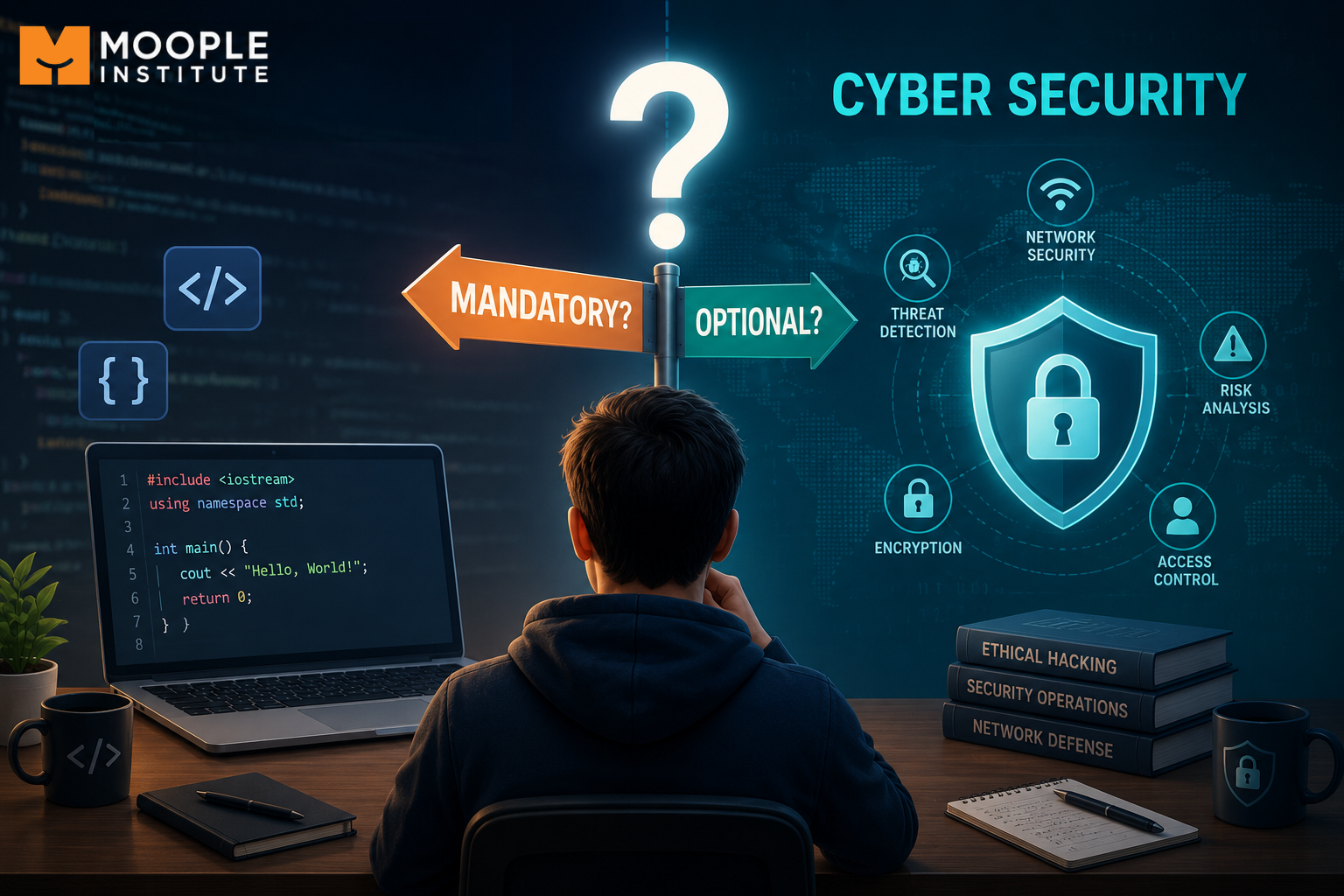
Cyber security has become one of the fastest-growing career fields in the world. As cyber threats continue to increase, organizations need skilled professionals to protect their systems, networks, and sensitive data. However, many students considering a BSc in Cyber Security often have one important question: Is coding mandatory in cyber security?
The simple answer is no, coding is not mandatory for every cyber security role, but having basic programming knowledge can certainly improve your career opportunities. Many beginners assume that cyber security is entirely about writing complex code, but the reality is much broader. There are several domains within cyber security where coding requirements vary depending on the role and responsibilities.
If you’re exploring BSc in Cyber Security colleges, understanding the relationship between coding and cyber security can help you make informed career decisions. This guide will explain where coding is required, where it isn’t, and how students can build successful careers regardless of their programming background.
Understanding the Role of Coding in Cyber Security
Cyber security involves protecting digital assets from unauthorized access, attacks, and data breaches. Professionals in this field work across various areas such as network security, ethical hacking, digital forensics, cloud security, risk management, and security operations.
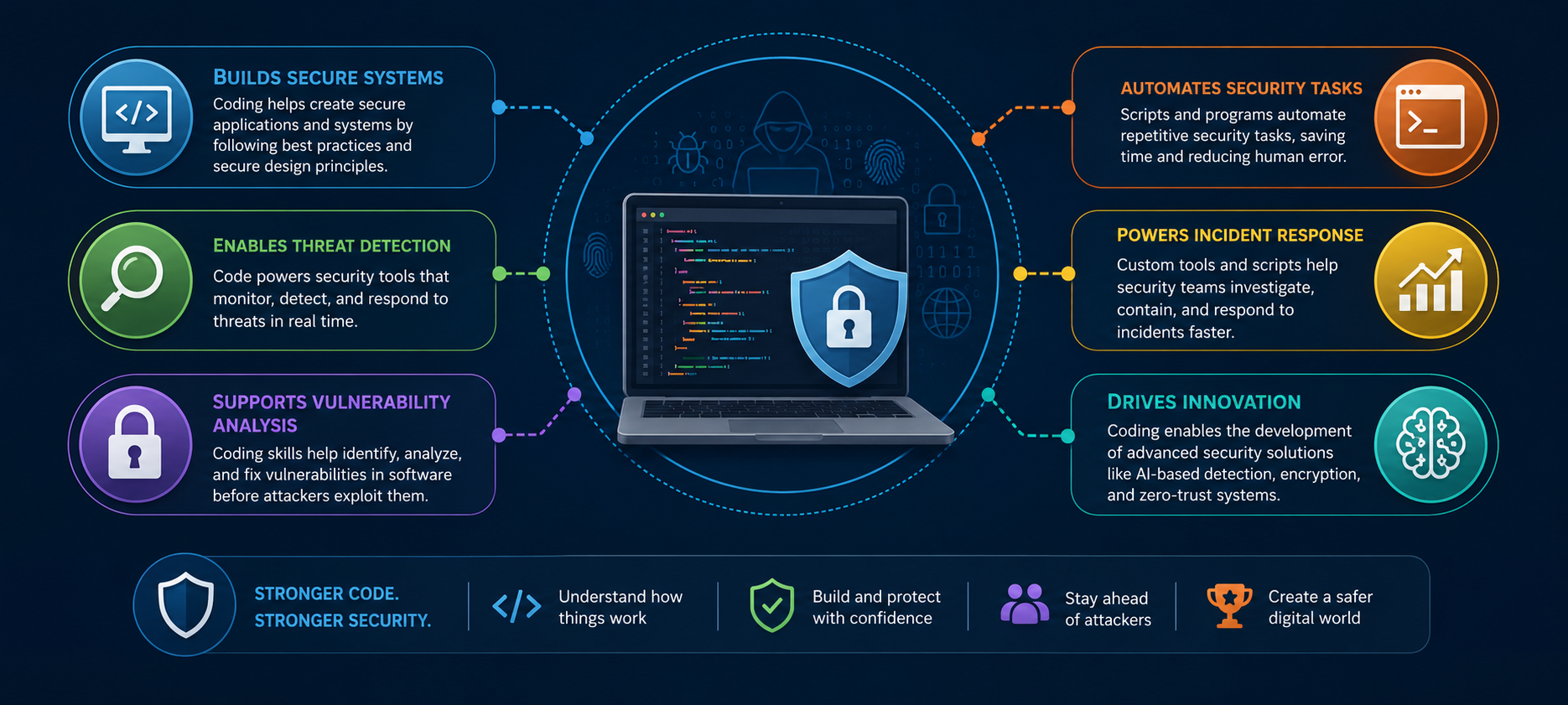
Coding serves as a tool that helps professionals automate tasks, analyze vulnerabilities, and understand how applications function. However, not every cyber security professional spends their day writing code. Many roles focus more on monitoring systems, assessing risks, implementing security policies, and responding to incidents.
The need for coding depends largely on your chosen specialization. For example, penetration testers and malware analysts often use programming extensively, while security auditors and compliance specialists may use little or no coding in their daily work.
This flexibility makes cyber security an attractive career option for students from diverse academic backgrounds, including those without strong programming skills.
Why Many Students Think Coding Is Mandatory
There is a common misconception that every cyber security professional must be an expert programmer. This belief often comes from popular portrayals of hackers writing code rapidly to break into systems.
In reality, modern cyber security relies heavily on specialized tools and platforms that simplify many technical tasks. Security professionals often use software solutions to scan networks, monitor threats, and investigate incidents without writing complex programs.
Additionally, many educational institutions offering a BSc in Cyber Security design their curriculum to help students gradually learn technical concepts. Coding is introduced step-by-step rather than being treated as a prerequisite.
As a result, students who are willing to learn and practice can succeed even if they have no prior programming experience.
Cyber Security Roles That Require Minimal Coding
Several cyber security careers require little to no coding knowledge. Roles such as Security Analyst, SOC Analyst, Cyber Security Auditor, and GRC Specialist focus more on monitoring threats, reviewing security policies, and ensuring compliance. These positions are ideal for students who are interested in security but not in programming.
Not all cyber security careers demand advanced programming skills. Several entry-level and professional roles focus more on security principles, risk assessment, and operational processes.
Security Analyst
Security analysts monitor networks and systems for suspicious activities. They investigate alerts, assess threats, and help prevent cyber attacks. While basic scripting knowledge can be helpful, advanced coding is generally not required.
Security Operations Center (SOC) Analyst
SOC analysts use security monitoring tools to detect and respond to incidents. Their primary focus is analyzing logs, identifying threats, and coordinating responses rather than developing software.
Governance, Risk, and Compliance (GRC) Specialist
GRC professionals ensure organizations follow security regulations and best practices. They work with policies, audits, and compliance frameworks, requiring strong analytical skills rather than coding expertise.
Cyber Security Auditor
Auditors evaluate security controls and identify potential risks. Their work involves assessments, documentation, and reporting more than programming.
Information Security Consultant
Consultants help organizations improve security strategies and reduce vulnerabilities. Communication and problem-solving skills often matter more than coding ability.
These roles demonstrate that cyber security offers multiple career paths for students who are not interested in becoming programmers.
Cyber Security Roles Where Coding Is Important
Although coding isn’t mandatory for all positions, certain specialized roles benefit significantly from programming knowledge.
Ethical Hacker
Ethical hackers simulate cyber attacks to identify vulnerabilities. Understanding programming helps them analyze applications and exploit security weaknesses effectively.
Penetration Tester
Penetration testers frequently use scripting languages to automate security assessments and customize testing tools.
Malware Analyst
Malware analysts study malicious software to understand how it works. Reverse engineering often requires familiarity with programming concepts.
Security Researcher
Researchers discover new vulnerabilities and develop innovative security solutions. Coding skills are essential for testing and analyzing threats.
Application Security Engineer
Application security professionals work closely with software developers to identify and fix security flaws in applications. Strong programming knowledge is usually required.
Students aiming for these advanced roles should consider learning programming languages as part of their career development.
Which Programming Languages Are Useful in Cyber Security?
Learning programming languages like Python, JavaScript, SQL, Bash, and PowerShell can significantly improve your cyber security skills. These languages are commonly used for automation, web security testing, database protection, and system administration. Python is often the best starting point for beginners due to its simplicity and versatility.
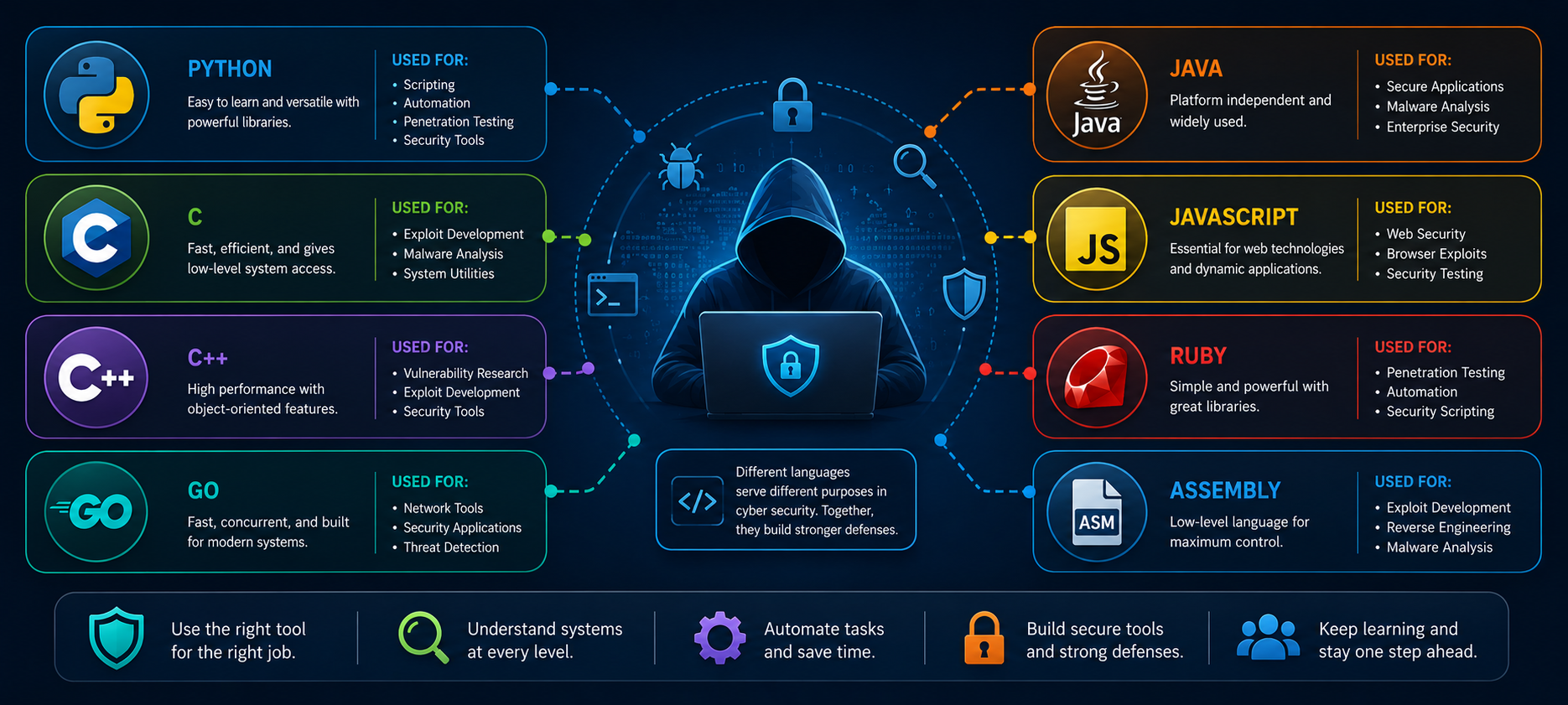
If you decide to learn coding, certain programming languages are particularly valuable in cyber security.
Python
Python is widely used for automation, penetration testing, malware analysis, and security tool development. Its simple syntax makes it ideal for beginners.
JavaScript
Understanding JavaScript helps security professionals identify vulnerabilities in web applications.
SQL
SQL knowledge is useful for understanding database security and preventing SQL injection attacks.
Bash Scripting
Bash scripting helps automate tasks in Linux environments, which are commonly used in cyber security.
PowerShell
PowerShell is valuable for managing Windows systems and automating administrative tasks.
Learning even one or two of these languages can significantly improve your cyber security capabilities and employability.
How Much Coding Is Taught in a BSc in Cyber Security?
A well-designed BSc in Cyber Security program introduces students to coding in a structured and manageable way. Most programs focus on building practical security skills while gradually teaching programming fundamentals.
Typical subjects include:
- Cyber Security Fundamentals
- Network Security
- Ethical Hacking
- Operating Systems
- Programming Basics
- Cloud Security
- Digital Forensics
- Cryptography
- Incident Response
- Security Management
The goal is not to turn every student into a software developer but to provide enough technical understanding to work effectively in the cyber security industry.
Many BSc in Cyber Security colleges include hands-on labs where students learn through practical exercises rather than theoretical programming alone.
Benefits of Learning Coding Even If It’s Not Mandatory
Even if coding is not required for your chosen role, learning it can provide a competitive advantage. Coding improves problem-solving abilities, helps automate repetitive tasks, and opens doors to higher-paying cyber security positions. It also gives professionals a deeper understanding of how systems and applications work.
Even if your chosen cyber security role does not require extensive coding, learning programming offers several advantages.
Better Problem-Solving Skills
Programming teaches logical thinking and structured problem-solving, which are valuable in cyber security investigations.
Increased Career Opportunities
Employers often prefer candidates who can automate tasks and understand technical systems at a deeper level.
Higher Salary Potential
Professionals with coding skills often qualify for specialized roles that offer higher compensation.
Improved Threat Analysis
Understanding code helps security professionals identify vulnerabilities and analyze malicious activities more effectively.
Greater Flexibility
Coding knowledge allows professionals to transition into advanced security domains such as penetration testing and security engineering.
Industry Demand for Cyber Security Professionals
The demand for cyber security professionals continues to grow as organizations face increasing cyber threats. Companies across industries need skilled experts to protect their digital assets and sensitive information. This growing demand creates excellent career opportunities for students entering the field
According to the International Information System Security Certification Consortium (ISC²), the global cyber security workforce gap remains significant, creating strong employment opportunities for skilled candidates.
The World Economic Forum also identifies cyber security as one of the most critical challenges facing organizations worldwide.
Choosing the Right BSc in Cyber Security College
Selecting the right BSc in Cyber Security college is essential for building a successful career. A strong educational foundation can significantly improve employability after graduation.
Selecting the right institution plays a major role in career success. When evaluating BSc in Cyber Security colleges, consider the following factors:
Industry-Relevant Curriculum
Choose programs that cover current cyber security technologies and industry standards.
Practical Training
Hands-on labs, simulations, and real-world projects help students gain practical experience.
Placement Support
Strong placement assistance can help students secure internships and full-time opportunities.
Experienced Faculty
Learning from industry professionals provides valuable insights into current security challenges.
Industry Certifications
Look for programs that prepare students for certifications such as CompTIA Security+, CEH, and CISSP foundations.
Students researching cyber security training institutes in Kolkata should prioritize institutes that offer practical exposure, an updated curriculum, and dedicated career support.
Understanding Cyber Security Course Fees in Kolkata
One of the most common concerns among students and parents is educational investment. The cyber security course fees in Kolkata vary depending on the institution, course duration, infrastructure, and placement support.
Factors affecting fees include:
- Course specialization
- Industry certification training
- Practical lab facilities
- Placement assistance
- Faculty expertise
- Internship opportunities
Rather than focusing only on cost, students should evaluate the overall value and return on investment offered by the program.
Career Opportunities After Completing a BSc in Cyber Security

A BSc in Cyber Security opens the door to a wide range of exciting and high-demand career opportunities. As businesses, governments, and organizations continue to face cyber threats, the need for skilled cyber security professionals is growing rapidly. Graduates can work in industries such as IT, banking, healthcare, e-commerce, government agencies, and multinational corporations. With the right skills and certifications, students can build a rewarding career with excellent growth potential and competitive salaries.
Security Analyst
A Security Analyst monitors networks, systems, and applications to identify potential security threats. They investigate suspicious activities, analyze security incidents, and implement measures to protect organizational data from cyber attacks.
SOC Analyst (Security Operations Center Analyst)
SOC Analysts work in dedicated security teams that continuously monitor and respond to cyber threats. They use advanced security tools to detect attacks in real time and help organizations minimize risks and security breaches.
Ethical Hacker
Ethical Hackers, also known as white-hat hackers, test systems and networks for vulnerabilities before cybercriminals can exploit them. They perform authorized penetration testing and provide recommendations to improve security defenses.
Penetration Tester
Penetration Testers simulate real-world cyber attacks to identify weaknesses in applications, networks, and systems. Their findings help organizations strengthen their security infrastructure and prevent future attacks.
Digital Forensics Investigator
Digital Forensics Investigators collect, analyze, and preserve digital evidence after a cyber incident. They play a crucial role in investigating cybercrimes, recovering data, and supporting legal proceedings when necessary.
Information Security Consultant
Information Security Consultants advise organizations on how to improve their cyber security strategies. They assess risks, recommend security solutions, and help businesses comply with industry regulations and standards.
Cloud Security Specialist
As cloud computing becomes more popular, Cloud Security Specialists are responsible for protecting cloud-based systems and data. They implement security controls, monitor cloud environments, and ensure secure access to digital resources.
Incident Response Specialist
Incident Response Specialists manage and contain cyber security incidents such as ransomware attacks, data breaches, and malware infections. Their primary goal is to minimize damage and restore normal business operations quickly.
Cyber Security Engineer
Cyber Security Engineers design, implement, and maintain security systems to protect organizational infrastructure. They develop security architectures, configure firewalls, and ensure systems remain resilient against cyber threats.
Risk and Compliance Analyst
Risk and Compliance Analysts help organizations identify security risks and comply with legal and industry regulations. They conduct audits, assess vulnerabilities, and ensure security policies are effectively implemented.
Security Consultant
Security Consultants work with businesses to evaluate their security posture and recommend improvements. They help organizations develop strong cyber security frameworks and prepare for evolving cyber threats.
Chief Information Security Officer (CISO) – Future Career Goal
With years of experience, cyber security professionals can advance to leadership positions such as Chief Information Security Officer (CISO). A CISO oversees an organization’s entire cyber security strategy, manages security teams, and ensures business data remains protected.
Key Benefits of a Cyber Security Career
- High demand across industries
- Competitive salary packages
- Strong job security
- Global career opportunities
- Continuous learning and growth
- Opportunities to work with emerging technologies
- Ability to protect organizations from cyber threats
A BSc in Cyber Security provides students with the technical knowledge and practical skills needed to enter this rapidly growing industry. Whether you aspire to become an Ethical Hacker, Security Analyst, or Cyber Security Engineer, the field offers diverse career paths and excellent long-term prospects.
Skills Beyond Coding That Matter in Cyber Security
Successful cyber security professionals rely on many skills besides programming.
Analytical Thinking
Identifying patterns and understanding complex threats requires strong analytical abilities.
Communication Skills
Professionals must explain security risks clearly to technical and non-technical stakeholders.
Attention to Detail
Small vulnerabilities can lead to major security incidents.
Continuous Learning
Cyber threats evolve rapidly, making ongoing education essential.
Ethical Responsibility
Trust and integrity are fundamental in cyber security careers.
Developing these skills can be just as important as learning code.
FAQs
Is coding compulsory for cyber security beginners?
No. Many entry-level cyber security roles require only basic technical knowledge. Coding can be learned gradually as your career progresses.
Can I pursue a BSc in Cyber Security without a coding background?
Yes. Most BSc programs teach programming fundamentals from the beginning, making them suitable for beginners.
Which programming language should cyber security students learn first?
Python is often recommended because it is beginner-friendly and widely used in cyber security automation and analysis.
Are there cyber security jobs without coding?
Yes. Roles such as Security Analyst, SOC Analyst, Auditor, and GRC Specialist typically require minimal coding.
What is the average cyber security course fees in Kolkata?
Fees vary depending on the institute, facilities, certifications, and placement support offered.
Conclusion
So, is coding mandatory in cyber security? The answer is no. While programming skills can certainly enhance your career prospects, many cyber security roles focus on analysis, monitoring, risk management, and compliance rather than software development.
A quality BSc in Cyber Security program provides the right balance of technical knowledge, practical training, and industry exposure to help students build successful careers. Whether you aspire to become a security analyst, ethical hacker, or security consultant, the field offers opportunities for individuals with diverse skill sets.
If you’re exploring BSc in Cyber Security colleges or looking for a reputable cyber security training Institute in Kolkata, now is an excellent time to begin your journey. With cyber threats increasing globally and organizations actively seeking skilled professionals, a career in cyber security offers strong growth, stability, and long-term opportunities.
👉To start your journey? Learn everything about Cyber Security Courses and Career Paths in our latest blog.
BSc Cyber Security Course Details: Everything Students Need to Know

Farhat Jabeen is passionate about documenting the student enrollment journey in the fields of technology, design, and digital media. Through her writing, she shares practical guidance, industry insights, and real-world learning experiences that help aspiring students confidently navigate their path toward creative and technology-driven careers. Her goal is to empower learners with the knowledge they need to choose the right educational journey.