The digital world runs on websites, web applications, and online platforms. From e-commerce stores and educational portals to banking systems and social media platforms, almost every business today depends on web technologies. As companies continue their digital transformation journey, the demand for skilled web developers is growing faster than ever.
If you are a student looking for a future-proof career, a professional planning a career switch, or a parent concerned about your child’s job prospects, enrolling in a Web Development Course can be one of the smartest decisions in 2026. Web development is no longer limited to coding websites; it now includes building responsive applications, creating user-friendly interfaces, ensuring cybersecurity, integrating AI-powered solutions, and managing cloud-based platforms.
According to the latest developer surveys and industry reports, web development remains one of the most in-demand technology careers worldwide. Organizations across industries actively seek professionals who can build, maintain, and secure digital experiences for their customers.
Why Web Development Is One of the Best Career Choices in 2026
Web development remains one of the most promising career options in 2026 because the internet economy continues to expand rapidly. Businesses are investing heavily in websites, web applications, e-commerce platforms, and digital services to stay competitive.
Several factors are driving the demand for web developers:
- A growing number of online businesses
- Increased adoption of cloud computing
- Expansion of e-commerce platforms
- Rise of AI-powered web applications
- Demand for secure and responsive websites
- Digital transformation across industries
The modern web developer is responsible for creating digital experiences that are fast, responsive, secure, and accessible. These skills are valuable across startups, multinational corporations, government organizations, and freelance marketplaces.
According to the U.S. Bureau of Labor Statistics, employment in web development and digital design-related roles is projected to grow faster than many other occupations over the coming decade.
What is Web Development?
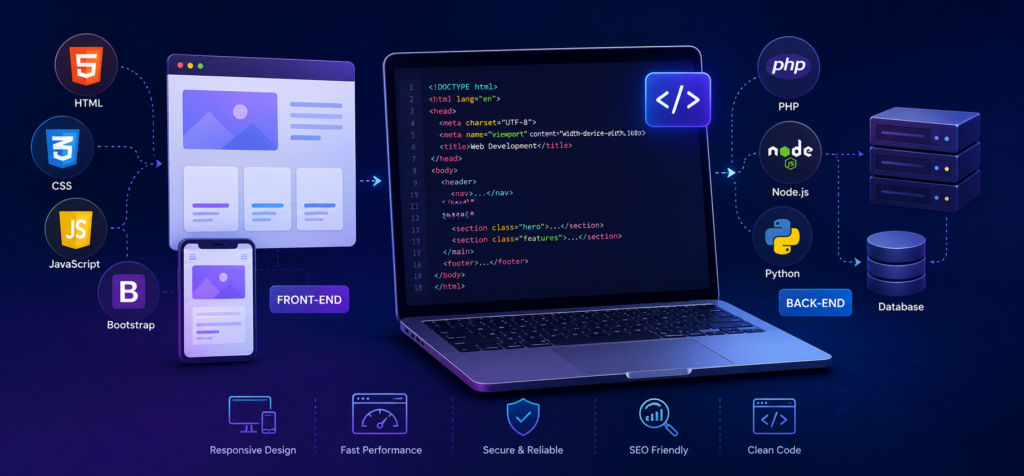
Web development is the process of creating, building, and maintaining websites and web applications. It involves designing user interfaces, writing code, managing databases, and ensuring that websites function smoothly across different devices and browsers.
Today, web development is no longer limited to simple websites. Developers build complex applications such as:
- E-commerce platforms
- Online banking systems
- Social networking websites
- Learning management systems
- Business portals
- Cloud-based applications
The field combines creativity and technology, making it an ideal career path for students who enjoy problem-solving and innovation.
According to the U.S. Bureau of Labor Statistics, employment in web development and digital design occupations is expected to grow faster than the average for many professions over the coming years, reflecting the increasing need for digital solutions across industries.
Skills You Learn in a Web Development Course
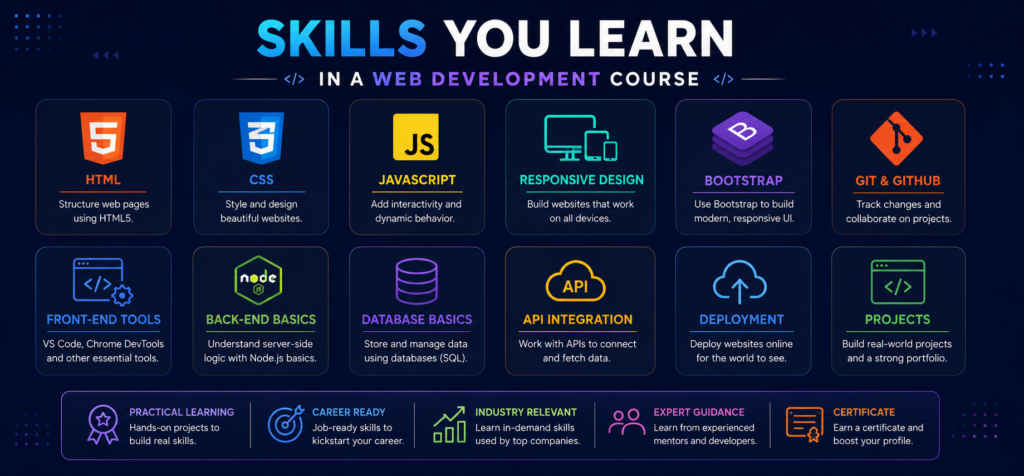
A Web Development Course equips students with the technical and practical skills needed to build modern, responsive, and user-friendly websites. From designing website layouts to developing dynamic web applications, students gain hands-on experience with industry-standard tools, programming languages, and development frameworks that prepare them for real-world projects and career opportunities.
1. HTML and CSS Development
Learn how to structure web pages using HTML and style them with CSS to create visually appealing and well-organized websites.
2. JavaScript Programming
Develop interactive website features such as sliders, forms, animations, and dynamic content using JavaScript.
3. Responsive Web Design
Understand how to create websites that automatically adapt to different screen sizes, including desktops, tablets, and smartphones.
4. Front-End Frameworks
Gain experience with popular frameworks and libraries that help build modern, fast, and interactive user interfaces.
5. Back-End Development
Learn how servers, databases, and applications work together to process data and manage website functionality.
6. Database Management
Understand how to store, organize, retrieve, and manage website data using database technologies.
7. Web Security Fundamentals
Learn essential security practices to protect websites from common threats, vulnerabilities, and cyberattacks.
8. Version Control Systems
Use tools like Git to track code changes, collaborate with teams, and manage development projects efficiently.
9. API Integration
Learn how websites communicate with external services and applications through APIs to enhance functionality.
10. Project Development and Deployment
Build real-world web projects and learn how to publish and maintain websites on live servers.
These skills are particularly valuable for students interested in cybersecurity and security engineering careers.
Web Development Course Curriculum for 2026
The Web Development Course Curriculum for 2026 is designed to meet current industry demands and includes training in HTML5, CSS3, JavaScript, responsive web design, React.js, database management, and back-end development. Students also learn version control with Git, web hosting, cloud deployment, and web security fundamentals. Through practical projects and real-world assignments, the curriculum helps learners build job-ready skills and create a professional portfolio for successful careers in web development.
A modern curriculum should cover current industry technologies.
Web Design Fundamentals
- UI/UX Basics
- Layout Principles
- Color Theory
- Typography
- Wireframing
HTML5 and CSS3
- Semantic HTML
- Responsive Design
- Flexbox
- CSS Grid
- Animation Basics
JavaScript Development
- Variables and Functions
- Loops and Conditions
- DOM Manipulation
- ES6 Features
- AJAX
Front-End Frameworks
- React.js
- Bootstrap
- Component-Based Development
Back-End Development
- PHP or Node.js
- APIs
- Authentication
- Server Management
Database Management
- MySQL
- MongoDB
- Database Connectivity
Deployment and Hosting
- Git and GitHub
- Domain Management
- Cloud Hosting
- Website Deployment
Industry Projects
- Portfolio Website
- E-Commerce Website
- Blog Platform
- Business Website
Hands-on projects help students gain practical experience that employers value.
Career Opportunities After Completing a Web Development Course
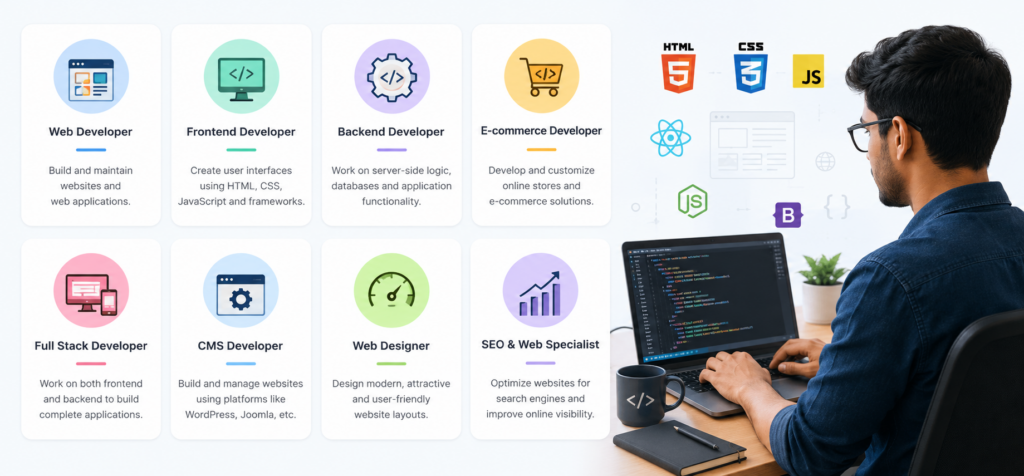
Completing a Web Development Course can open the door to a variety of exciting and high-demand career opportunities in the IT industry. As businesses continue to expand their online presence, skilled web developers are needed to build, manage, and optimize websites and web applications. Whether you prefer coding, design, or managing complete web projects, web development offers diverse career paths with excellent growth potential.
Front-End Developer
Front-end developers create the visual and interactive parts of websites using HTML, CSS, JavaScript, and modern frameworks. They ensure websites are responsive, attractive, and user-friendly across all devices.
Back-End Developer
Back-end developers manage the server-side functionality of websites and applications. They work with databases, APIs, and programming languages to ensure websites operate smoothly and securely.
Full-Stack Developer
Full-stack developers have expertise in both front-end and back-end development. Their ability to handle complete web projects makes them highly sought after by startups and technology companies.
Web Designer
Web designers focus on the layout, appearance, and user experience of websites. They combine creativity and technical knowledge to create visually appealing and engaging digital experiences.
WordPress Developer
WordPress developers specialize in creating, customizing, and maintaining websites using the WordPress platform. They are in high demand among businesses, bloggers, and e-commerce companies.
UI/UX Developer
UI/UX developers improve the usability and overall experience of websites and applications. They ensure users can navigate digital platforms easily and efficiently.
Web Application Developer
Web application developers build dynamic applications that run through web browsers. They create platforms such as online booking systems, learning portals, and customer management tools.
E-Commerce Developer
E-commerce developers create and maintain online stores, shopping carts, payment gateways, and product management systems, helping businesses sell products and services online.
Freelance Web Developer
Freelance web developers work independently and provide website development services to clients worldwide. This career path offers flexibility, remote work opportunities, and the potential for high earnings.
Website Maintenance Specialist
Website maintenance specialists ensure websites remain up to date, secure, and fully functional. They monitor performance, fix issues, and implement updates to improve user experience and security.
Salary Expectations for Web Developers in India
Web development offers attractive salary packages for skilled professionals. Entry-level developers can earn competitive salaries, while experienced developers with expertise in modern technologies can achieve significant career growth and higher earnings.
Salaries vary depending on skills, location, and experience.
- Entry-Level Developer ₹3 LPA – ₹6 LPA
- Mid-Level Developer : ₹6 LPA – ₹12 LPA
- Experienced Developer : ₹12 LPA – ₹25+ LPA
Developers with expertise in React, Node.js, cloud technologies, and cybersecurity often command higher salaries.
Why Students Consider the Moople Institute for Web Development Training
Many students choose Moople Institute because of its industry-focused approach to technical education.
Key advantages include:
- Updated curriculum aligned with industry standards
- Experienced trainers
- Practical project-based learning
- Portfolio development support
- Placement assistance
- Modern training infrastructure
Students gain both theoretical knowledge and practical experience, helping them become job-ready professionals.
Future Trends in Web Development

Web development is evolving rapidly with new technologies that improve website performance, security, and user experience. As businesses continue to move online, developers are adopting advanced tools such as Artificial Intelligence (AI), Progressive Web Apps (PWAs), serverless architecture, and voice search optimization. Understanding these future trends can help aspiring web developers stay competitive and build modern, high-performing websites.
Emerging technologies are shaping the future of web development.
1. Artificial Intelligence (AI) and Machine Learning
AI is transforming web development by enabling smarter and more personalized user experiences. Websites can now offer chatbots, content recommendations, and automated customer support based on user behavior.
2. Progressive Web Apps (PWAs)
PWAs combine the features of websites and mobile apps, allowing users to access fast, responsive, and offline-capable applications directly from their browsers without downloading an app.
3. Voice Search Optimization
With the growing popularity of voice assistants, websites are being optimized for voice-based searches. This helps businesses reach users who prefer speaking rather than typing queries.
4. Serverless Architecture
Serverless technology allows developers to build and deploy applications without managing physical servers. It reduces infrastructure costs, improves scalability, and simplifies maintenance.
5. Cybersecurity and Data Protection
As cyber threats increase, web developers are focusing more on secure coding practices, data encryption, and compliance with privacy regulations to protect user information.
6. Motion UI and Interactive Design
Modern websites are using animations, transitions, and interactive elements to create engaging user experiences and improve visitor retention.
7. Low-Code and No-Code Development
Low-code and no-code platforms enable faster website creation with minimal programming knowledge, making web development more accessible to businesses and beginners.
8. API-First Development
Developers are increasingly building applications with an API-first approach, allowing seamless integration between websites, mobile apps, and third-party services.
9. Single Page Applications (SPAs)
SPAs provide faster loading times and smoother user experiences by updating content dynamically without reloading the entire webpage.
10. Web 3.0 and Blockchain Integration
Web 3.0 technologies and blockchain are creating decentralized applications that offer greater transparency, security, and user control over data.
These trends are shaping the future of web development, creating exciting opportunities for developers who stay updated with the latest technologies and industry practices.
FAQs
1. Who can join a Web Development Course?
Students who have completed Class 12, graduates, career changers, and professionals interested in web technologies can join a Web Development Course.
2. How long does it take to learn web development?
Most professional courses take between 6 months and 1 year, depending on the curriculum and learning pace.
3. Is coding mandatory for web development?
Yes. Coding is a core part of web development. However, structured training helps beginners learn programming step by step.
4. What is the difference between web design and web development?
Web design focuses on visual appearance and user experience, while web development focuses on coding, functionality, and website performance.
5. Is web development a good career in 2026?
Yes. The demand for skilled web developers continues to grow as businesses increasingly rely on digital platforms and online services.
Conclusion
A Web Development Course is one of the most valuable investments students can make in 2026. It provides technical skills, practical experience, and access to a wide range of career opportunities in IT, software development, cybersecurity, and digital industries. Whether you are looking for website design classes, a web development course in Kolkata, web design training Kolkata, or a BSc in Multimedia, Design and Web Development, choosing the right program can significantly influence your future success.
The digital world needs skilled developers who can build secure, user-friendly, and innovative web solutions. If you’re ready to start a rewarding technology career, now is the perfect time to enroll in a professional web development course and take the first step toward a bright future.

Farhat Jabeen is passionate about documenting the student enrollment journey in the fields of technology, design, and digital media. Through her writing, she shares practical guidance, industry insights, and real-world learning experiences that help aspiring students confidently navigate their path toward creative and technology-driven careers. Her goal is to empower learners with the knowledge they need to choose the right educational journey.