Choosing the right career after Class 12 can feel confusing, especially when you want a profession that combines creativity with strong job opportunities. If you enjoy creating videos, editing reels, making YouTube content, or storytelling through visuals, enrolling in a Video Editing Course after 12th can be an excellent career choice.
The demand for skilled video editors is growing rapidly as businesses, influencers, OTT platforms, advertising agencies, gaming companies, and film studios continue producing digital content every day. Learning professional editing techniques can help you turn your creativity into a rewarding profession.
In this guide, you’ll discover everything about a Video Editing Course, including eligibility, skills, software, career opportunities, salary, course duration, and how to choose the right video editing training institute to start your journey.
Why Choose a Video Editing Course After 12th?
Video content has become the most consumed form of digital media. Whether it’s YouTube videos, Instagram Reels, documentaries, films, advertisements, online courses, or corporate presentations, every industry needs skilled editors.
After completing Class 12, many students look for career-oriented courses that provide practical skills and faster employment opportunities. A Video Editing Course after 12th allows students to gain industry-ready knowledge without waiting years to enter the workforce.
Some key reasons include:
- High demand across industries
- Creative and technology-driven career
- Freelance and remote work opportunities
- Excellent career growth
- Opportunities in India and abroad
- Suitable for students from any stream
According to the World Economic Forum’s Future of Jobs Report 2025, creative thinking, technology literacy, and digital content creation are among the fastest-growing workplace skills. Video editing combines all these essential competencies
What is a Video Editing Course?
A Video Editing Course is a professional training program that teaches students to transform raw footage into engaging, high-quality videos using industry-standard editing software. The course focuses on both creative storytelling and technical editing skills through practical projects, preparing students for careers in film, television, digital marketing, social media, and content creation.
Key Learning Areas:
- Video Editing Basics
- Timeline Management
- Audio Editing
- Color Correction & Grading
- Motion Graphics
- Visual Effects (VFX) Basics
- Typography & Titles
- Video Transitions
- Green Screen Editing
- Video Export & Compression
- Storytelling Techniques
The course focuses heavily on practical learning through real-world projects.
Who Can Join a Video Editing Course After 12th?
Students from Arts, Commerce, or Science streams who have completed Class 12 can join this course. It is suitable for beginners who are passionate about creativity, filmmaking, and digital content creation.
One of the biggest advantages is that students from almost every educational background can join.
Eligibility
- Passed Class 12 from any recognized board
- Students from Arts, Commerce, or Science
- Beginners with no prior editing experience
- Freshers interested in digital media
Many institutes also allow students to join immediately after board examinations.
Skills You Will Learn During the Course
Students learn video editing by developing technical and creative skills such as video editing, color correction, audio editing, motion graphics, storytelling, and project management, making them industry-ready professionals.
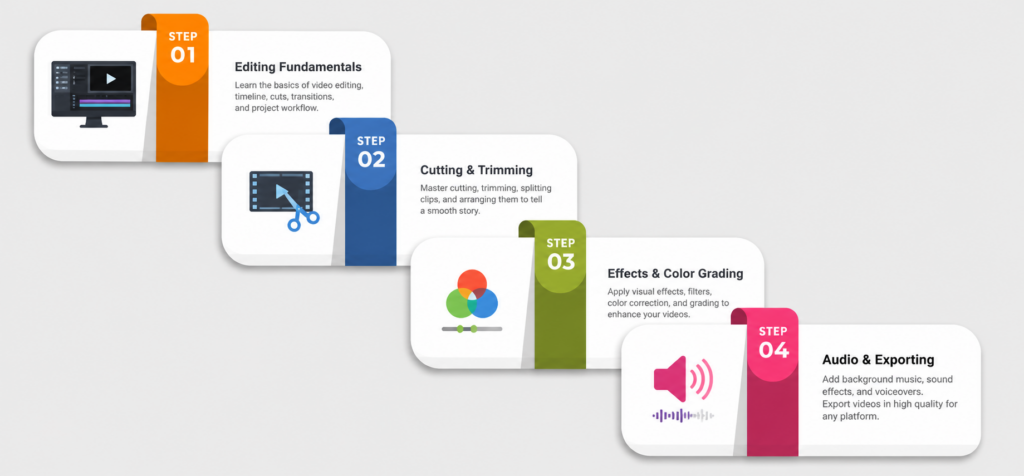
When you learn video editing, you develop both technical and creative abilities that employers value.
Technical Skills
- Timeline editing
- Multi-camera editing
- Video sequencing
- Audio synchronization
- Green screen editing
- Motion graphics
- Basic VFX
- File management
- Video rendering
Creative Skills
- Storytelling
- Creative thinking
- Visual composition
- Color psychology
- Rhythm and pacing
- Audience engagement
- Branding consistency
These skills prepare students for professional production environments.
Software You Will Learn
Most professional courses teach industry-standard software like Adobe Premiere Pro, Adobe After Effects, DaVinci Resolve, Adobe Photoshop, and Adobe Audition to help students create high-quality video content.
Professional editors work with powerful editing software. Most quality institutes train students using industry-standard tools.
- Adobe Premiere Pro: The most widely used professional editing software for films, YouTube, television, and advertising.
- Adobe After Effects: Used for motion graphics, animation, titles, and visual effects.
- DaVinci Resolve: Known for advanced color grading and professional post-production.
- Adobe Photoshop: Useful for creating thumbnails, graphics, and visual assets.
- Adobe Audition: Professional audio editing and sound enhancement.
Learning multiple software applications increases employability significantly.
Why Practical Learning Matters
Practical training helps students gain real-world experience by working on live projects, advertisements, short films, and social media videos. It also helps build a strong portfolio that improves job opportunities
Video editing cannot be mastered by watching tutorials alone.
The best video editing training institute focuses on practical projects that simulate real client work.
Students should work on:
- Short films
- Advertisements
- Music videos
- Social media reels
- Corporate videos
- Wedding highlights
- Documentary editing
- YouTube videos
Hands-on training builds confidence and creates an impressive portfolio that employers appreciate.
Career Opportunities After a Video Editing Course
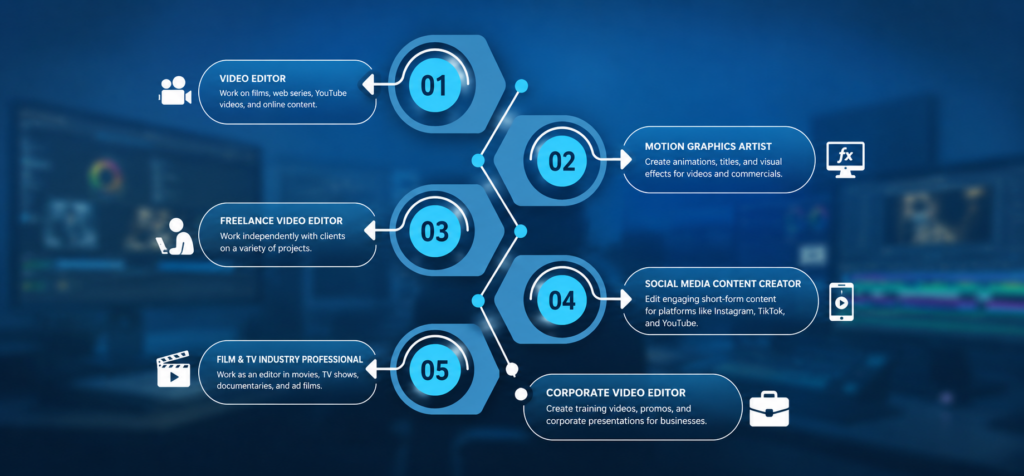
A Video Editing Course opens the door to a wide range of career opportunities in the media and entertainment industry. Skilled video editors are in demand across film production, digital marketing, advertising, television, social media, and content creation. With the right skills and a strong portfolio, students can choose full-time jobs, freelance projects, or even start their own creative business.
- Video Editor
- Film Editor
- YouTube Video Editor
- Social Media Video Editor
- Motion Graphics Artist
- Post-Production Executive
- Multimedia Editor
- Content Creator
- Freelance Video Editor
- Advertising Video Editor
- Corporate Video Editor
- Wedding Video Editor
- OTT Content Editor
- Television Video Editor
- Digital Media Editor
Start your journey with a professional Video Editing Course and build the skills needed for today’s fast-growing digital media industry. With the right training and hands-on experience, you can turn your creativity into a successful and rewarding career.
Industries Hiring Video Editors
The demand for skilled video editors is growing across many industries as video content becomes a key part of marketing, entertainment, education, and communication. From film production and digital media to corporate businesses and online platforms, professionals with video editing skills have a wide range of career opportunities.
Video editing skills are needed in many industries beyond film production.
These include:
- Advertising agencies
- Digital marketing companies
- News channels
- OTT platforms
- Television production
- Event management companies
- Educational technology companies
- Gaming industry
- Corporate organizations
- Social media agencies
- Wedding production studios
- Animation studios
With the right skills and creativity, you can work in multiple industries and build a successful career. The increasing demand for digital content makes video editing a future-ready profession.
Salary After a Video Editing Course
Salary depends on experience, location, portfolio, and specialization.
Typical salary ranges in India include:
| Experience | Average Annual Salary |
| Fresher | ₹2.5–4.5 LPA |
| 2–4 Years | ₹4.5–7 LPA |
| Senior Editor | ₹7–12+ LPA |
| Freelancers | Income varies based on projects |
Editors with strong portfolios, motion graphics skills, and experience in commercial projects often earn significantly more.
Future Scope of Video Editing in 2026 and Beyond
The future of video editing looks highly promising.
Several trends are driving demand:
- Growth of YouTube creators
- Expansion of OTT platforms
- AI-assisted editing workflows
- Short-form video marketing
- Online education videos
- Corporate branding videos
- Gaming content
- Virtual production
According to Statista, global digital video consumption continues to grow year after year, encouraging businesses to invest more in video marketing and content production.
Although AI tools can automate repetitive tasks, creativity, storytelling, and professional editing decisions still require skilled human editors.
Students who continuously upgrade their skills will enjoy excellent career opportunities over the next decade.
Tips to Become a Successful Video Editor
Practice regularly, build a strong portfolio, stay updated with the latest editing software and trends, improve storytelling skills, and take on freelance or internship projects to gain practical experience.
If you want to stand out in the industry, follow these tips:
- Practice editing every day.
- Watch professionally edited films and commercials.
- Build a strong portfolio.
- Learn motion graphics.
- Understand storytelling techniques.
- Stay updated with new editing software.
- Improve communication skills.
- Take freelance projects early.
- Learn basic color grading.
- Keep experimenting with different editing styles.
Consistency is the biggest factor behind long-term success.
Why Moople Institute is a Great Choice
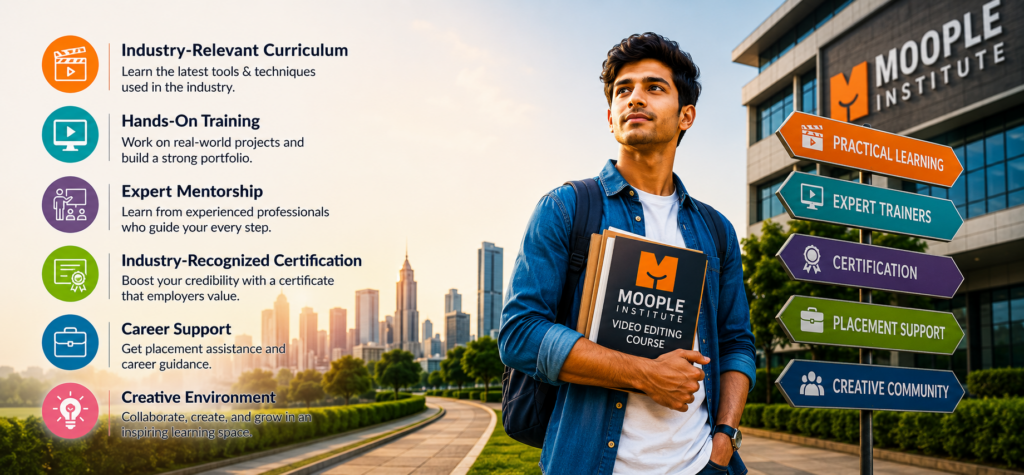
Moople Institute is a trusted destination for students who want to build a successful career in video editing and multimedia. With industry-focused training, experienced mentors, hands-on projects, and placement support, the institute helps students develop practical skills and become job-ready for the creative media industry.
- Industry-Oriented Curriculum
- Experienced Faculty
- Practical Project-Based Learning
- Advanced Editing Software Training
- Portfolio Development
- Live Industry Projects
- Internship Opportunities
- Placement Assistance
- Modern Computer Labs
- Career Guidance
- Industry Certifications
- Creative Learning Environment
Start your video editing journey with Moople Institute and gain the skills employers are looking for. Build your portfolio, enhance your creativity, and prepare for a successful career in the media industry.
Visit us Today :
(FAQs)
Yes. Students from Arts, Commerce, or Science streams can join a Video Editing Course after 12th. Most institutes welcome beginners with no prior experience.
Depending on the institute, courses typically range from 6 months to 1 year. Advanced diploma programs may take longer and include internships.
Yes. With growing demand for digital content, OTT platforms, advertising, and social media marketing, video editing offers strong career opportunities and long-term growth.
Industry-standard software includes Adobe Premiere Pro, Adobe After Effects, DaVinci Resolve, Adobe Photoshop, and Adobe Audition.
Freshers generally earn between ₹2.5–4.5 LPA. Experienced editors, motion graphics artists, and freelancers can earn significantly higher rates depending on their skills and portfolio
Conclusion
A Video Editing Course after 12th is one of the best career options for students who enjoy creativity, storytelling, and digital technology. With increasing demand across entertainment, advertising, social media, education, and corporate industries, skilled video editors have excellent opportunities in today’s job market.
The key to success is choosing a quality video editing training institute, gaining practical experience, building a strong portfolio, and continuously upgrading your skills. If you’re ready to learn video editing and build a rewarding creative career, enrolling in a professional video editing course in Kolkata can be the first step toward achieving your goals.

Farhat Jabeen is passionate about documenting the student enrollment journey in the fields of technology, design, and digital media. Through her writing, she shares practical guidance, industry insights, and real-world learning experiences that help aspiring students confidently navigate their path toward creative and technology-driven careers. Her goal is to empower learners with the knowledge they need to choose the right educational journey.