In today’s digital world, every business needs a professional website to attract customers and grow online. From startups and e-commerce brands to educational institutions and multinational companies, websites have become the foundation of every successful business. This growing demand has created exciting career opportunities for skilled website designers.
If you’re looking for a creative and future-ready profession, enrolling in Website Design Classes can be one of the smartest decisions you make. A quality website design course not only teaches you how to create visually appealing websites but also helps you develop practical skills that employers value.
Whether you’re a student after Class 12, a graduate exploring career options, or a parent looking for a stable career path for your child, this guide explains how website design can open doors to a successful and rewarding future.
Why Website Design Is One of the Most In-Demand Skills Today
Businesses no longer compete only through physical stores. Today, customers often visit a company’s website before making a purchase or contacting the business. A modern, responsive, and user-friendly website creates trust and improves customer experience.
As more companies embrace digital transformation, the demand for skilled website designers continues to rise. According to the U.S. Bureau of Labor Statistics, employment for web developers and digital designers is projected to grow faster than the average for many occupations through the coming years. Similarly, industry reports from Statista show that global spending on digital transformation continues to increase, creating more opportunities for professionals with web design skills.
This means learning website design today prepares you for an industry that is expected to grow for years to come.
What Are Website Design Classes?
Website Design Classes are professional training programs that teach students how to create attractive, responsive, and functional websites. These courses combine creativity with technology, helping learners understand both visual design and website development basics.

A good website design course focuses on practical learning rather than just theory. Students work on real projects, build portfolios, and learn industry-standard tools used by professional designers.
Instead of simply learning software, students understand how to solve real business problems through effective website design.
Skills You Learn in a Website Design Course
A professional website design course helps students develop both creative and technical skills needed in today’s digital industry. From coding and UI design to responsive layouts and SEO basics, learners gain practical knowledge that prepares them for real-world projects.
1. HTML and CSS:
HTML and CSS are the foundation of every website. Students learn how to build website structures, style web pages, and create responsive layouts that work smoothly across all devices.
2. Responsive Website Design:
Responsive design ensures websites automatically adjust to different screen sizes, including mobiles, tablets, and desktops. This improves user experience and meets modern web standards.
3. UI Design Fundamentals:
Students learn the basics of user interface design, including typography, color theory, spacing, layout, and visual hierarchy, to create attractive and user-friendly websites.
4. Basic JavaScript:
JavaScript adds interactivity to websites through features like sliders, navigation menus, animations, forms, and dynamic content, making websites more engaging for users.
5. Figma and Design Tools :
Modern website design courses introduce tools like Figma for creating wireframes, prototypes, and UI designs before website development begins
6. Website Optimization :
Students learn techniques to improve website speed, accessibility, mobile performance, image optimization, and SEO-friendly design for better user experience.
7. Portfolio Development:
Throughout the course, students create multiple live projects that showcase their design skills and strengthen their portfolio for job interviews and freelance opportunities.
How Website Design Classes Help Build a Successful Career
Website Design Classes provide the knowledge, practical experience, and industry-ready skills needed to build a successful career in the digital world. A well-structured website design course goes beyond teaching design principles by helping students work on live projects, understand real client requirements, and create responsive, user-friendly websites. This hands-on approach builds confidence and prepares learners for real workplace challenges.
These classes also help students develop a professional portfolio, improve problem-solving and communication skills, and stay updated with the latest web design trends and technologies. With guidance from experienced mentors, practical assignments, and placement support, students become job-ready for careers in web design, UI/UX, front-end development, digital agencies, or freelancing. Continuous learning and practical experience gained during the course lay a strong foundation for long-term career growth.
Website Design Classes provide practical knowledge, industry exposure, and real-world project experience that employers value. They help students build confidence, improve technical skills, and prepare for successful careers in the digital industry.
Career Opportunities After Completing Website Design Classes
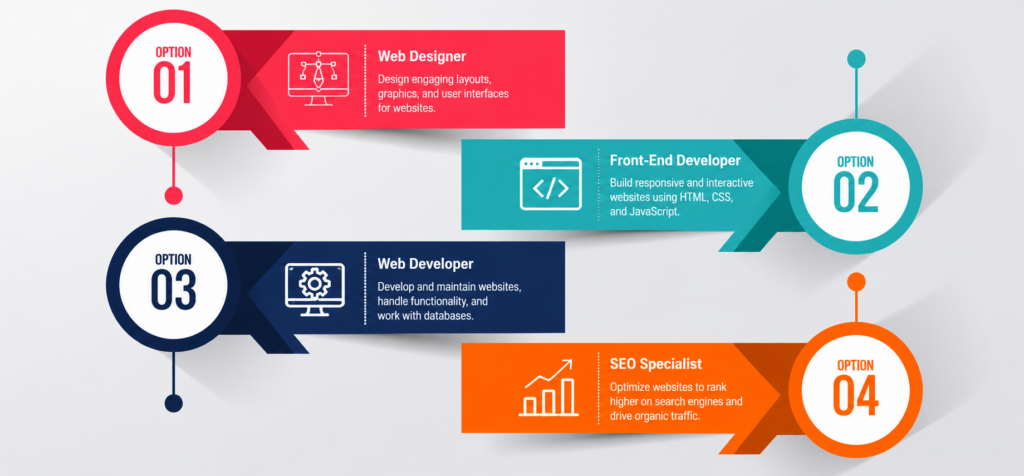
Completing Website Design Classes opens the door to a wide range of career opportunities in the digital and IT industry. As businesses continue to expand their online presence, skilled website designers are in high demand across startups, digital agencies, software companies, e-commerce businesses, and freelance platforms. With the right skills and a strong portfolio, you can build a rewarding career with excellent growth potential.
Career Opportunities
- Website Designer
- UI Designer
- Front-End Developer
- WordPress Developer
- Web Graphic Designer
- Landing Page Designer
- Email Template Designer
- Website Maintenance Executive
- Freelance Website Designer
- Digital Agency Web Designer
- E-commerce Website Designer
- Web Design Consultant
Whether you choose to work for a leading company or build your own freelance business, website design offers flexibility, creativity, and long-term career growth. With continuous learning and practical experience, you can establish a successful career in the ever-growing digital industry.
Why Website Design Is a Future-Proof Career
The demand for skilled website designers continues to grow as businesses, startups, educational institutions, and organizations increasingly rely on digital platforms to reach their audiences. Every company needs a professional, responsive, and user-friendly website, making website design a valuable skill that remains relevant across industries. As technologies like AI, e-commerce, and mobile-first design evolve, the need for creative professionals who can build engaging online experiences will continue to rise.
Website design is also a career that offers flexibility and continuous learning. Professionals can work in IT companies, digital agencies, startups, or as freelancers serving clients worldwide. By staying updated with modern design trends, development tools, and user experience principles, website designers can enjoy long-term career growth and adapt to the ever-changing digital landscape.
Why Practical Training Matters More Than Theory
While theoretical knowledge helps you understand the basics of website design, practical training is what prepares you for real-world challenges. Working on live projects, designing responsive websites, and solving actual client requirements allow students to apply their learning in meaningful ways. This hands-on experience builds confidence, improves problem-solving skills, and helps create a strong professional portfolio.
Practical training also familiarizes students with industry-standard tools, workflows, and best practices used by professional web designers. By gaining real project experience and continuous feedback from mentors, students become job-ready and are better equipped to succeed in interviews, internships, freelance projects, and full-time careers in the web design industry.
Choosing the Right Website Design Course
Selecting the right website design course is an important step toward building a successful career in the digital industry. A quality course should offer a balance of creative design concepts, technical skills, and hands-on training to help you become industry-ready. Before enrolling, compare different institutes based on their curriculum, faculty, practical learning approach, and placement support.

Look for a course that includes modern web technologies, live projects, portfolio development, and guidance from experienced mentors. An institute that provides career counseling, internship opportunities, and placement assistance can give you a competitive advantage when entering the job market. Choosing the right training program will help you gain confidence, develop in-demand skills, and prepare for long-term career success.
Tips to Become a Successful Website Designer
Becoming a successful website designer requires continuous learning, creativity, and regular practice. Developing both technical and soft skills helps you stay competitive in the rapidly evolving digital industry.
1. Learn Design Fundamentals
Build a strong understanding of color theory, typography, layout, and visual hierarchy to create attractive and user-friendly websites.
2. Master Essential Design Tools
Gain hands-on experience with tools like Figma, Adobe XD, Photoshop, and Illustrator to design professional website layouts.
3. Understand HTML, CSS, and Basic JavaScript
Knowing the basics of front-end development helps you create responsive designs and communicate effectively with developers.
4. Focus on User Experience (UX)
Always design with the user in mind by ensuring easy navigation, fast loading speed, and a seamless browsing experience.
5. Create a Strong Portfolio
Showcase your best projects, live websites, and design concepts to demonstrate your creativity and technical skills to employers.
6. Stay Updated with Design Trends
Keep learning about modern web design trends, AI tools, responsive design, and accessibility standards to stay competitive.
7. Practice Through Real Projects
Work on internships, freelance assignments, or personal projects to gain practical experience and improve your problem-solving skills.
8. Develop Communication and Problem-Solving Skills
Successful website designers understand client requirements, collaborate with teams, and provide creative solutions to design challenges.
Success in website design comes from continuous learning, creativity, and practical experience. By mastering modern tools, building a strong portfolio, and staying updated with industry trends, you can build a rewarding and future-ready career as a professional website designer
Final Thoughts
Website design is one of the few careers that combines creativity, technology, and excellent career growth. As businesses continue expanding their online presence, skilled designers remain in high demand across industries.
Enrolling in Website Design Classes gives you practical knowledge, real-world experience, portfolio projects, and industry-ready skills that employers value. Whether your goal is to become a professional website designer, front-end developer, UI designer, or freelancer, the right website design course provides the foundation for long-term success.
If you’re searching for a website design course in Kolkata, choose a reputed website design training institute in Kolkata that offers experienced mentors, live projects, updated curriculum, and placement support. Investing in the right training today can help you build a successful and rewarding career tomorrow.
(FAQs)
Anyone interested in designing websites can join. Students after Class 12, graduates, job seekers, and working professionals can all benefit from website design training.
Basic coding using HTML, CSS, and JavaScript is usually taught during the course. Most beginners can learn these skills without prior programming experience.
You can work as a Website Designer, UI Designer, Front-End Developer, WordPress Designer, Freelance Web Designer, or Digital Agency Professional.
Choose a course that offers an updated curriculum, live projects, experienced faculty, portfolio development, and placement assistance to prepare you for industry requirements.
Most professional website design courses can be completed within a few months, depending on the curriculum and learning schedule. Consistent practice is the key to becoming job-ready.

Farhat Jabeen is passionate about documenting the student enrollment journey in the fields of technology, design, and digital media. Through her writing, she shares practical guidance, industry insights, and real-world learning experiences that help aspiring students confidently navigate their path toward creative and technology-driven careers. Her goal is to empower learners with the knowledge they need to choose the right educational journey.