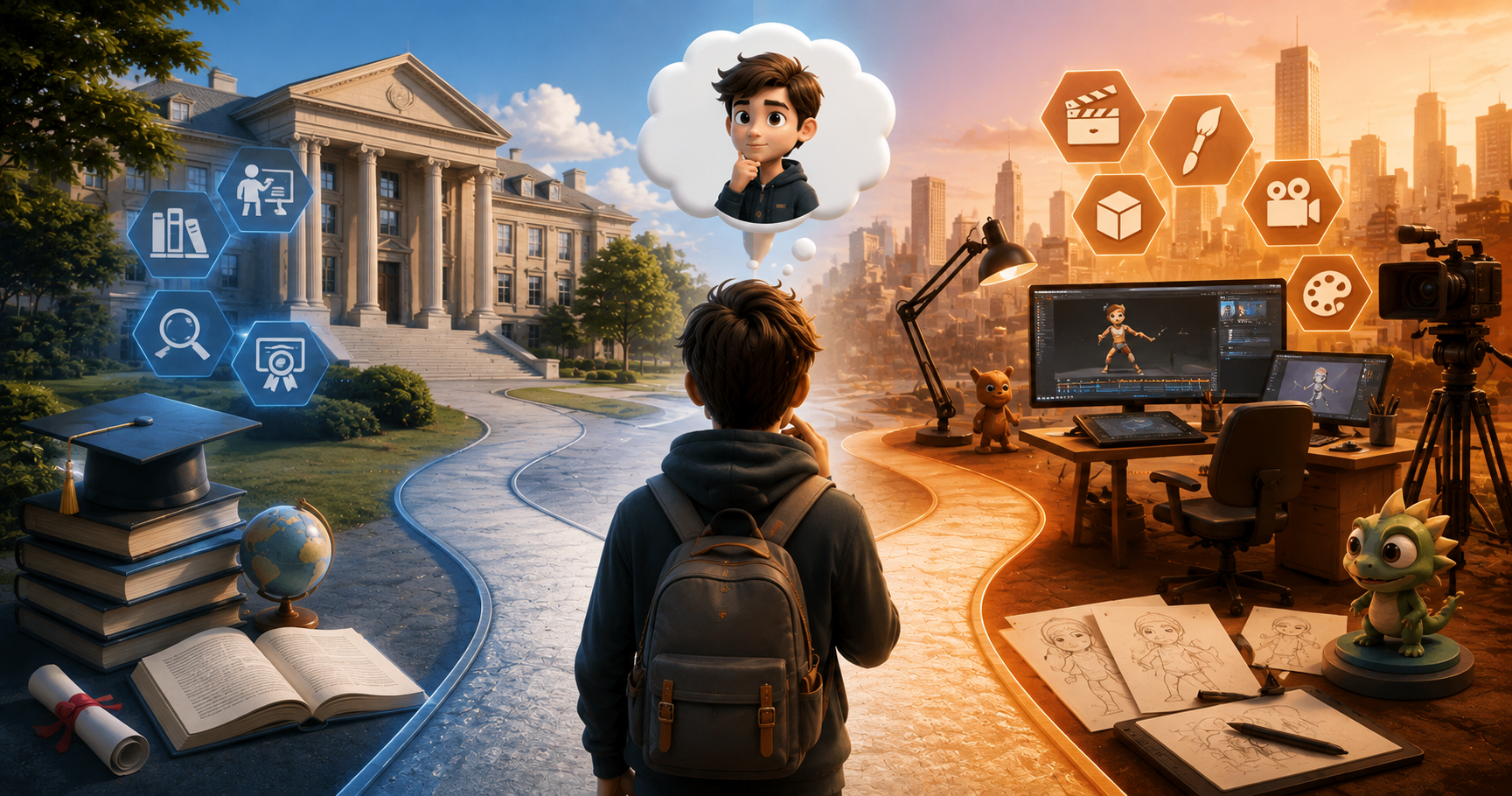
Animation has grown from a niche art form into one of the most in-demand creative careers in the world. From feature films and web series to video games, mobile apps, and advertising, animators are shaping the visuals we consume every single day. With this boom in demand, a common question keeps popping up among aspiring artists and their parents: do you actually need a formal degree in animation to build a successful career, or can talent and self-teaching get you there just as well?
The honest answer is that it depends on your goals, your learning style, and how deep you want to go into the industry. Let’s break this down properly so you can make an informed decision.
The Case For a Formal Animation Degree
A structured Animation Course offers something that self-teaching often struggles to provide: a complete, sequential curriculum. Instead of randomly picking up tutorials online, you learn the fundamentals of art and design, storyboarding, character design, rigging, lighting, and rendering in a logical order, building each skill on top of the last.
What a formal degree typically brings to the table:
1. Structured Learning Path: A degree program is designed by industry professionals who understand what skills employers actually look for. You’re not guessing what to learn next; the curriculum guides you step by step, from basic sketching to advanced 3D animation software.
2. Access to Industry-Standard Software and Tools: Institutions offering an Animation Course usually provide access to expensive, licensed software like Maya, Blender, Toon Boom, and Adobe After Effects, which can be a financial barrier for a self-taught learner starting from scratch.
3. Mentorship and Feedback: One of the biggest advantages of formal education is direct feedback from experienced faculty. Animation is a craft that improves dramatically with constructive criticism, something that’s harder to get consistently when you’re learning alone.
4. Portfolio Development: Degree programs are built around helping students create a strong, diverse portfolio by graduation, which is often the single most important factor recruiters look at, sometimes even more than the degree itself.
5. Networking Opportunities: Studying alongside peers, working on group projects, and interacting with visiting industry experts opens doors that are much harder to access independently. Many students land their first internships or jobs through connections made during their course.
6. Placement Support: Reputed institutes have tie-ups with studios and production houses, offering placement assistance that can significantly shorten the job hunt after graduation.
The Case Against Requiring a Degree
That said, the animation industry is fairly unique in one important way: it’s one of the most portfolio-driven fields in the creative world. Recruiters and studios often care far more about what you can show than what certificate you hold.
1. Skill Over Credentials: Many successful animators are entirely self-taught, having learned through YouTube tutorials, online courses, and relentless practice. If your showreel demonstrates strong fundamentals, timing, and creativity, many studios won’t ask about your educational background at all.
2. Faster and Cheaper Alternatives: Formal degrees can take three to four years and come with a high cost. Short-term certification programs, workshops, and online courses can teach specific, job-ready skills in a fraction of the time and cost.
3. Flexibility to Specialize Early: Self-directed learners can dive straight into a niche they’re passionate about, whether it’s 2D character animation, VFX, motion graphics, or game animation, without spending time on unrelated general coursework.
4. Freelance and Remote Opportunities: The rise of freelance platforms and remote studio work means many animators build entire careers without ever needing a formal degree, as long as their portfolio speaks for itself.
So, What Actually Matters More?
In truth, most hiring managers in animation studios prioritize three things: your portfolio, your technical proficiency with industry software, and your ability to meet deadlines while collaborating on a team. A degree can help you build all three efficiently, but it isn’t the only route.
If you’re someone who thrives with structure, mentorship, and a step-by-step syllabus, a formal Animation Course is likely to serve you well and fast-track your growth. If you’re highly self-motivated, disciplined, and already have some artistic foundation, a mix of online courses, tutorials, and consistent practice can also get you industry-ready.
Why Location and Institute Quality Matter
If you do decide to pursue formal training, where you study matters just as much as what you study. For students based in eastern India, enrolling in an animation course in Kolkata offers a practical advantage: access to a growing local creative industry, lower cost of living compared to metro hubs like Mumbai or Bangalore, and, increasingly, institutes that are updating their curriculum to match global industry standards.
Kolkata has steadily built a reputation as a hub for animation and design education, with institutes offering specialized tracks in 2D animation, 3D modeling, VFX, and game design. Choosing an animation course in Kolkata also means you can build a local network within the eastern Indian creative and gaming industry while still being positioned to work remotely for national or international studios once you graduate.
When evaluating any animation institute, whether in Kolkata or elsewhere, look for:
- Updated software training aligned with current industry tools
- Faculty with real industry production experience
- A strong track record of student placements
- Opportunities for live projects or internships
- A curriculum that balances art fundamentals with technical software skills
Final Verdict
A degree in animation is not strictly necessary for career growth, but it is one of the most reliable and efficient paths to get there, especially for beginners who need structure, feedback, and access to industry connections. Self-taught animators can absolutely succeed, but the path often takes longer and requires exceptional self-discipline.
If you want a faster, more guided route into the industry, investing in a proper Animation Course is a smart move. And if you’re located in or around eastern India, exploring a good zcould be the practical first step toward a rewarding creative career, offering both quality training and a growing local industry to plug into.
Ultimately, what matters most is consistent practice, a strong portfolio, and staying updated with evolving animation technology and techniques. Whether you get there through a classroom or self-study, the animation industry rewards skill and creativity above all else.
Frequently Asked Questions (FAQs)
Q1. Do I need a degree to become a professional animator?
No, a degree is not mandatory. Many successful animators are self-taught. However, a formal degree or diploma can provide structured learning, mentorship, and better placement support, which can speed up your career growth.
Q2. What skills matter most for getting hired as an animator?
Studios typically prioritize a strong portfolio, proficiency in industry-standard software (like Maya, Blender, or Toon Boom), understanding of animation principles, and the ability to work within production timelines.
Q3. How long does a typical animation course take?
Formal degree programs usually run three to four years, while diploma or certification courses can range from six months to two years, depending on the depth and specialization offered.
Q4. Is an animation course in Kolkata a good option for beginners?
Yes, Kolkata has a growing number of institutes offering quality animation training at a relatively affordable cost compared to bigger metro cities, making it a solid choice for students starting in the field.
Q5. Can I switch to animation from a different educational background?
Absolutely. Many animators come from backgrounds in fine arts, engineering, or even unrelated fields. What matters most is your willingness to learn the software and consistently build a strong portfolio.
Q6. What is more important: a degree or a strong portfolio?
In most cases, a strong portfolio outweighs a degree. Recruiters want to see what you can actually create. That said, a degree often helps you build that portfolio more efficiently through guided coursework and feedback.

Pooja Sharma is a creative education content writer who creates engaging articles on career guidance, skill development, and learning opportunities to help students make informed decisions.