The world of design is changing faster than ever. Brands, startups, e-commerce companies, media agencies, and technology firms all need visually appealing content to attract customers and build strong identities. As a result, the demand for skilled designers continues to grow across industries.
If you’re considering a Graphic Design Course in 2026, you’re entering a field that combines creativity, technology, branding, and artificial intelligence. Today’s designers are not only creating logos and advertisements but also designing social media campaigns, user interfaces, motion graphics, AI-generated visuals, and digital experiences.
For students looking for a future-ready career, parents seeking stable career options for their children, and professionals wanting to upgrade their skills, graphic design offers exciting opportunities. Modern design education now includes AI-powered tools, branding strategies, digital marketing concepts, and industry-standard software that help students stay competitive in a rapidly evolving market.
Why Graphic Design is a High-Demand Career in 2026
Graphic design has become one of the most valuable skills in today’s digital economy. Businesses rely on visual content for branding, marketing, social media, websites, and advertising campaigns. As companies continue investing in digital growth, the demand for skilled graphic designers is increasing across industries, making it a promising career choice for students in 2026.
Businesses require designers for:
- Brand identity creation
- Social media marketing
- Website design
- Product packaging
- Advertising campaigns
- Motion graphics
- User interface design
- Digital content creation
- AI-assisted creative production
The rapid growth of digital marketing, e-commerce, content creation, and startup ecosystems has significantly increased the demand for skilled graphic designers.
India has become one of the fastest-growing digital economies, creating opportunities for creative professionals across industries. Design is no longer limited to advertising agencies. Designers now work in technology companies, SaaS businesses, gaming studios, media houses, education platforms, healthcare organizations, and multinational corporations.
The future belongs to designers who can combine creativity with technology and understand both human psychology and digital tools.
What is a Graphic Design Course?
A Graphic Design Course is a professional training program that teaches students how to create visual content for digital and print media. The course covers design principles, typography, color theory, image editing, branding, and layout design using industry-standard software. It helps students develop creative and technical skills needed for careers in advertising, marketing, publishing, web design, and digital media.
Key Highlights of a Graphic Design Course:
- Design Fundamentals
- Typography and Color Theory
- Logo and Brand Identity Design
- Image Editing and Manipulation
- Print and Digital Media Design
- UI/UX Design Basics
- Adobe Photoshop Training
- Adobe Illustrator Training
- Portfolio Development
- Industry-Oriented Projects
- Creative Thinking and Visual Communication
The course helps students develop both creative and technical skills required to solve communication and branding challenges.
Advanced Graphic Design Course: Why It Matters in 2026
An advanced graphic design course goes beyond basic software training and focuses on industry-relevant skills such as branding, visual storytelling, design strategy, and AI-powered design tools. It prepares students for professional roles by helping them develop creative thinking, problem-solving abilities, and a strong design portfolio.
An advanced graphic design course goes beyond software training.
It focuses on:
- Brand strategy
- User experience principles
- Motion graphics
- AI-assisted design
- Design thinking
- Creative problem-solving
- Professional portfolio development
Employers today are looking for designers who understand business goals, customer behavior, and visual storytelling.
An advanced course prepares students for higher-paying roles and leadership opportunities in creative industries.
Graphic Design and AI: The Future of Creative Careers
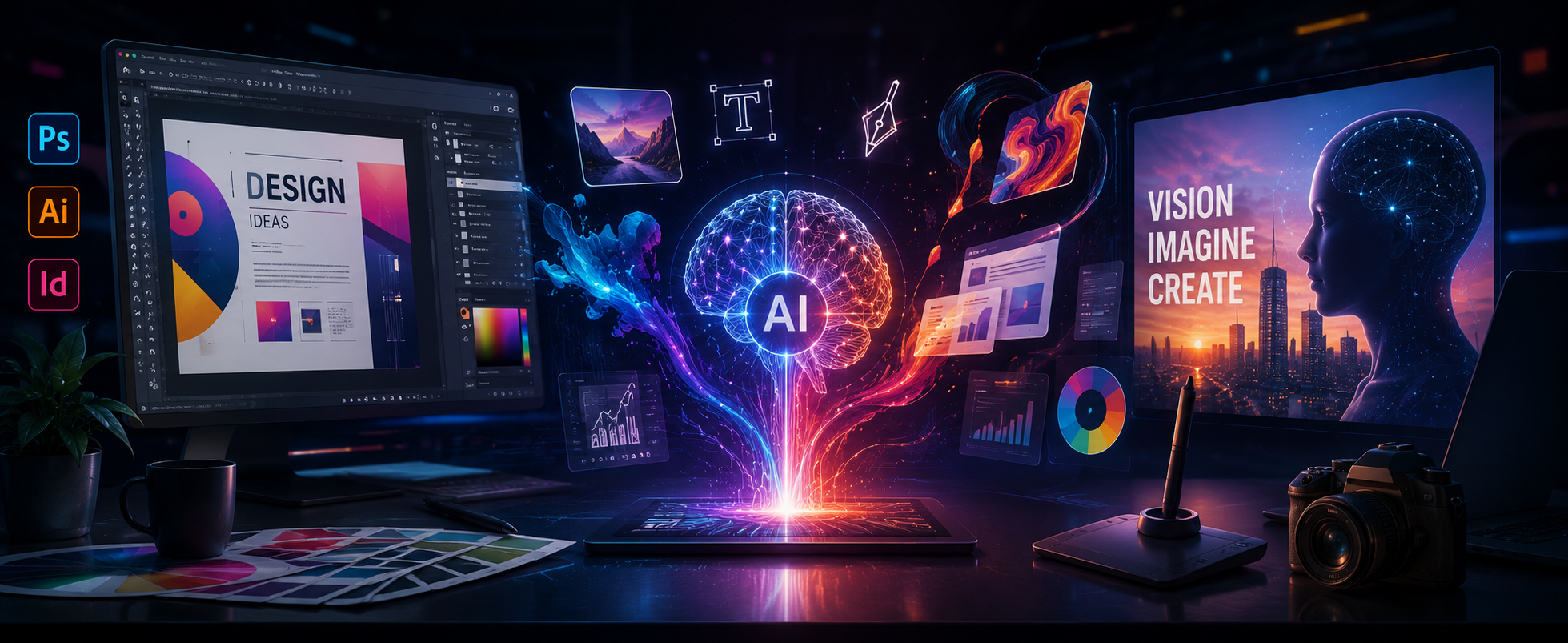
One of the biggest changes in 2026 is the integration of Graphic Design and AI.
Many students ask:
“Will AI replace graphic designers?”
The simple answer is no.
Artificial Intelligence is not replacing designers. Instead, it is helping them work faster and more efficiently.
Modern designers use AI tools for:
- Image generation
- Background removal
- Design suggestions
- Color palette creation
- Content ideation
- Layout optimization
- Automated resizing
- Creative experimentation
Popular AI-powered design tools include:
- Adobe Firefly
- Midjourney
- Canva AI
- Adobe Express AI
- Microsoft Designer
- DALL·E
Designers who combine creative thinking with AI knowledge gain a competitive advantage in the job market.
According to Adobe’s global Creators’ Toolkit Report, 86% of creators actively use creative generative AI in their workflows, showing how rapidly AI has become part of modern content creation.
Research also shows that creative professionals increasingly use AI to improve productivity and content quality rather than replace creative decision-making.
Explore more blog who wants learn more :
Advanced Graphic Design Course: Become a Pro Designer in 2026
Why Human Creativity Still Matters
AI can generate designs.
Humans provide:
- Strategy
- Emotional storytelling
- Brand understanding
- Cultural awareness
- Creative direction
- Design judgment
The most successful designers in 2026 are those who combine traditional design skills with AI-powered workflows.
This is why many institutes are now integrating Graphic Design and AI modules into their curriculum.
Skills You Learn in a Graphic Design Course
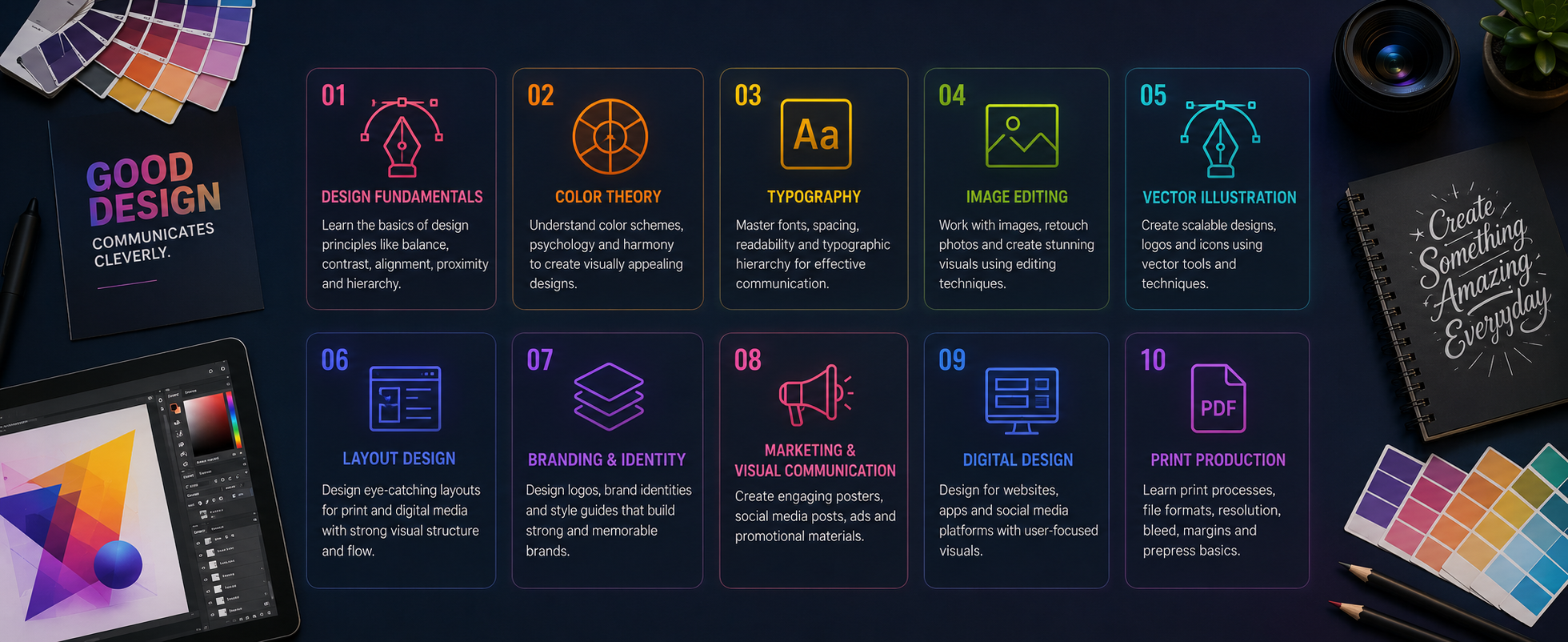
A Graphic Design Course helps students develop creative, technical, and communication skills required to create impactful visual designs. Through practical training and real-world projects, students learn how to use design tools, apply design principles, and create professional graphics for branding, advertising, digital media, and marketing purposes.
Skills You Learn in a Graphic Design Course:
- Visual Communication
- Creative Thinking
- Typography Design
- Color Theory Application
- Logo Design
- Brand Identity Development
- Layout and Composition
- Image Editing
- Illustration Skills
- Adobe Photoshop Proficiency
- UI/UX Design Basics
- Print Design Techniques
- Digital Media Design
- Portfolio Development
- Problem-Solving Skills
- Project Management
Who Should Enroll in a Graphic Design Course?
A Graphic Design Course is ideal for individuals who are passionate about creativity, visual storytelling, and digital design. Whether you are a student, job seeker, freelancer, or professional looking to enhance your creative skills, this course provides the knowledge and practical experience needed to build a successful career in the design industry.
A Graphic Design Course is suitable for:
- Students After 10th or 12th
- College Students
- Graduates
- Aspiring Graphic Designers
- Creative Individuals
- Freelancers
- Digital Marketing Professionals
- Entrepreneurs and Business Owners
Graphic Design Course Curriculum for 2026
A Graphic Design Course Curriculum for 2026 is designed to equip students with both creative and technical skills required by today’s digital industries. The curriculum typically covers design fundamentals, branding, typography, Adobe Creative Suite, UI design, motion graphics, and AI-powered design tools to prepare students for modern creative careers.
A comprehensive curriculum generally includes:
Module 1: Design Fundamentals
- Principles of design
- Visual communication
- Color theory
Module 2: Adobe Photoshop
- Image editing
- Retouching
- Compositing
Module 3: Adobe Illustrator
- Vector graphics
- Logo creation
- Branding assets
Module 4: Typography
- Font selection
- Typography systems
- Print typography
Module 5: Branding Design
- Brand identity creation
- Corporate design systems
Module 6: Social Media Design
- Ad creatives
- Campaign graphics
- Content marketing visuals
Module 7: Packaging Design
- Product packaging
- Label design
Module 8: Graphic Design and AI
- AI-powered creative workflows
- Generative design tools
- Prompt engineering basics
Module 9: Portfolio Development
- Case studies
- Presentation techniques
- Industry portfolio creation
Career Opportunities After Completing a Graphic Design Course
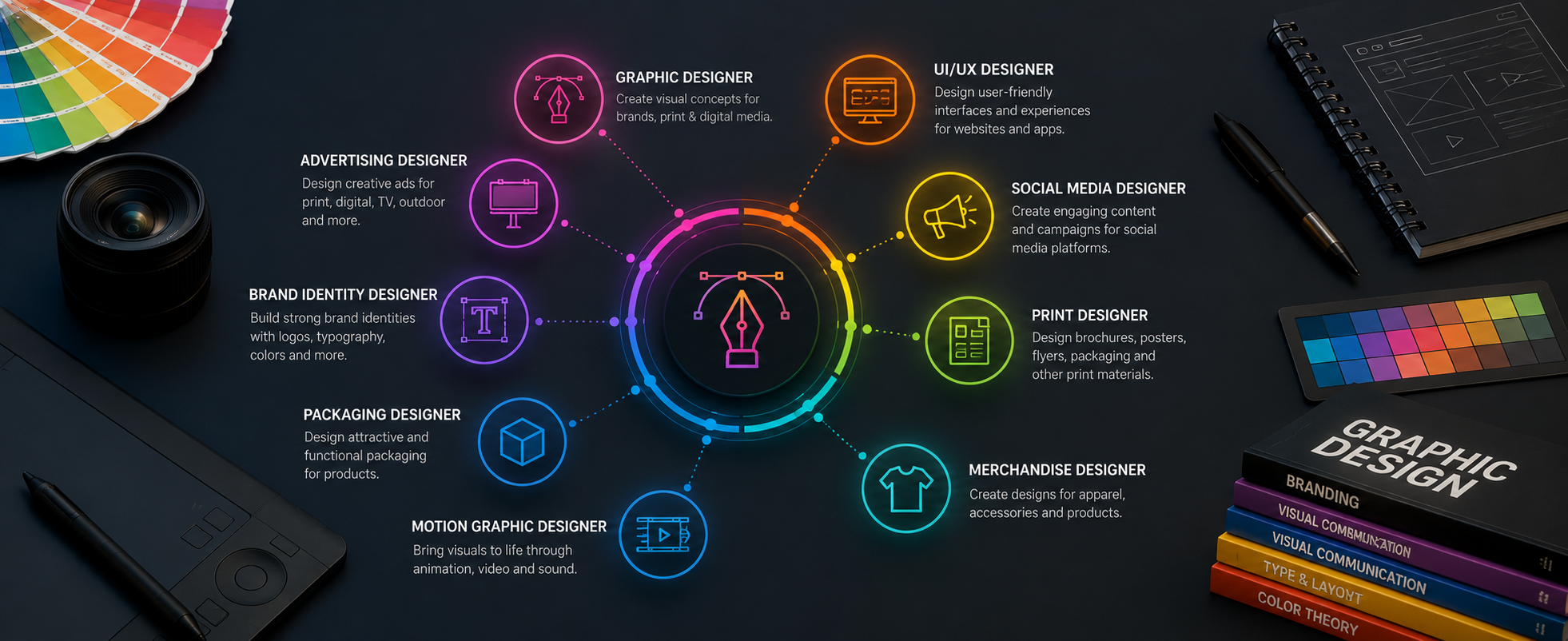
Completing a Graphic Design Course opens up a wide range of career opportunities across industries such as advertising, marketing, publishing, media, web development, and digital content creation. With the growing demand for creative professionals, graphic designers can work in agencies, corporate organizations, startups, or as freelancers.
- Art Director – Lead creative teams and oversee the visual direction of advertising, branding, and design projects.
- After completing a Graphic Design Course, students can explore a wide range of career opportunities in the creative and digital industries.
- Graphic Designer – Create visual content, advertisements, brochures, posters, and marketing materials for businesses and brands.
- UI Designer – Design user-friendly interfaces for websites, mobile applications, and digital platforms.
- Brand Identity Designer – Develop logos, brand guidelines, and visual identities that help businesses establish a strong brand presence.
- Web Designer – Design attractive and responsive website layouts that enhance user experience and engagement.
- Illustrator – Create custom artwork, digital illustrations, and visual concepts for books, advertising, and media projects.
- Packaging Designer – Design product packaging that attracts customers and effectively communicates brand value.
- Social Media Designer – Develop creative graphics, banners, and promotional content for social media marketing campaigns.
- Advertising Designer – Create eye-catching advertisements for print, digital, and outdoor media platforms.
- Motion Graphics Designer – Design animated graphics and visual effects for videos, presentations, and digital content.
- Creative Designer – Work on a variety of creative projects, including branding, marketing campaigns, and promotional materials.
- Freelance Graphic Designer – Offer design services independently to clients across different industries and locations.
Salary Expectations in 2026
Graphic design offers competitive salary growth based on skills, experience, and specialization
Entry-Level Designer
Experience:
0–2 years
Typical Salary:
₹2.5 LPA – ₹5 LPA
Mid-Level Designer
Experience:
3–5 years
Typical Salary:
₹5 LPA – ₹10 LPA
Senior Designer
Experience:
5+ years
Typical Salary:
₹10 LPA – ₹20 LPA+
Specialized fields such as UI/UX design, motion graphics, branding, and product design often command higher salaries.
Freelancers and agency owners can earn significantly more depending on their client base and expertise.
Why the Moople Institute is a Great Choice for Graphic Design Training
Moople Institute has established itself as a leading destination for creative education by offering industry-focused graphic design training. The institute provides a comprehensive curriculum covering design fundamentals, Adobe Creative Suite, branding, digital design, and emerging AI tools. With experienced faculty, practical project-based learning, portfolio development support, and career guidance, Moople helps students build job-ready skills. Its focus on industry-relevant training and student success makes it a preferred choice for aspiring graphic designers looking to build a successful creative career.
Importance of a Strong Design Portfolio
A strong portfolio is one of the most important assets for any graphic designer. It showcases creativity, technical expertise, and real-world project experience to potential employers and clients. A well-curated portfolio can significantly increase job opportunities and help designers stand out in a competitive industry.
Employers hire designers based on skills, not just certificates.
Your portfolio should showcase:
- Branding projects
- Logo designs
- Social media campaigns
- Packaging concepts
- Creative case studies
- Real-world assignments
A well-structured portfolio often becomes your most powerful career asset.
Industry Trends Shaping Graphic Design in 2026
The graphic design industry continues to evolve with trends such as AI-assisted design, motion graphics, 3D visuals, immersive experiences, and human-centered branding. Designers who stay updated with emerging technologies and creative trends will have a strong advantage in the competitive job market.
Several trends are influencing the future of design.
- AI-Assisted Design: Faster creative production through AI tools.
- Motion-Based Visuals: Animated content continues to dominate social platforms.
- Minimalist Branding: Clean and user-friendly design remains popular.
- Personalized Visual Content: Brands increasingly tailor visuals to specific audiences.
- Sustainable Packaging Design: Eco-conscious branding is becoming more important.
- Data Visualization: Businesses need designers who can present complex information clearly.
Why Now is the Best Time to Learn Graphic Design
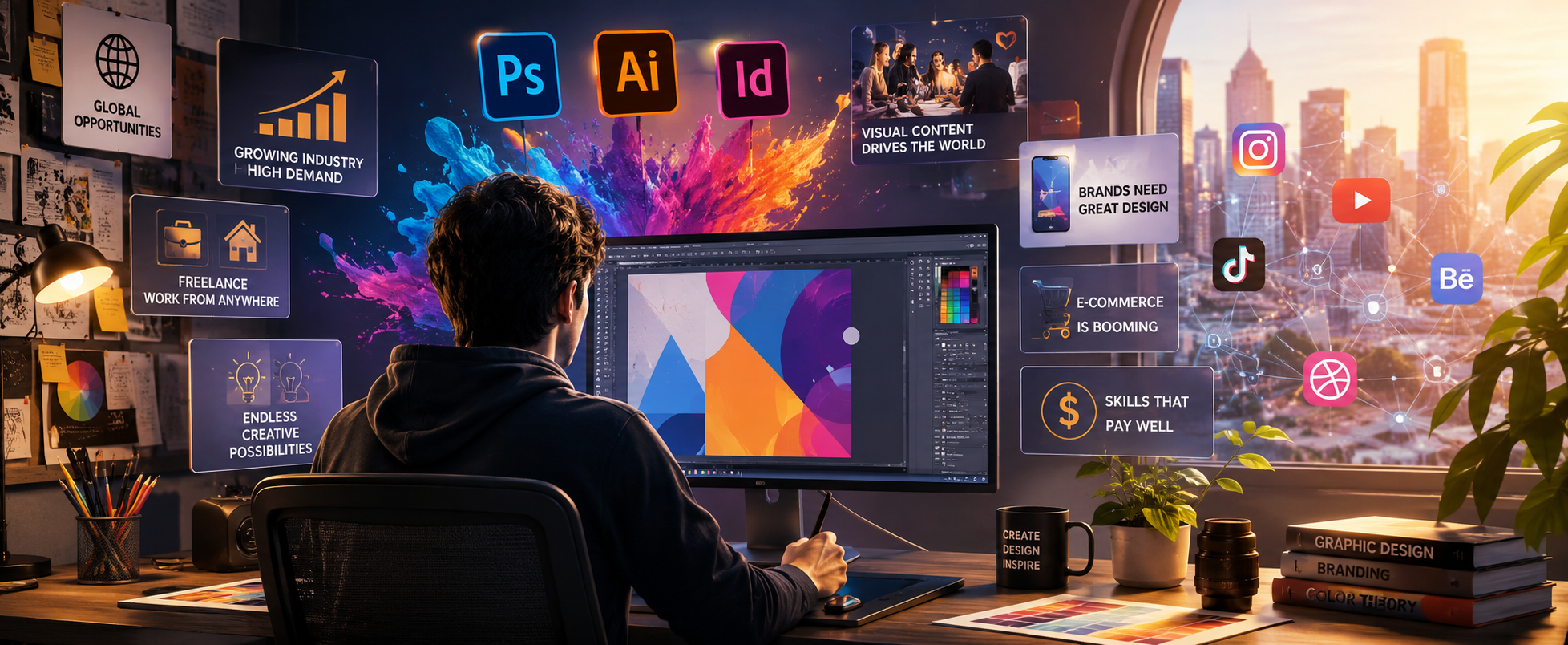
Graphic design sits at the intersection of creativity and technology.
As companies compete for digital attention, the need for skilled designers continues to rise. The introduction of AI tools has not reduced opportunities—it has expanded them for professionals who adapt and learn modern workflows.
Whether your goal is a corporate job, freelancing career, agency role, or entrepreneurship, graphic design offers flexibility, creativity, and long-term growth potential.
Students who start learning today will be better positioned to take advantage of emerging opportunities in branding, digital marketing, content creation, UI design, and AI-powered creative production.
FAQs
1. Is graphic design a good career in 2026?
Yes. Graphic design remains a growing profession due to increasing demand for digital content, branding, social media marketing, and AI-powered visual communication.
2. What is the duration of a Graphic Design Course?
Most courses range from 3 months to 18 months, depending on specialization and certification level.
3. Can I learn graphic design after Class 12?
Absolutely. Many students begin graphic design training immediately after completing higher secondary education.
4. What software should I learn for graphic design?
Adobe Photoshop, Adobe Illustrator, Adobe InDesign, Figma, Canva Pro, and AI-powered design tools are highly recommended.
5. Are certificates important in graphic design?
Certificates help validate your skills, but employers often prioritize your portfolio, practical experience, and creative abilities.
Conclusion
A Graphic Design Course in 2026 is much more than learning software. It is about mastering visual communication, developing creative problem-solving abilities, understanding branding strategies, and leveraging modern technologies like AI to create impactful designs.
Whether you’re exploring an advanced graphic design course, searching for one in Kolkata, learning about Graphic Design and AI, or comparing Graphic Design Course Fees with Certificate, the key is choosing a program that offers practical training, industry exposure, portfolio development, and career support.
The design industry is evolving rapidly, creating exciting opportunities for skilled professionals. If you’re ready to turn creativity into a rewarding career, now is the perfect time to enroll in a Graphic Design Course and start building your future in one of the world’s most dynamic industries.
Apply today and take the first step toward becoming a professional graphic designer in 2026.

Farhat Jabeen is passionate about documenting the student enrollment journey in the fields of technology, design, and digital media. Through her writing, she shares practical guidance, industry insights, and real-world learning experiences that help aspiring students confidently navigate their path toward creative and technology-driven careers. Her goal is to empower learners with the knowledge they need to choose the right educational journey.