For decades, Tom and Jerry have remained one of the greatest examples of expressive animation ever created. Despite having very little dialogue, audiences instantly understand the emotions, intentions, and reactions of the characters. Every chase, jump, surprise, and facial expression tells a story without words. This timeless animation style continues to inspire aspiring animators worldwide.
If you dream of creating memorable animated characters, enrolling in an Animation Course can help you master these essential skills. Modern animation training focuses on character acting, body language, facial expressions, timing, exaggeration, and storytelling—the same principles that made Tom and Jerry legendary.
Whether you are searching for an animation course in Kolkata, exploring animation courses after 12th, or considering a specialized character animation course, understanding expressive animation is a crucial step toward building a successful career in the animation industry.
Why Tom and Jerry Is Considered a Masterclass in Expressive Animation
One reason Tom and Jerry have stood the test of time is their ability to communicate emotions through movement rather than dialogue. The creators relied heavily on visual storytelling techniques that remain relevant in today’s animation industry.
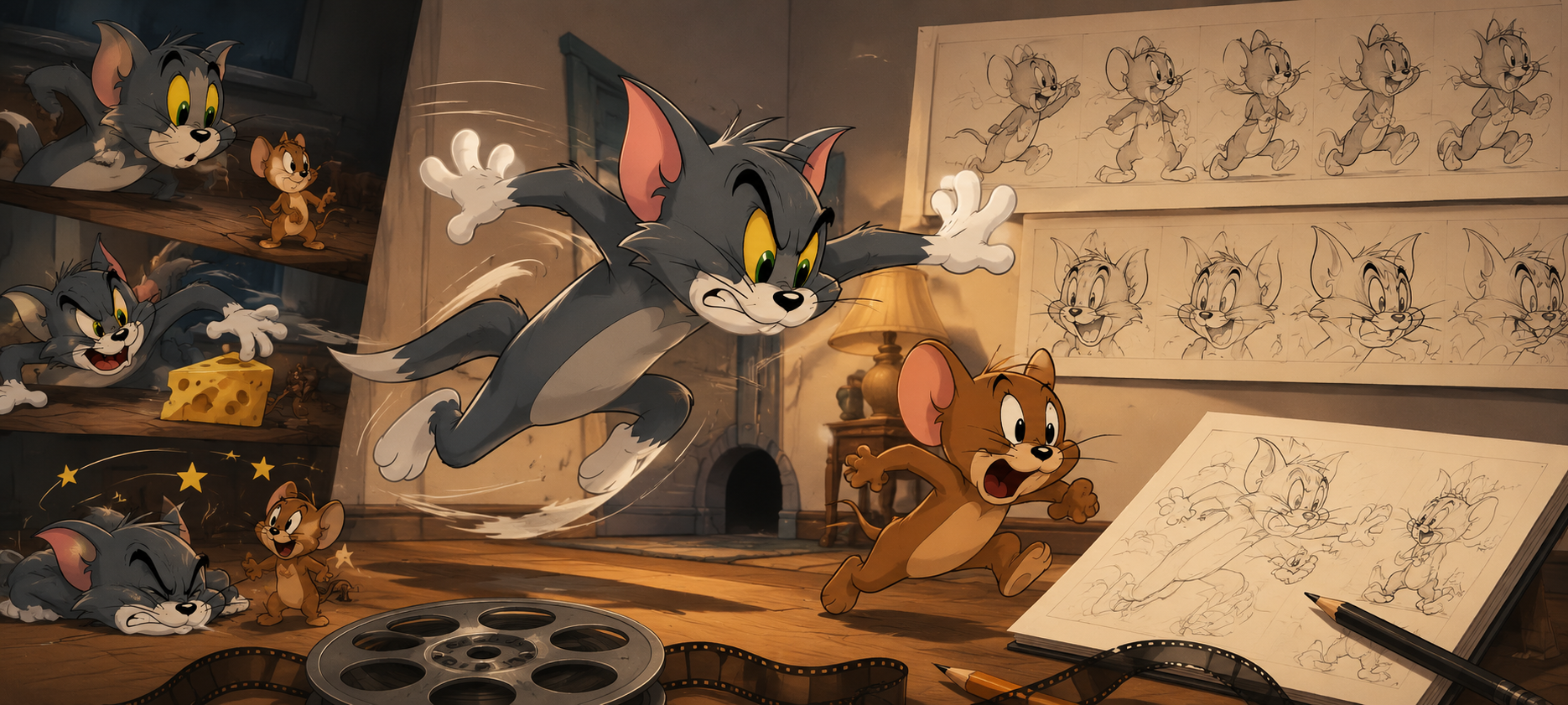
Every action in the series serves a purpose. Tom’s frustration, Jerry’s confidence, surprise reactions, fear, excitement, and determination are all communicated through carefully designed movements and expressions. This level of animation requires a deep understanding of human behavior and motion.
Modern animation studios continue to use similar principles when creating films, television shows, games, and digital content. Students enrolled in a 2D animation course or 3D Animation course often study classic animations like Tom and Jerry to understand how visual storytelling works.
Key lessons from Tom and Jerry include:
- Expressing emotions without dialogue
- Using exaggerated movements for comedic impact
- Creating believable character reactions
- Understanding timing and spacing
- Building strong visual storytelling skills
- Capturing audience attention through character acting
These skills remain highly valuable for today’s animation professionals.
Understanding Expressive Animation
Expressive animation is the art of making characters appear alive by communicating thoughts, feelings, and personality through movement.
When audiences connect emotionally with an animated character, it is usually because the animator has successfully translated emotions into believable actions. A happy character moves differently from a sad character. A confident character behaves differently from a nervous one.
Animation students learn that movement is more than simply making a character walk or run. Every action should reveal something about the character’s personality and emotional state.
Elements of Expressive Animation
Facial Expressions
Facial expressions are among the most powerful storytelling tools in animation. A raised eyebrow, widened eyes, or a subtle smile can instantly communicate emotions.
Students in a character animation course spend significant time learning how facial features work together to create convincing emotions.
Body Language
Body posture often reveals emotions even before facial expressions do. Slumped shoulders may indicate sadness, while an upright stance can communicate confidence.
Animation training teaches students how to use body language effectively to strengthen storytelling.
Timing and Rhythm
The speed of movement greatly influences emotional impact. Fast actions can create excitement and comedy, while slower movements can convey seriousness or sadness.
Timing is one of the most important principles taught in professional animation programs.
Exaggeration
Tom and Jerry became famous for their exaggerated reactions and movements. Exaggeration helps make emotions clearer and more entertaining for audiences.
Learning when and how to exaggerate actions is a critical skill for aspiring animators.
How an Animation Course Teaches Character Acting
Character acting is a crucial skill taught in every professional Animation Course. Students learn how to observe human emotions, study body language, and translate real-life reactions into animated performances. Through practical exercises and projects, they develop the ability to make characters feel natural, emotional, and relatable.
Just as actors perform on stage or in films, animated characters must also “act” convincingly. Animators become performers through their characters.
Students learn how to:
- Observe real-life human behavior
- Study emotional reactions
- Analyze gestures and expressions
- Create believable performances
- Develop unique character personalities
- Convey emotions through movement
Professional animation institutes often assign acting exercises where students animate scenes showing happiness, anger, fear, excitement, or surprise.
These exercises help build the observation and storytelling skills required by animation studios.
Learning the 12 Principles of Animation
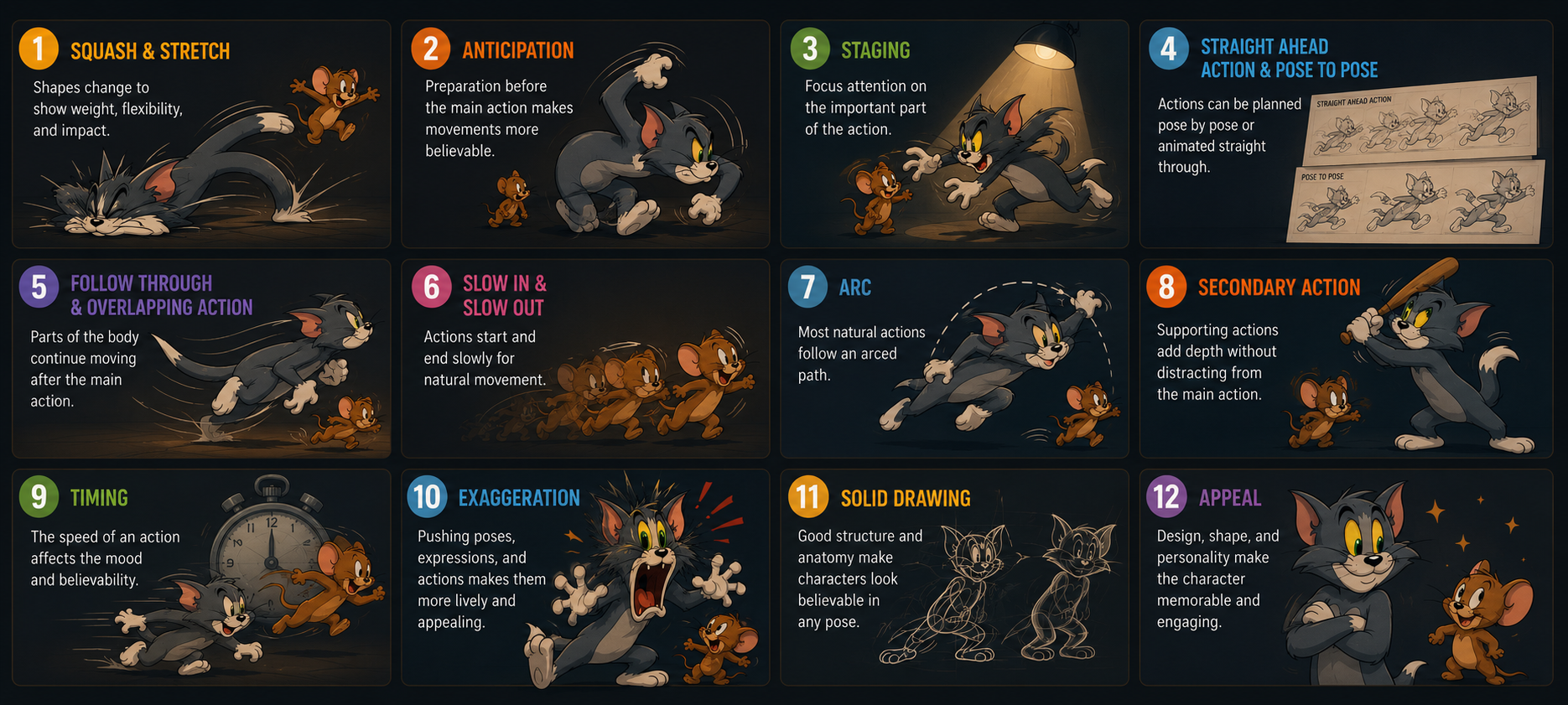
The 12 Principles of Animation are the foundation of creating realistic, engaging, and expressive animated characters. Originally developed by Disney animators, these principles help bring drawings and digital models to life by making movements look natural and appealing. Every professional Animation Course teaches these principles because they are essential for storytelling, character acting, and creating high-quality animations in films, television, games, and advertisements.
1. Squash and Stretch
This principle gives characters and objects a sense of weight and flexibility. For example, a bouncing ball squashes when it hits the ground and stretches when it moves upward, making the movement feel more realistic.
2. Anticipation
Anticipation prepares the audience for an upcoming action. Before a character jumps, they may bend their knees first. This small movement helps viewers understand what is about to happen.
3. Staging
Staging focuses the audience’s attention on the most important action in a scene. Proper staging ensures that emotions, actions, and storytelling are clear and easy to understand.
4. Straight Ahead Action and Pose-to-Pose
These are two different animation techniques. Straight Ahead Action creates movements frame by frame for a spontaneous look, while Pose-to-Pose starts with key poses and fills in the details for better control and planning.
5. Follow Through and Overlapping Action
Different parts of a character continue moving even after the main action stops. For example, a character’s hair or clothing may keep moving after they suddenly stop running, adding realism.
6. Slow In and Slow Out
Objects and characters usually do not start or stop moving instantly. This principle adds more frames at the beginning and end of an action to create smoother and more natural motion.
7. Arcs
Most natural movements follow curved paths rather than straight lines. Animating actions in arcs makes character movements appear more fluid and realistic.
8. Secondary Action
Secondary actions support the main action and add depth to a performance. For example, a character may wave their hands while talking, making the animation more expressive and believable.
9. Timing
Timing determines the speed and rhythm of an action. It helps communicate emotions, weight, and personality. Good timing can make a scene feel funny, dramatic, energetic, or realistic.
10. Exaggeration
Exaggeration enhances actions and expressions to make them more entertaining and visually appealing. It is widely used in cartoons like Tom and Jerry to create strong emotional reactions and comedy.
11. Solid Drawing
Solid Drawing focuses on creating characters with proper structure, balance, and form. It helps animators produce characters that look consistent and believable from every angle.
12. Appeal
Appeal refers to the charm and attractiveness of a character or scene. Appealing characters capture the audience’s attention and make them emotionally invested in the story.
Why These Principles Matter
Mastering the 12 Principles of Animation helps students create animations that feel alive and engaging. Whether you are pursuing a 2D animation course, a 3D Animation course, or a character animation course, understanding these principles is essential for building a successful career in the animation industry. They form the foundation of expressive animation and are used by professional animators worldwide.
How a 2D Animation Course Builds Expressive Skills
When selecting an animation course in Kolkata, students should consider factors such as curriculum quality, faculty expertise, software training, industry exposure, and placement support. The Best animation course in Kolkata should focus on both technical skills and creative storytelling to prepare students for successful careers.
A 2D animation course often serves as the ideal starting point for understanding expressive animation.
Because students create every frame manually, they develop a deeper understanding of movement, timing, and character performance.
Benefits of learning expressive animation through 2D animation include:
- Strong understanding of motion fundamentals
- Better control over character acting
- Improved observation skills
- Enhanced storytelling ability
- Strong foundation for advanced animation techniques
Many professional animators recommend starting with 2D animation before moving into more advanced disciplines.
How a 3D Animation Course Applies the Same Principles
A 3D Animation course uses modern software to create lifelike characters and environments, but the core principles of expressive animation remain the same. Students learn how to animate facial expressions, body mechanics, and emotional performances that make digital characters feel realistic and engaging.
While technology has evolved significantly, the principles behind expressive animation remain unchanged.
A 3D Animation course teaches students how to apply traditional animation concepts using modern software such as:
- Autodesk Maya
- Blender
- Autodesk 3ds Max
- Cinema 4D
- Houdini
Students learn how to animate facial rigs, body mechanics, emotional scenes, and complex character performances.
The goal remains the same: making characters feel believable and emotionally engaging.
Today, major animation studios actively seek artists who understand character performance rather than simply software operation.
The Importance of Observation in Expressive Animation
Observation is one of the most valuable skills for an animator. By studying people’s movements, facial expressions, and behaviors, students learn how emotions are expressed in real life. This understanding helps them create authentic character performances that audiences can easily connect with.
One of the most valuable skills taught in professional animation programs is observation.
Animators constantly study:
- Human behavior
- Animal movement
- Emotional reactions
- Facial expressions
- Body mechanics
- Everyday interactions
By observing real-life situations, students learn how to create more authentic and relatable animated performances.
Many animation schools encourage students to maintain sketchbooks and reference libraries to improve their observation skills.
Career Opportunities After Learning Expressive Animation
Learning expressive animation opens the door to various creative career opportunities. As the animation and entertainment industries continue to grow, skilled animators are in high demand across multiple sectors.
The demand for skilled animators continues to grow across multiple industries.
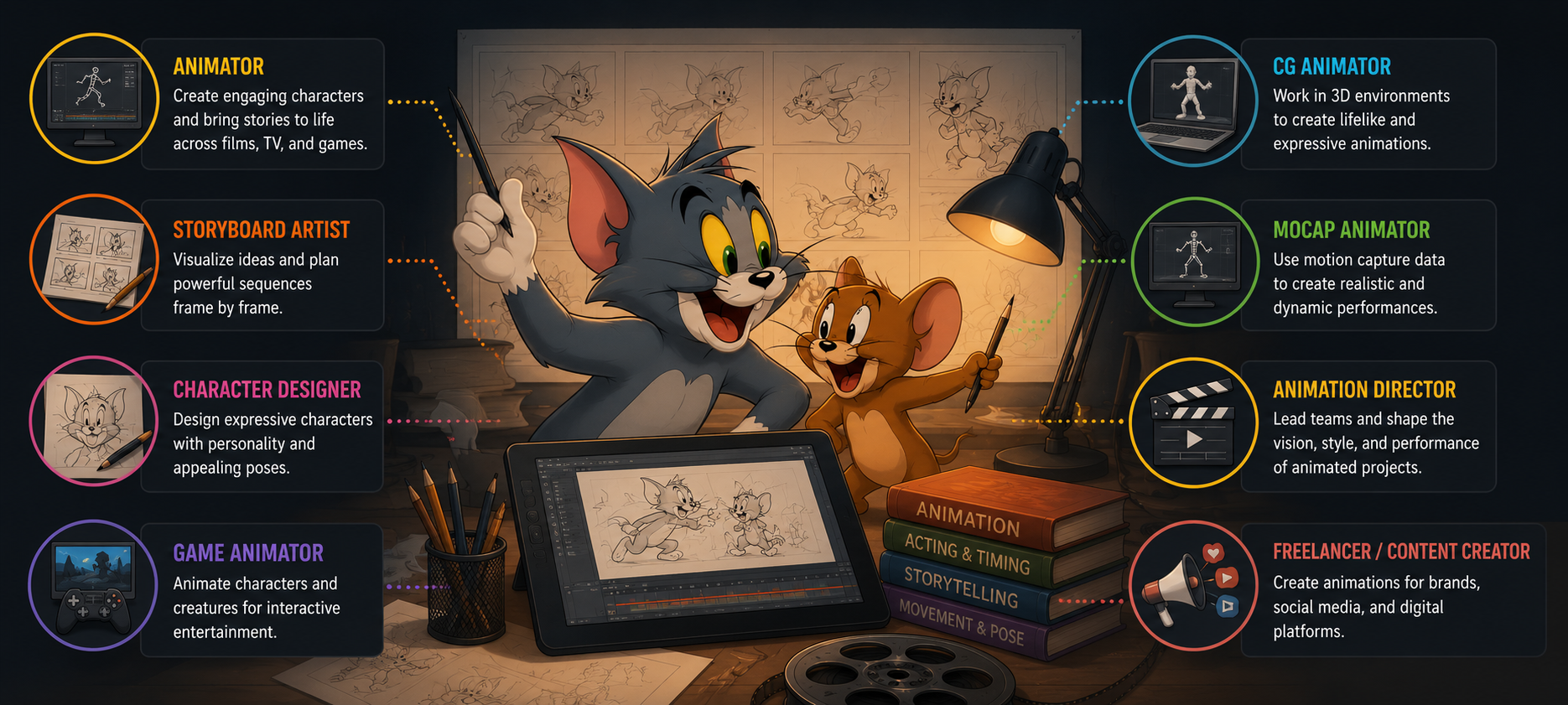
After completing an animation course, students can explore careers such as:
Character Animator
Creates performances and movements for animated characters in films, television, and games.
3D Animator
Works on feature films, advertisements, games, and digital content.
2D Animator
Produces animations for educational content, television, marketing campaigns, and entertainment projects.
Storyboard Artist
Visualizes scenes and storytelling sequences before production begins.
Motion Graphics Designer
Creates animated visual content for brands, media companies, and digital platforms.
Game Animator
Develops character movements and interactions for video games.
VFX Animator
Creates realistic animated effects for films and television productions.
According to the industry insights published by the Animation Career Review and the Bureau of Labor Statistics, demand for digital artists and animators continues to expand due to growth in entertainment, gaming, streaming platforms, and digital media.
How to Choose the Best Animation Course in Kolkata
When selecting an animation course in Kolkata, students should consider factors such as curriculum quality, faculty expertise, software training, industry exposure, and placement support. The Best animation course in Kolkata should focus on both technical skills and creative storytelling to prepare students for successful careers.
Finding the Best animation course in Kolkata requires careful research.
Look for institutes that offer:
- Industry-oriented curriculum
- Dedicated character animation training
- Experienced faculty
- Modern animation software
- Portfolio development support
- Internship opportunities
- Placement assistance
- Practical project-based learning
Additionally, compare the animation course fees in Kolkata with the value provided, including software access, mentorship, and career support.
A good institute should focus not only on software training but also on storytelling, acting, and expressive animation skills.
The student who wants to learn more can explore this blog: Animation Course in Kolkata
Why Animation Courses After 12th Are a Smart Career Choice
Many students wonder whether they can start learning animation immediately after school.
The answer is yes.
Enrolling in animation courses after 12th allows students to start building professional skills at an early stage. These courses provide practical training, portfolio development, and industry-relevant knowledge that can help students enter the growing animation, gaming, and visual effects industries with confidence. Since the animation industry values portfolios and practical abilities, students who start early often gain a competitive advantage.
Benefits include:
- Early career preparation
- Strong portfolio development
- Industry-relevant skills
- Access to internships
- Better job opportunities
- Creative career growth
With streaming platforms, gaming companies, advertising agencies, and animation studios expanding rapidly, skilled animators are increasingly in demand.
Explore More: Animation Courses after 12th
Conclusion
Expressive animation is what transforms simple drawings or digital models into unforgettable characters. The timeless success of Tom and Jerry demonstrates how powerful storytelling can be when emotions are communicated through movement, timing, and character acting.
A professional Animation Course helps students master these techniques through practical training in observation, storytelling, character acting, and animation principles. Whether you choose a 2D animation course, a 3D Animation course, or a specialized character animation course, developing expressive animation skills can open doors to exciting creative careers.
If you are exploring an animation course in Kolkata or searching for animation courses after 12th, now is an excellent time to begin your journey. The animation industry continues to grow, creating opportunities for talented artists who can bring characters to life and connect with audiences around the world.
Ready to turn your creativity into a career? Enroll in a professional Animation Course today and start creating expressive characters that audiences will never forget.
FAQs
1. What is expressive animation?
Expressive animation is the technique of communicating emotions, personality, and storytelling through character movement, facial expressions, and body language.
2. Can I join an animation course after 12th?
Yes. Many institutes offer animation courses after 12th, allowing students to begin building professional animation skills immediately.
3. Is a 2D animation course good for beginners?
Yes. A 2D animation course helps students understand fundamental animation principles before moving to advanced 3D workflows.
4. What career opportunities are available after an animation course?
Students can become character animators, 3D animators, storyboard artists, game animators, motion graphics designers, and VFX artists.
5. How much are animation course fees in Kolkata?
Animation course fees in Kolkata vary depending on course duration, curriculum, software training, and placement support offered by the institute.

Farhat Jabeen is passionate about documenting the student enrollment journey in the fields of technology, design, and digital media. Through her writing, she shares practical guidance, industry insights, and real-world learning experiences that help aspiring students confidently navigate their path toward creative and technology-driven careers. Her goal is to empower learners with the knowledge they need to choose the right educational journey.