

The visual appeal of any animated film, game, or CGI sequence depends heavily on lighting. It is lighting that creates mood, adds realism, directs the audience’s attention, and transforms a simple 3D scene into a cinematic masterpiece. While enrolling in a VFX & filmmaking course helps students understand the technical foundation of visual effects, becoming a successful lighting artist requires much more than software knowledge.
Today’s entertainment industry demands professionals who can blend artistic creativity with technical precision. Whether you’re interested in working on feature films, OTT content, advertisements, or gaming projects, mastering lighting techniques can open doors to exciting career opportunities.
If you’ve recently completed a lighting artist course or are planning to join a reputed VFX training institute, understanding these essential skills will help you stand out in an increasingly competitive industry.
Why a VFX & Film Making Course Is the First Step Toward Becoming a Lighting Artist
A professional VFX & filmmaking course introduces students to the complete production pipeline, including modeling, texturing, animation, rendering, compositing, and lighting. Since lighting connects every stage of production, understanding the workflow is crucial.
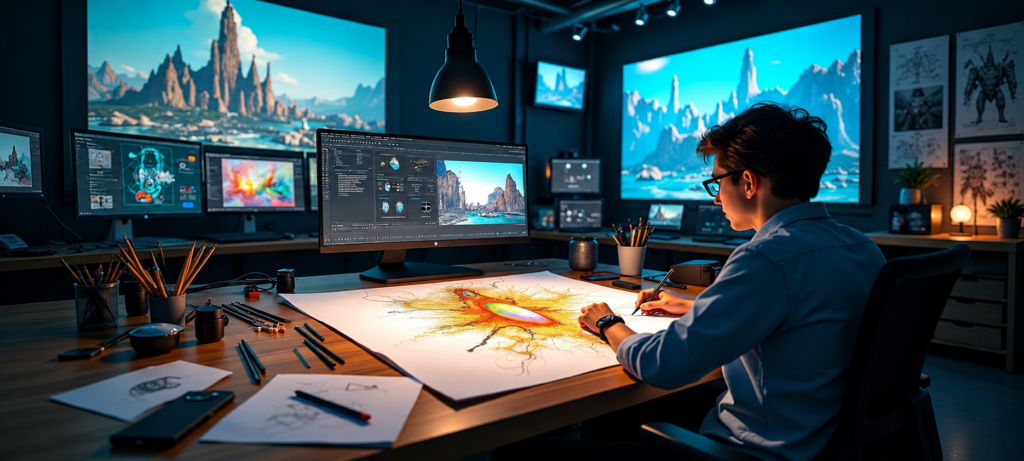
During quality VFX classes, students learn how different lighting setups influence textures, materials, shadows, and the overall storytelling process. However, classroom training alone isn’t enough. Lighting artists continuously develop their artistic vision and technical expertise through practice and real-world projects.
The stronger your understanding of both art and technology, the more valuable you’ll become in professional studios.
Understanding Light Beyond Software
Many beginners assume that learning lighting software is enough. In reality, professional lighting artists first understand how light behaves in the real world.
Natural sunlight changes throughout the day. Artificial lights create different moods depending on their intensity, color temperature, and direction. Observing these real-life lighting conditions helps artists recreate believable environments inside 3D software.
Studying photography and cinematography can significantly improve your lighting decisions. Resources from the American Society of Cinematographers (ASC) provide valuable insights into professional lighting techniques used in film production.
Developing this observational skill separates average artists from exceptional ones.
Building Strong Artistic Fundamentals
Lighting is not just about brightness—it is about storytelling.
Every scene communicates emotion. A horror sequence uses shadows differently than a romantic scene. A futuristic city requires completely different lighting compared to a medieval village.
Strong artistic fundamentals include:
- Understanding color harmony
- Creating depth and atmosphere
- Using contrast effectively
- Guiding viewer attention
- Establishing visual balance
Students attending a professional lighting artist course should regularly study movie frames, photography, and digital artwork to understand how experienced artists use lighting to tell compelling stories.
Mastering Industry-Standard Lighting Software
Technical skills remain equally important.
Professional studios commonly use software such as Autodesk Maya, Houdini, Blender, Katana, Arnold, RenderMan, V-Ray, and Redshift for lighting and rendering tasks.
A reputed VFX training institute typically introduces students to these tools, but true expertise comes through consistent practice.
Rather than memorizing software functions, focus on understanding concepts like:
- Global illumination
- HDRI lighting
- Area lights
- Volumetric lighting
- Ambient occlusion
- Light linking
- Render optimization
Technology evolves rapidly, making continuous learning essential throughout your career.
Learning the Science of Color
Color directly influences emotion.
Warm lighting creates comfort and intimacy, while cool lighting often conveys mystery, isolation, or tension. Understanding color temperature helps artists establish the intended mood without overwhelming the scene.
Professional lighting artists also understand color management workflows such as ACES (Academy Color Encoding System), which ensure consistent color reproduction across production pipelines.
Learning color theory enables artists to make creative decisions that strengthen visual storytelling rather than simply making scenes brighter.
Developing Rendering Optimization Skills
Rendering is one of the most resource-intensive stages in visual effects production.
Studios value lighting artists who can produce high-quality results while keeping render times efficient.
This requires understanding:
- Sample optimization
- Noise reduction
- Render layers
- Pass management
- Scene optimization
- Memory management
Efficient rendering saves production costs and allows teams to meet strict deadlines.
Many advanced VFX classes now include optimization techniques because studios increasingly prioritize productivity alongside creativity.
Attention to Detail Makes the Difference
Professional lighting artists pay close attention to details that many beginners overlook.
Small inconsistencies like incorrect reflections, unrealistic shadows, mismatched exposure, or unnatural highlights can instantly reduce the realism of a scene.
Successful artists constantly ask questions while reviewing their work:
Does the light source make sense?
Are shadows physically accurate?
Is the atmosphere consistent?
Do reflective surfaces behave naturally?
This habit of self-evaluation gradually improves the quality of every project.
Communication and Team Collaboration
Lighting artists rarely work independently.
In a production environment, they collaborate with modelers, texture artists, animators, compositors, supervisors, and directors.
Strong communication skills help artists understand creative feedback and implement revisions efficiently.
Being open to constructive criticism also accelerates professional growth. Studios appreciate artists who can adapt quickly while maintaining quality under tight production schedules.
Building an Outstanding Portfolio
Your portfolio often matters more than your resume.
Employers want to see how well you solve visual problems rather than simply listing software knowledge.
A strong portfolio should include:
- Interior lighting projects
- Exterior environments
- Day and night scenes
- Cinematic sequences
- Realistic product lighting
- Stylized lighting examples
Every project should clearly demonstrate your understanding of composition, mood, color, and technical execution.
Many students graduating from a lighting artist course spend significant time refining their portfolios before applying for internships or full-time positions.
Staying Updated With Industry Trends
The VFX industry constantly evolves with new rendering engines, production workflows, and visual technologies.
Following trusted industry resources helps aspiring lighting artists stay competitive.
Websites like CGSociety showcase professional artwork, industry interviews, tutorials, and portfolio inspiration from leading artists worldwide.
Participating in online communities, attending webinars, joining lighting challenges, and practicing personal projects all contribute to long-term career growth.
Continuous improvement is one of the defining characteristics of successful lighting professionals.
Career Opportunities After Learning Lighting
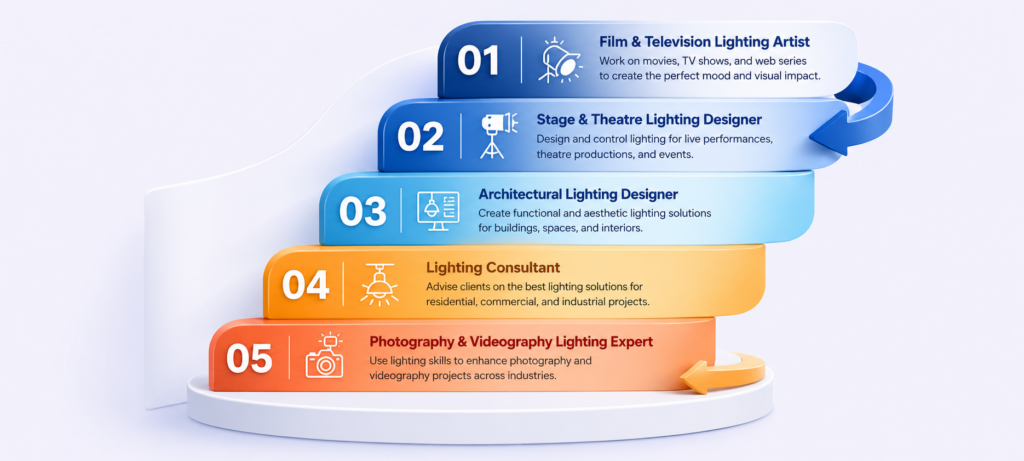
As the demand for high-quality visual content continues to grow across films, OTT platforms, gaming, advertising, architecture, and virtual production, skilled lighting artists are becoming increasingly valuable.
After completing a professional VFX & filmmaking course, students can explore career roles such as:
- Lighting Artist
- Look Development Artist
- Render Artist
- Environment Lighting Artist
- CG Generalist
- Scene Assembly Artist
- Technical Lighting Artist
With experience, professionals can progress into senior artist, lead lighting artist, lighting supervisor, or CG supervisor positions.
Explore More: What Does a VFX Compositor Do in Films & Games?
Conclusion
Lighting is where technology meets creativity. While a VFX & filmmaking course provides the technical foundation, becoming an exceptional lighting artist requires artistic observation, continuous practice, problem-solving skills, and an understanding of cinematic storytelling. Enrolling in a quality lighting artist course, practicing consistently, building a strong portfolio, and learning from industry professionals will prepare you for exciting opportunities in the rapidly growing world of visual effects. As you continue refining your skills through advanced VFX classes and hands-on experience at a reputed VFX training institute, you’ll be better equipped to create visually stunning scenes that captivate audiences across films, television, gaming, and digital media.
(FAQs)
A lighting artist should have a strong understanding of lighting principles, color theory, composition, rendering, storytelling, and industry-standard software. Creativity combined with technical expertise is essential for success.
A lighting artist course provides valuable training, but employers also look for a strong portfolio, practical experience, teamwork skills, and a willingness to learn continuously.
Popular software includes Autodesk Maya, Blender, Houdini, Katana, Arnold, V-Ray, RenderMan, and Redshift. Learning multiple tools increases career opportunities across different studios.
Yes. Most VFX & filmmaking course programs are designed for beginners and gradually introduce students to the complete visual effects production pipeline, including lighting.
A reputed VFX training institute offers structured learning, experienced mentors, industry-relevant curriculum, hands-on projects, portfolio guidance, and placement support, helping students build a strong foundation for a successful VFX career.
Visit Us Today :

Farhat Jabeen is passionate about documenting the student enrollment journey in the fields of technology, design, and digital media. Through her writing, she shares practical guidance, industry insights, and real-world learning experiences that help aspiring students confidently navigate their path toward creative and technology-driven careers. Her goal is to empower learners with the knowledge they need to choose the right educational journey.